
My mother-in-law has died. I bet God sent her sisters Flossie and Barbara, and her brother Sherod, her mother, and her husband Earl, to greet her with rejoicing at the doors of heaven. And then He stood quietly next to her and thanked her for the endurance, dignity and strength with which she lived her life….
Me, Before Boston
 This picture was taken in Panama, where my parents stopped with me on the way to my first surgery at Boston Children’s. You can see how far my left leg is rotated out. They were only figuring out how significant that was. (I also chuckle because there’s that awful plastic people used to put on cushions to make them last longer. That chair is still in my aunt’s house in Panama.)
A few days ago, I went to visit an extraordinarily brave young man who is recovering from Leukemia and a bone marrow transplant. C and I talked about the garden at Children’s. When he was strong enough after the transplant, he would lie in the grass in that magnificent garden and soak in the sunshine.
Boston Children’s continues to grow and in the next few months, that garden that gave me and C solace will become a construction zone. A new building is going up there. It breaks my heart and I am so incredibly grateful that I got to make that pilgrimage in 2012. I am so sorry for all the little boys and girls who will never know that magical place.
Another Sort

This morning, I tackled a couple of baskets of accumulated laundry I need to iron. And I tackled the closet in María’s room. It became another lesson in archeology, another small moment to practice discernment–what to hold on to, what to let go of. Some of it was easy. The closet was the repository for all of the clothes I wore until 2 years ago. I tried to put some of them on and literally, skirts would simply slip off of me and I swam in jackets and blouses. Those were easy to put in the ‘donate’ pile. But they gave me pause.
I am grateful for the second chances our bodies give us. Stress and not as healthy eating has my blood sugar edging in a not so good direction so I am back to as much mindfulness as I can muster in the eating department. Unlike the God of second chances and new beginnings, there are just so many blows my body can absorb. Seeing those clothes, realizing how unhealthy I once was, helps me remember that the choices are stark and have to be made over and over, and over again.
Other parts of today’s work have been harder. I found the Christmas dress María wore 3 years ago; it was hidden behind some other clothes in the closet. It is a very pretty dress—my girl looked lovely when she wore it with her first pair of heels. Sherod and I simply touched and looked at the dress for a while this morning. We had a game going in those years: if she wears a pretty dress, she will be happy and things will be better. If we learn something new, if we say something different, if we try this other program, things will change, she’ll understand, she will grow into better patterns of coping. I am learning that, along with putting dresses like this in the ‘donate’ pile, I have to sort out the hope grounded in reality from the If Only game. That can be wrenching. The spaces that open up when we let go can be fearsome. What replaces what I have let go of? Oh how I want it both ways—the new possibilities and the old dispensations.
Today, that question, “what must I let go of?” brings me back to holy indifference, a willingness to give something my all while not expecting one outcome or another. I am praying for the grace of holy indifference almost constantly this day and what I hear in response pushes rather than comforts (who knew that consolation is not always about warm fuzzies?). Holy Indifference understands that sometimes I won’t get to see wrongs made right. That letting go of something lets loose ripples that impact the lives of others, including people we care for deeply and the ripples sometimes cause pain to those I most wanted to shield. To practice this discipline means hosting grief, no matter how many times grief shows up and how ready you are for something else. And finally, practicing Holy Indifference means saying that a loss is real.
Whispered very gently with that truth is this other one. Even when a loss is real, it is not necessarily the last word. I strain to hear that whisper.
Bits and Pieces

Front Fence of a House in Vaxholm
I have a small window of time to write. These past days have been chaotic beyond words. We got the ‘dreaded’ early morning call last Thursday–the end was near for my mother-in-law. A flurry and Sherod was off, headed back to Selma. The next 5 days got worse and worse, in some respects. What some of the doctors saw as the beginning of ‘active dying’ was not. Instead we are now faced with a harder situation. Something has happened and Juanita is lost in deep dementia. She is in the hospital right now because when it seemed that the end was near, she ended up on a morphine drip. Sherod and his sister now face all the planning and preparations to place her in a nursing home–totally new set of plans with insurance companies, doctors, caretakers, etc. We are disgraceful these days, with our continuum of care for the very old and dying.
The ministry I serve continues to push me further and further into unknown and uncharted territory. I am doing a fair amount of looking back, identifying moments in the ministry where there were several more decisions that “coulda-shoulda” been considered and taken. This is not about engaging in a pity party of useless regrets. Rather, having found some new ways to understand how I serve and contribute to the health and wholeness of a community of faith, I am going back to mine what I can about moments that passed me by. By the grace of God, that may help me serve more effectively and faithfully as I move forward.
I am also making the final plans and preparations because I am going on the 30-day retreat. This is hard on the whole system I am a part of. I am fighting all kinds of little voices in my head that call me irresponsible and self-centered. But way down deep, I remain convinced that I am most able to do the work of transitioning out of this ministry, whenever that happens, and preparing for whatever comes next, having taken this time to spend in the company of my Maker in ways I am not able to otherwise.
Life goes on…
What It Means To Be Lost: Luke 15:1-10

Like many women, I have given a lot of my life to taking care of others. When I was growing up, my brothers got Tonka trucks to move dirt around and I got dolls to take care of. I look at the career choices I’ve made—by and large, they have to do with taking care of, nurturing, developing, teaching. And especially, as a clergy person, serving.
In late 2011 my mother was dead—the model of sacrificial service who had taught me well. Maria was spinning further and further out of my capacity to care for her. There was still plenty to do in ministry but having diabetes was simply too real to ignore. And so I began to walk.
My decision to walk was different than others I had made. Sure, I had whiled away hours reading or sewing or knitting or visiting with friends. This wasn’t to pass time away, this was to claim it in all its depth and breadth and meaning. This was a decision to reclaim my life. And then, for very practical reasons I chose to walk at night—that was when it least impacted my husband, my daughter, my work.
Some of the stretches of the sidewalk on Riverland Road are paved in blacktop and on moonless or overcast nights, I have been more than a little disoriented. There are unlit areas where I am always unsure. Recently, a pit bull came right at me out of the dark and it was by the grace of God and his human companion’s strength that he did not get to me because he was hell bent on attacking. I felt that awful sting of adrenaline zooming all the way out to my fingertips. I was reminded that there are monsters in the night. Walking in darkness has become for me a very powerful metaphor about my existence as I know it today.
You can call it the dark night of the soul, as the mystics do. Ignatius of Loyola, whose thought and spirituality has shaped my own, describes it as desolation. You can call it being blind and lame. Jesus calls it being a sinner and a tax collector. There are many ways to approximate this truth about ourselves, but in the end, it comes to the same. We know, we know only too well, what it means to be lost.
We know what it is like to go from oblivious to mildly concerned to anxious to agitated to frantic and desperate so our every movement entangles us more, till exhausted and powerless, we collapse.
Today’s gospel tells us that our Good Shepherd knows this about the human condition. Today’s Gospel insists that our Good Shepherd will not stop looking until the lost sheep is found. Today’s Gospel reminds us that finding even the least of the sheep, the runt, the one we all love to hate, the one no one has even noticed went missing, is worthy of celebration.
But we should not fool ourselves. This being found by Jesus is not all sparklers and confetti and victory parades. Don Schutte is a Jesuit musician who has composed a piece of music that is no great masterpiece. But it speaks powerfully to me. The song, Holy Darkness, says, “I have tried you in fires of affliction; I have taught your soul to grieve, I have showed you the cost of compassion”.
I have come to believe that the essence of our lostness is our unwillingness to face directly, and honestly, without artifice or pretension, into the hard, frightening, potentially destructive aspects of life. I didn’t want afflictions, especially the fires of my daughter’s afflictions. Who amongst us wants to learn the harsh and beautiful lessons of grief? Compassion costs? I want a volunteer job that I can do in five minutes and makes me feel good about myself, not one that costs.
Our culture does little to encourage us to accept the complexity of human existence, the tragedies that life brings with it. And when you cannot run any longer, when there is simply no more energy or light left, there is the searing loneliness that comes with being lost.
Holy Darkness makes one last claim, a claim that goes to the heart of God’s love for us. “In the barren soil of your loneliness, there I will plant my seeds.” God’s reign breaks in to the places of desolation and turns all that lost and brokenness into something new.
We are lost and the good shepherd won’t stop looking for us. We are lost and it is there that we find the light, the hope, and the life. We are lost and we we have already been found.
Pounce and Kill
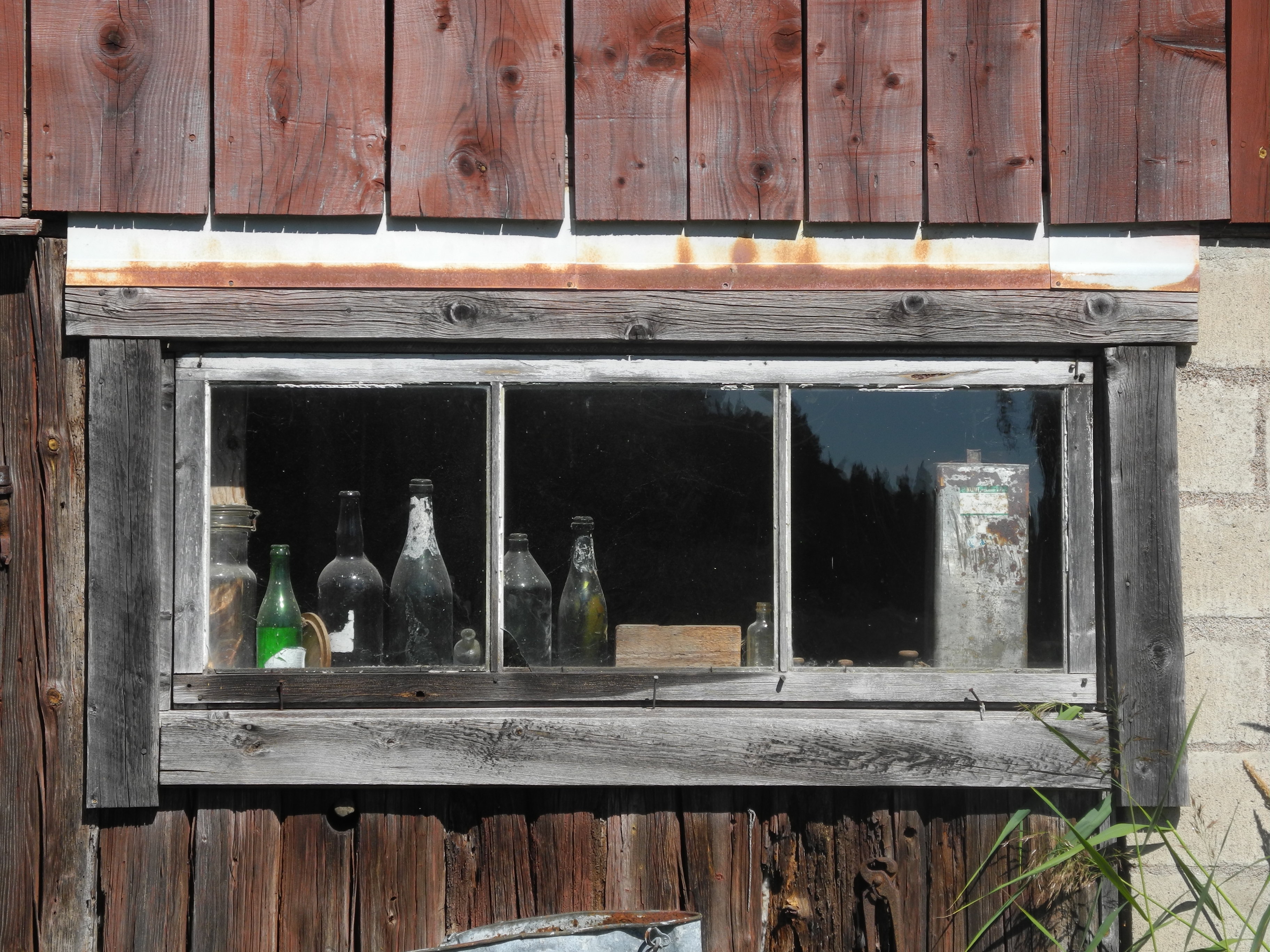
Window of An Abandonded House on the north end of Ljusterö, Summer 2013
It was sublime working with the little ones at the preschool yesterday. At the end of the day, this work allows me to say I have made a difference and I myself have been blessed. Earlier this year, I found myself scrubbing children’s toilets because we couldn’t afford paid janitorial help and we all needed to pitch in to keep going. It wasn’t that I felt virtuous as much as aware that I was glad that I could do my part, that toilets that were sort of nasty were now shiny white and clean, that all of us together were being hospitable even if it cost. These are the easy parts of my work.
In 2010 we set out to form this new model for doing ministry in Southeast Florida with a vague sense that the old parish model of the Episcopal Church, based on geographic boundaries just wasn’t working. While we did the work, we would figure out how we would manage the balance between a shared sense of identity and a commitment to allow the distinctive voices of the ministry to help shape our future. It all sounded great—and it was certainly bold.
Almost 4 years later, now that my departure looms far larger on the horizon, I continue to look at what my job has been and what I may be called to next. There are aspects of my job that are difficult to even think about. I am priest-missioner of the more fragile part of the NRRM. When NRRM was put together, it was simply taken for granted that the Rector of All Saints, the ‘big church’ would be the boss of the whole ministry. I was ordained at All Saints and have always worked as a subordinate of the Rector—my husband. Then there are the realities of the ‘stained glass ceiling’ for women in the church; that part of how I get defined as a priest is too big and deep to do more than acknowledge, but it is there.
At the very least, my role in NRRM is unusual and unorthodox. Most of the time, that opens spaces and gives me room to take risks and do work I would otherwise not get to do. Some of the time, my role is so complex, fraught and tension-laden that I walk around wanting to throw up. The hardest is maintaining clarity in my own mind between my marriage and my reporting relationship to ‘the boss of me’. On more than one occasion I have engaged in what Sherod accurately describes as a strategy of “pounce and kill”. We see something differently, he exercises his responsibility as rector, I entrench in my role as priest-in-charge of a separate congregation, and the next thing you know, I feel pushed up against the wall and go on the offensive. It is not a pretty picture.
The phrase ‘generous space’ keeps tumbling around in me these days and it has led me to reflect on some of the dynamics I just described. I am most able to be generous in the places and moments where I feel both capable and called to the work at hand. It is agonizingly difficult for me to find ways to be generous in the midst of powerlessness. When I find myself in the place of powerlessness, my instinctive response is the one Sherod describes: pounce and kill.
Now, the slick response to an ungenerous and unproductive response is to say this has to do with perceptions. All I have to do is claim my own power to change the dynamics, right? That’s a partial truth. For a person of privilege—and I am a person of privilege—absolutely, some of the work includes letting go of insecurities and whatever chips we might have on our shoulders. I also have a growing conviction that another part of the answer that leads to true generosity requires me to accept powerlessness. My life was literally transformed the day I understood that I had to host grief after my mom’s death and after all the stuff with Maria last year.
What would it mean to allow powerlessness to host me (and I believe that’s how this one works)? I only have a vague sense of this right now, but the general contours of what I see about powerlessness suggest it is an invitation if I am able to let go of that automatic response of pounce and kill. I pounce with words. Somewhere a long, long, long time ago, I decided that if I could just explain well enough, if I could be be perfectly articulate, or, if all else failed, if I could shred with my words, I would obtain my heart (or my fear’s) desire. Another one of those lies I have lived by. And too often killed with.
Continuing to prepare for my 30 day retreat, pondering this week’s gospel about the Lost Sheep, it is almost as if I am being tugged further out into a wilderness I am overwhelmed by and is also my home, at least for now. This is the sieving.
The Work of the Child
Today our work was beautiful walking and how we set out and put away a mat when we come into the atrium. It has been a long time since I have been in this kind of space with really young boys and girls. I had forgotten how children can be so serious, careful and reverent about something as simple as rolling up a mat. I find myself deeply moved. Our new program is starting well.

A Pedi Kind of Morning
 I just finished a work marathon. Today is the start of our Fall enrichment programs at the New River Academy. Last year, on this day we began serving 20 children. Today we will start serving 75. There were a million things to finish taking care of in these past two weeks. I was in bed and fast asleep shortly after 8 last night and this morning I went and got a pedi and am giving myself some time to write.
Especially the last 6 days were beyond grace-filled. One of my responsibilities in the evening on Thursday was to train our preschool teacher staff in preparation for their new responsibilities with our 3-5 year-old children. Several had never been exposed to any Montessori-based learning work. Through the Catechesis of the Good Shepherd I have received a fair amount of training in this pedagogy. More than anything, what I love is the profound respect for the child that is inherent in Maria Montessori’s approach to learning. Our children will do practical life work twice a week.
On Thursday night I made a presentation on beautiful walking–one of the very first expressions of grace and courtesy the child is invited to master. With the adults, as with children, I sensed the shift from our somewhat manic rhythms of daily life to a more quiet, thoughtful, gentle time as we practiced beautiful walking and beautiful talking. I am grateful for a teacher staff who will have to do more, not yet with any raise in pay, and so willingly embraced new ideas and new ways of providing hospitable learning spaces for our children.
Friday and Saturday were a flurry of mopping, sweeping, moving furniture and setting up the new resource room for the preschool enrichment program. I put out the materials for a lot of diferent practical life work and got tickled with the materials for the work opening and closing. On Saturday morning I got help from two brand-new high school students, guys both of them, all awkward elbows and big Adam’s apples in bodies that have a while to catch up to all that first growth. Their work generated new, extra work for me and even that amused and pleased me–my life is filled with such a variety of characters of every size and stripe!
On Saturday in the afternoon, I went to the airport to meet Ana Hernandez, a musician and congregation development person who I met at a conference a couple of years ago. Ana was coming to work with us on the place of music in the New River Regional Ministry and to help us find our voice and the song we’ve been given to sing. There were some tense moments when members of all our community gathered to spend time with Ana and me in the evening. I, at least, was keenly aware that we are fragile, and still skating on the surface a lot of the time. But it was also a moment to see clearly that we are all we’ve got and the ministry happens with a bunch of improbable folks, all of as fractious and blind and lame as any in the Bible.
Sunday, Ana and I were at the “big” church and there, difference is not so obvious and the Sunday liturgy was in place to carry us through something very new like Ana invited us into–we did this really beautiful humming/chanting/harmonizing improvisation of the Prayers of the People and it worked. I looked around at the space where there are layers and layers and layers of my family story–more layers than anywhere else–and realized this time is winding now, and only too soon, it will be time to say farewell. Again, that sense of overwhelming gratitude, this time mixed with the kind of dislocation that goes with the discerning I am in the midst of. We have been lent to each other for such a short time…
And time was not what I had much of after the service because then it was on to host an open house for the parents of our preschoolers who will be participating in this new venture in learning we launch today. The moms and dads sat as eager and curious and a tiny bit apprehensive as their children on the first day of school. I looked out and saw families from Latin America, India and Pakistan, the Caribbean Islands, Canada and the USA. What most overwhelmed me was what I had been most apprehensive about. For this program to work well, we will need considerable parent involvement. The United Way grant funds much of what we are doing but we need lots of adults working with our children. It was up to me to “make the ask”. Every single parent who attended (and there were about 40 or so) volunteered to help. Not only will we get the help we need–we may even become that more close-knit learning community we’ve been building towards for 3 years now.
In a bit, I will jump back into the fray and I have a boat-load of work to do before I make my retreat in October. This morning it felt like heaven to get my tired feet tended to and to stop and give thanks for this work I have been given to hold lightly and love deeply.
Generous Space

My spiritual director used that phrase in a conversation we had recently. It captured my imagination. In my family of origin, we had experiences of lavishness. My grandmother came to visit a couple of times a year, visits my brothers and I waited for with enormous anticipation. We knew she made my mom cry a lot, that the tension in our house often went through the roof when she was in Cali. But her suitcases…When she opened them, they looked like any other suitcase would—clothes and this and that. Then she would begin to unpack.
Before goat cheese became chichi here in the States, in the late sixties and seventies, my grandmother bought it at a fancy cheese store in Panama and snuck it in her bags when she came to Cali, for the daily cocktail hour she and my parents never failed to gather for, even if they were hating each other bad. You may remember when Grey Poupon Mustard had its heyday in the late 80’s with those funny, droll, pretentious adds involving Rolls Royces and snooty Brits. We couldn’t buy Grey Poupon in Colombia but there were always a couple of bottles of it in my mom’s pantry thanks to Vera’s largesse.
You could divide the treasures in her bags into treats of this sort and rather breathtaking gifts. Occasionally, she brought my mom a really fine piece of jewelry, usually there was some kind of sterling silverware or really fine ornament for the house. She was especially fond of Lalique pieces. The ones my mom lit up for were the bits and pieces of her childhood homes (yes, plural) that brought back memories of her dad. But the presents my grandmother brought her grandchildren. Oh. My. God. They were over the top and I could never understand why they made my parents mad. Without understanding the cosmically mean games she often played with her largesse, my brothers and I always managed to wheedle and cajole Mom and Dad into letting us stay home from school the day after Mormor Vera arrived (always in the evening) so we could play with our new gifts.
I arrived at adulthood understanding largesse. I began to understand generosity when I married Sherod. The lesson was like gall, a bitter pill to swallow. Sherod was insistent that we would work up to tithing to the church. He had emerged from a financially crippling divorce and I was just starting to bring in anything approaching regular wages. It made no sense to me that Sherod was employed by the church and yet was giving so much back. Our pledges have always significantly affected what we had available as ‘disposable income’. Quite doggedly, Sherod kept insisting, “all gifts come from God and this is how we show our gratitude”. Over time, I began to ‘get it’ and over time, I have also become almost excruciatingly aware of God’s generosity.
Generous and generative are close friends. So for me, at least, generosity and the ability to bear fruit, extend out beyond self-imposed limits and boundaries, create new possibilities and arrive at unexpected places go hand in hand. Generous space is opened from one person to another, from one community to another, it can never be manipulated and extorted into being.
I am in awe because an incredibly generous space is being opened for me in October. I will fly to Reno and then travel to small, simple living quarters at a conference center on Lake Tahoe. I will make a 30-day silent retreat in the tradition of St Ignatius of Loyola in that space. Twice I will break by my silence to celebrate the Eucharist at St Nicholas Parish and in keeping with the Spiritual Exercises, I will speak regularly with my retreat director.
A former Jesuit who is now an Episcopal priest and has decades providing spiritual direction, Joe has structured the exercises to reflect a more Anglican theological framework—authority, obedience and suffering mean something different in our denomination. I am also doing this somewhat differently in that I will not be making this retreat in the company of other retreatants, the way it’s usually done. This will be a more solitary endeavor. I am being offered a place and time to continue to do the work of discernment that is far more Christ-centric than anything I’ve done before. I have no idea how immersing myself in the life, death and resurrection narratives of the Gospels, how reflecting in deep silence, hoping for a new sense of this person Jesus, will help me understand what my work is to be. But I will be in the presence of the deep, crystal clear water of Tahoe and steep and untamed mountain wilderness. Surely, they will help point the way.
Tiny Little Thrill

So I have now officially been published for pay here. No Nobel Literature Prize, but some small satisfaction with the results of perseverance. Happy day…
 New Road Rising