Quest, pilgrimage and sabbath – Part III

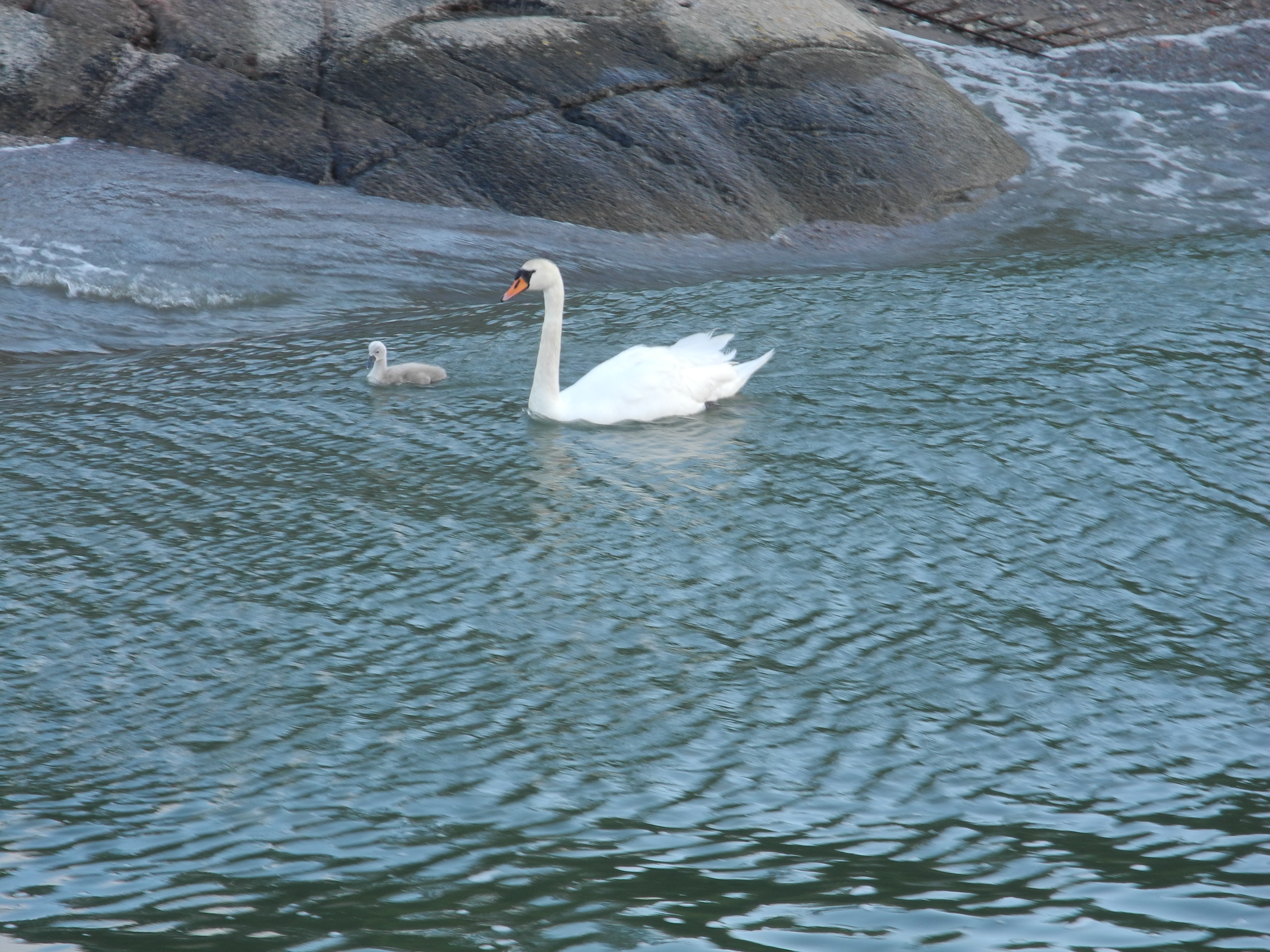
The Swans Close to Ljusterö, Sweden

I like planning and organizing sequences a lot. My freshman year in college, I took a course in BASIC, an old programming language from fairly early in the age of computers. What I remember loving was the flow charts we had to create as the first step in writing code. I loved the crispness and clarity they provided, the specificity of alternatives paths that opened based on yes/no decisions. That a task could be broken down to these exceedingly well-understood steps was both surprising and obvious. I still want to organize life, projects, all kinds of things, around a flowchart. And if I can put date and time and place and person in front of each step, even better.

I started out taking that approach when I finally settled on a trip to Maine next month. I have a basic timeline because I won’t be staying in a single place and had to make some reservations. Somewhere along the way, though, I realized I am a whole lot more comfortable moving through chaos than I used to be, a lot more willing to stay open to what may unfold in totally unexpected ways and places. As I made the decisions to leave most of the 12 days I’ll be in Maine blank, I turned back to a short, beautiful, book by Abraham Heschel called “The Sabbath.”

Heschel draws a distinction I find very helpful between time and space. He makes the argument that our relationship with space has a lot to do with mastery and control—we form and reform and reshape creation; most of our days are spent on those tasks. I don’t think Heschel intends to condemn those days. Certainly, I have known extraordinary joy and wonder on the occasions when I led or worked on a project where, not only were the results as good or better than I had hoped, but the relationships within the team had grown stronger because of the work we did together. Last weekend, I pulled out a recipe handwritten by mom at least 35 years ago, that took me two days to complete. At one point I had 5 bowls I was working with, moving quickly from one to the other. When I plated the dessert at my friend’s house, it felt like I had honored my mama by bringing that Charlotte Russe (the Swedish version) to celebrate two birthdays. I felt such satisfaction on her behalf. A recipe, like a flowchart, had given me a path to that moment and I was grateful.

But Heschel insists that to observing the Sabbath we must stop. Just stop. We cannot allow the next step, the next task, the next item on a to-do list, to hold us hostage. Within the bounds of 24 hours, the Sabbath allows those who observe it to sanctify time, because when we make that full stop, we allow God into our lives in a different way. The Sabbath allows us to “tend to the seeds of eternity planted in our souls,” in Heschel’s words.

Today is the second anniversary of my dad’s death. Stopping often this week to retrace our steps in those last days was probably inevitable. But repeatedly this week, it is another memory that surfaces. In 2012, my dad and I spent almost two weeks in Sweden so my dad could attend a class reunion and celebrate his 85th birthday. It was the height of summer and on our last night in Stockholm, we decided to ride the ferry that goes through the Stockholm archipelago, making many stops where people, going to spend some days in their summer homes, can disembark. We stayed on the ferry all along the route and had a lovely dinner on board. Then at about 9:30 or 10 that night, after feasting our eyes on the beauty that revealed itself all along the path through Baltic waters, we sat on a bench in the twilight of a Swedish summer night.

After a while in silence, my dad started talking. We’d just gone by the island where his parents rented a house in 1937. Already, the rumbles of war could be heard, even out there. But they were still distant enough and my dad was a young enough boy, that those were blissful days of time out of time. It was an exquisitely, heart-breaking-ly, beautiful moment of getting to know my dad as I never had before. I think I got some sense of the meaning of Sabbath as Heschel describes it, sitting on that bench with Dad. Time was sanctified.

My trip to Maine will be different because I will be alone. I have the sense that for Heschel, the Sabbath is deeply communal. My introverted self, who has been intensely engaged in my communal work as a priest, a mom, a wife, a friend, is longing for the open space and time of solitude. I will be able to follow where curiosity and wonder invite me. I have a couple of visits planned, including with my Godchild, whom I am extraordinarily proud of. I look forward to getting to know them as a young adult who has just bought a small market in a town along the coast. I will also blog a fair amount, I suspect. I won’t completely stay away from community.

But I am going to allow this part of the world I don’t know (except to understand it will remind me of Sweden with its granite cliffs facing out to the Atlantic) to tell me new stories. In the words of Parker Palmer, I am going to allow “my life to speak to me.” Sabbath begins, appropriately enough, close to sundown on a Friday, in 3 weeks, when I land in Portland, get my rental car and head out to places I’ve never been.

Hiking Gear

Quest, pilgrimage, sabbath Part II

There is a striking scene towards the end of the movie The Way starring Martin Sheen. A dad who got that most devastating of all calls in the middle of the night, Sheen must travel to France unexpectedly. He is going to pick up the ashes of his somewhat estranged son who died in a freak storm as he started a pilgrimage on the Camino de Santiago (Way of St James). One thing leads to another, and Sheen decides do the pilgrimage, carrying his son’s ashes with him. There are beautiful, transformative moments along the path, filled to the brim with grief, self-discovery, laughter. Finally, he arrives in Santiago and heads to the Cathedral of Santiago de Compostela to participate in the daily Pilgrim’s Mass, replete with medieval majesty and mystery.

One of traditions of the Camino involves getting on your knees for the very last stretch of the journey, as you make your way from the entrance of the church to the foot of a large statue of St. James. Sheen, whose character is a hard-charging lawyer, has been reclaiming his Roman Catholic identity all along the way. In the doorway, he hesitates for a split second and then slowly, carefully, not without difficulty, goes down on his knees to end his pilgrimage as millions of other faithful people have done since the eleventh century. I found that scene very moving, always imagined I would do the same. To me, it’s yet another way in which our bodies can be vessels of grace and give witness to the agency at the heart of all faith. You choose to take those final steps on your knees not because you have to, but because you can, because it is an act of humility, because to me, this is an act of gratitude. I don’t believe a statue is endowed with any special, magical powers. Rather, it is part of the sacramentality that has been so central to my faith: what we can touch, feel, see, smell is able to serve as an outward and visible sign of an inwardly and invisible grace. Even if I never walk the Camino, I will always be able to imagine the awe I’d experience after walking from Porto to Santiago, the joy in my capacity in body, heart, and mind, to go in search of, and find a holy place.

Reflecting on the stretch of time I will have in September, I’ve wondered what a pilgrimage might look like for me in my current, bounded, set of circumstances. When I am willing to practice patience (not often), I find a new possibility usually emerges that cannot replace what had to be let go of, but has its own wonder and meaning—its own holiness.

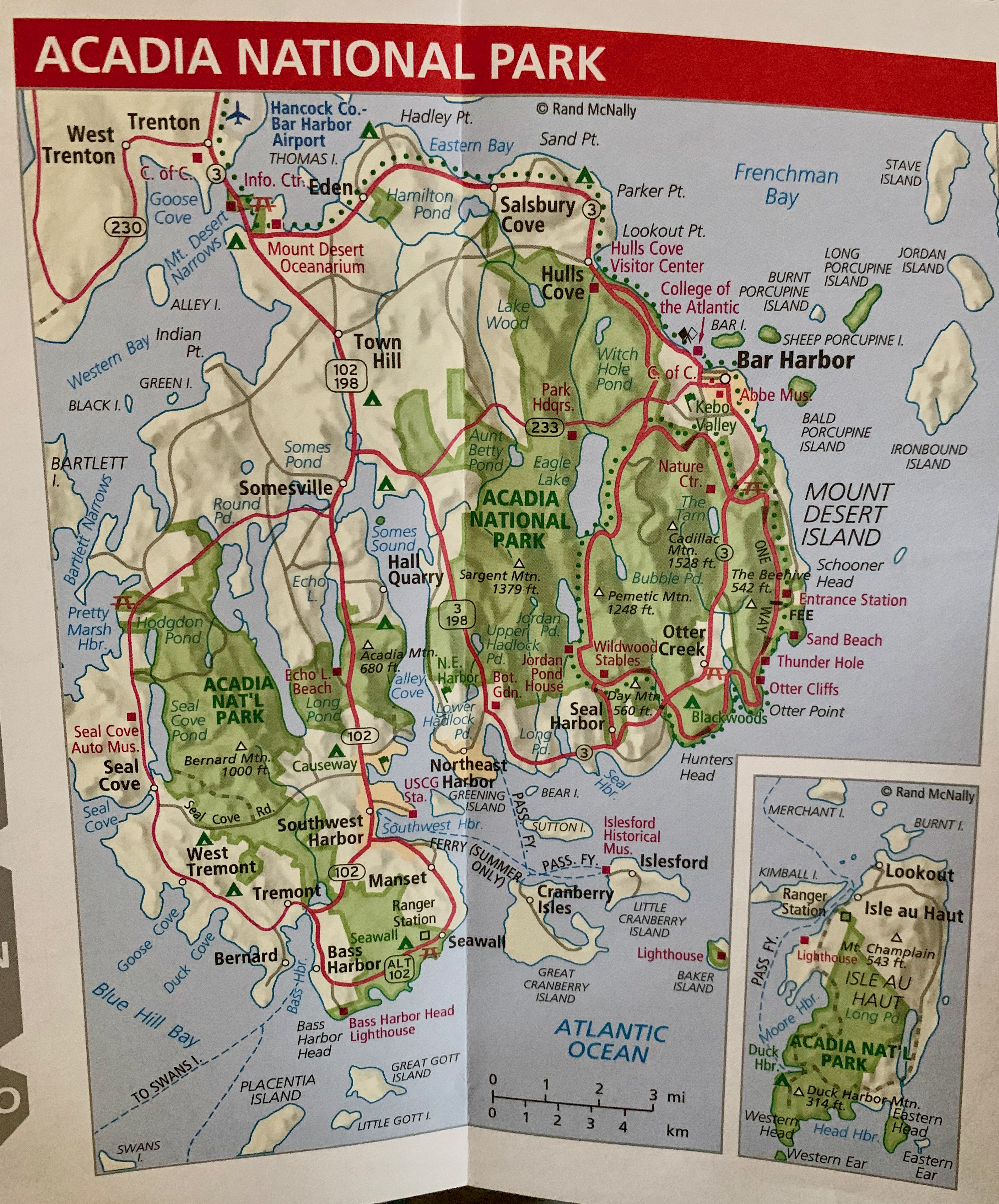
Instead of going to Santiago, I am going to spend most of the last two weeks of the month in Maine. In the strictest sense of the word, this won’t be a pilgrimage. By definition, a pilgrimage is a journey to a shrine or sacred site. That’s not what I’m going to do; I’m not even sure I’ll make it to church at all. I am simply yearning to spend most of those days outside. I am already selecting the trails I will hike, the places where I want to sit on the edge of a cliff, looking out at the same Atlantic as I would have seen had I been on the Camino. I’ll even wave, in case Mary can see me. One day, I hope to be a straight-out tourist: go out to sea to try to see whales. The first time I went on retreat, my friend Robin told me to take a camera to look for God. It’s been advice I’ve followed ever since. I am looking forward to doing lots of photography. I also have a brand-new Moleskine to write in. And I will get to keep silence. Lots of silence. I have a couple of visits planned but I will spend most of my time alone, and I am putting a plan together to go to places where there will not be big tourist crowds. That feels like heaven.

“Lord, you give the great commission” is a well-known hymn in the Episcopal Church. When I took my General Ordination Exam, I had to write an essay about the theology of mission of the hymn. The line that guided my effort to answer that question is at the beginning of the third verse: “Lord, you make the common holy…” That line comes back to me as I consider my time in Maine. There may not be a shrine. I surely will not approach the statue of a saint on my knees to touch it as I raise a prayer at journey’s end. And. I will be on holy ground because all ground is holy and all time can be sanctified. Not the Way of Santiago, but actually, a pilgrimage nonetheless…

Quest, pilgrimage and sabbath, Part I

Me, Circa 1967

For months I went back and forth about my plan for September. Walking one of the routes of “Camino de Santiago,” the web of pilgrimage paths that lead to the city of Santiago de Compostela in Spain, has been a dream of mine for a good 25 years. I was going to take this September to walk the Coastal Portuguese Way; my most wonderful friend M was going to walk with me. I even renamed this blog of mine in honor of that journey. Then, the Omicron wave hit. War broke out in Ukraine. My Dutch brother said, “this is not the time to travel in Europe.” The dissonance between what a pilgrimage is supposed to be, and my own anxiety was too great; in May I cancelled my trip to Portugal and Spain.

For weeks after, I sat with the disappointment. Small alternative plans were made that fell apart. Over and over, I asked myself, “why was this important, what was this all about?” Gradually, I realized this is part of a far larger ‘life project.’ In a sense, it’s a quest, about looking for something specific. A quest I’ve been on for most of my life, to find peace and acceptance of myself as flesh, and bone, and blood.

Until around my mid-twenties, my experience of myself was filled with considerable pain, physically, but even more so, in heart and mind and spirit. The realities surrounding my left hip—its malformation, all the surgeries, pins through my bone that were tightened daily for weeks to force my femur to grow (necessary torture so I could have reconstructive surgery), made pain a constant. To this day, just the thought of getting blood drawn sends my heart racing; there are so many memories of nurses digging to find a new vein for an IV in the arm of a very little girl. Makes my skin crawl.

As I moved into adolescence, this split between the reality of what it meant to be this particular body and what seemed reasonable to hope for about myself got more difficult. I began to struggle with my weight. I had to get glasses. Those hideous orthopedic shoes I’ve written about before. It’s not that there weren’t good times and privilege; absolutely there were. It’s just that, at a time when you are constantly comparing yourself, I became more and more alienated and filled with despair by a body that left me feeling isolated, that failed me as I tried to find a place in the world where I fit. For so many of those years, I lived in my head and in the books that opened worlds I could inhabit free of all that was wrong with me.

Then, the day finally came when l fell in love, madly, deeply, passionately. After a particularly wonderful day with my love, I lay in bed that night thinking, this must be what it is like to be a ballerina when she is able to be more true to dance, move more gracefully, than she ever has before. Who I had been that day, what I had been able to offer without shame or self-consciousness, was only possible in this particular body, this one and no other. I had done everything I could to leave my body in any way I could, and the only hope for a meaningful life was to find my way back to it. Love allowed me to discover there was, in fact, a way back.

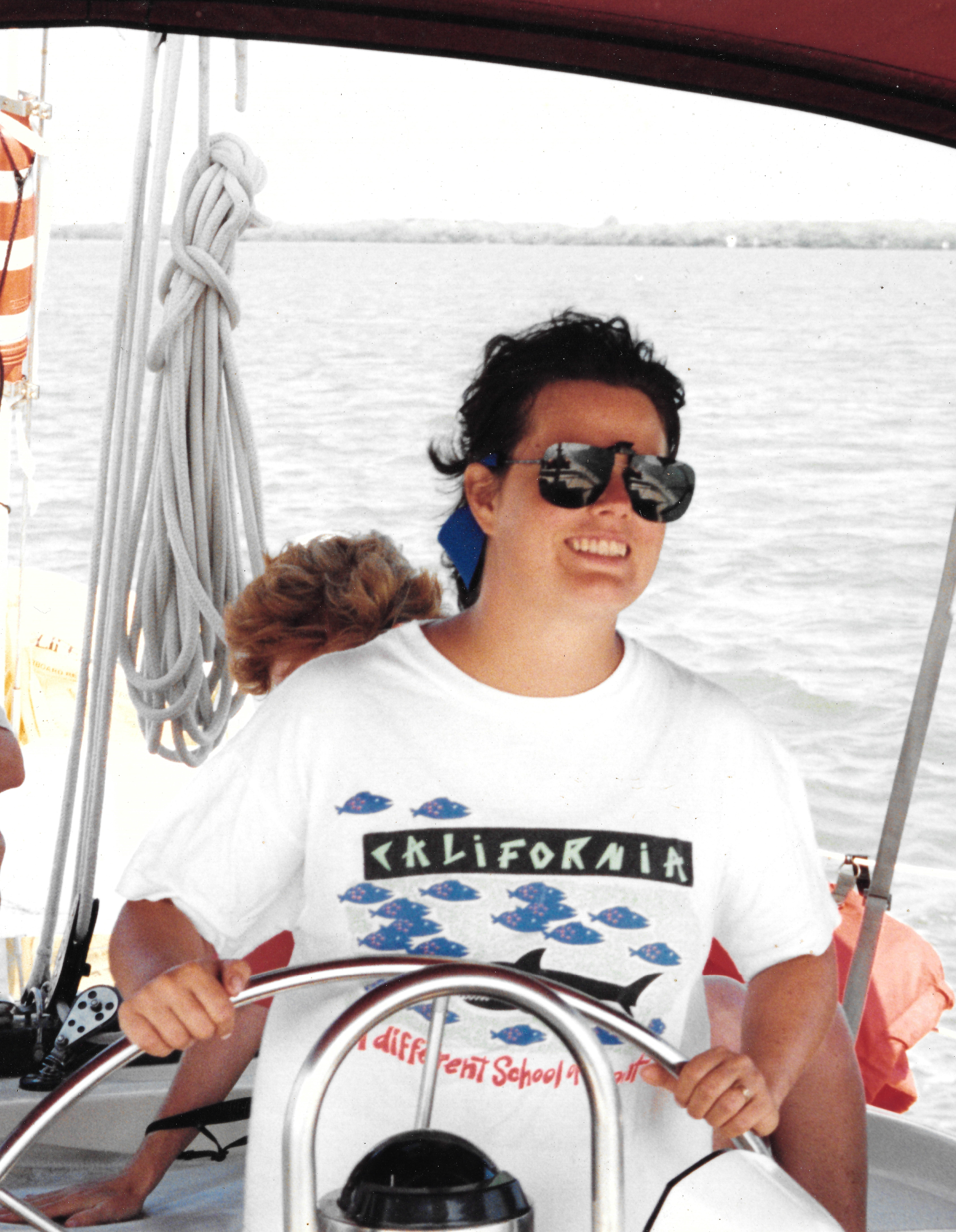
I reached a different milestone the year Sherod began to work on his DMin in Chicago. We lived in Memphis at the time, and he’d be gone for 6 weeks that summer. I was determined not to be a clingy, needy wife, even if we’d never been apart for so long. I asked myself what I might do to be true to myself in the meantime. I am the granddaughter of a sailor and sea captain. I don’t know why I thought that mattered but it seemed reason enough to enroll in a 10-day sailing class by taught by women for women, on the west coast of Florida. I think the picture that follows says it all…

Me, Circa 1967

The next big step came with my mother’s death. For a number of reasons, I began to walk every evening. At first I went to the end of the street we lived on. I kept pushing though, so by the time Sherod and I left Fort Lauderdale, I was walking 6 or so miles every night, and had completed a walking half-marathon that was part of the Mercedes Benz Marathon in Birmingham. I got strong enough (and brave enough) to go zip-lining through the rain forest in Panamá, on a visit to see my dad.

Alto Volcán, Panamá 2012

In 2013, also took a 30 day sabbatical/silent retreat that allowed me to do magnificent hiking around Lake Tahoe. Each part of the quest helped me discover something new, usually a gift of being myself in my body, that pulled me deeper into hope and joy.

Tahoe, 2013

Then, shortly after I returned from my retreat in Tahoe , life as I had been carefully building it, unraveled. The details are still painful to consider but on June 20, 2014, Sherod and I began the move to Alabama. As we pulled out of Fort Lauderdale, I remember seriously wondering if I would be able to make it through this move, started feeling like I would end up crushed beyond recognition.

Sherod stayed until the movers unloaded our household goods in our new home in Lowndesboro but he still had to finish up his pastorate in Fort Lauderdale. He headed back south and then, I was on my own for almost 3 months. After Sherod left, I started getting to know the 4 acres of our small farm/homestead and realized it was up to me to make sure the garden around our house and our two pastures did not grow wild beyond all reason. All we had was a push mower and for those 12 weeks, when I wasn’t busy with my part-time job, I mowed. I mean, I mowed a lot. Most days, I cried as I went back and forth from one end of the property to the other. At night, I’d go to bed so exhausted I was asleep in less than 5 minutes; it was good, restful, renewing, sleep.

Having a body able to do the hard work of mowing through an Alabama summer gave me a way to grieve what needed to be grieved, ensured bitterness and despair did not take hold. I found myself in a healthier space than I’d ever had before, unafraid to look at what had happened, not just what others had done and said, but also my own failures. My tears were a baptism of repentance and in equal measure, of forgiveness. I was set free to find my way in a new version of life, the kind I think is meant in the Gospel of John when Jesus said, “I have come that you might have life, and life abundant.”

These last years have been about navigating through a world turned upside down, still looking for, and sometimes finding, pieces of myself I did not want to accept, tried to abandon, or at least ignored. I can’t imagine I’m that different from anybody else. I’m going to take that month off, come September 1, because the quest does continue. What I’ve also figured out is this time will also be about pilgrimage and sabbath. (to be continued)

Meee, meee, meee, meh

Such Is the Life on a Farm

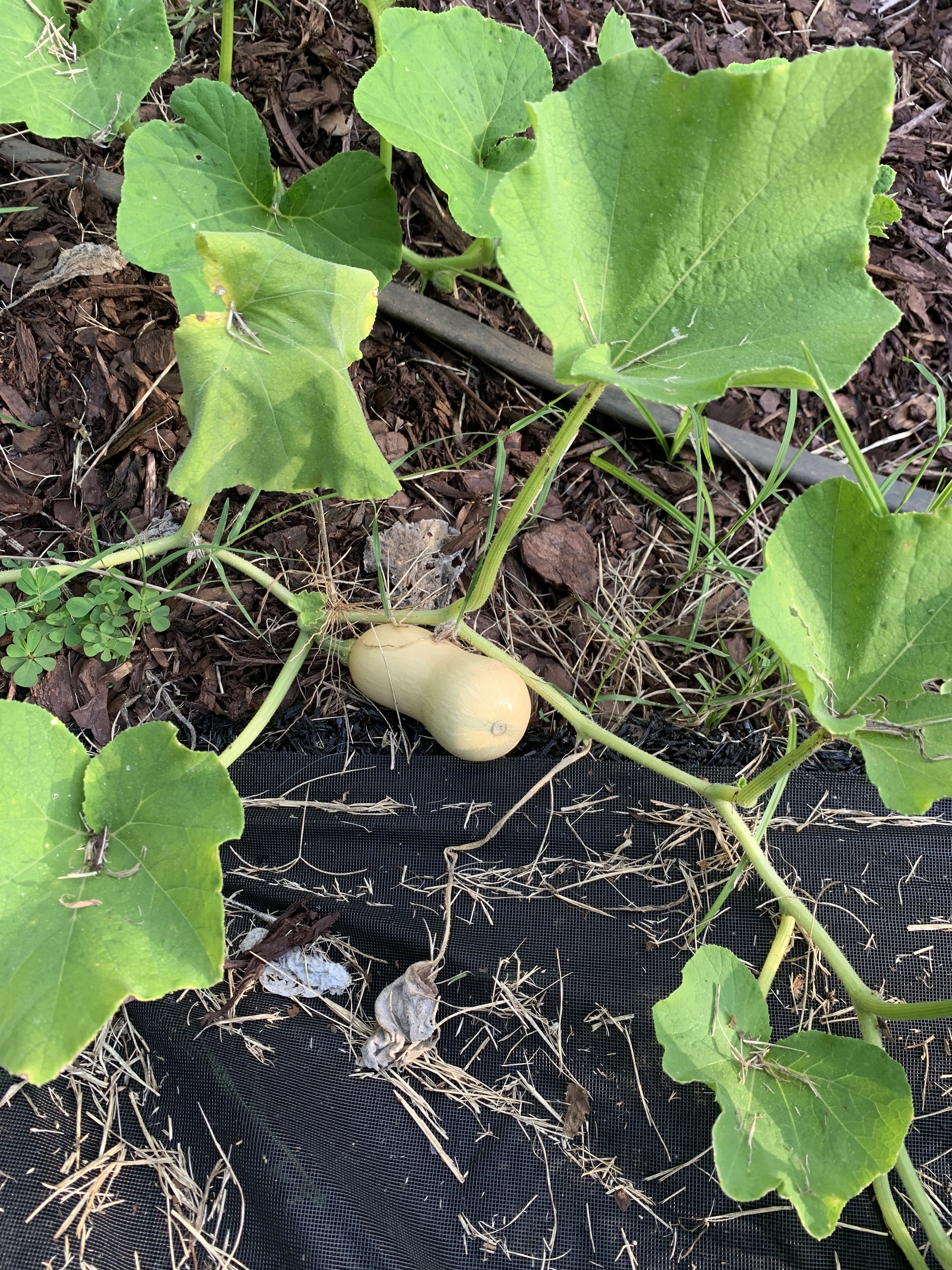
I was thrilled late in the spring when a little squash followed a flower on one of the stems of the plant that had started as a seed in the palm of my hand. I watched it grow and imagined the butternut squash soup I’d make in the fall-one of my most favorite meals. Except that after a bit, it quit growing. Since this was my first go-round with this kind of squash I tried patience. Today, I noticed the stem it was on had totally dried and shriveled, so I picked it. A teeny tiny butternut squash, suffering from failure to thrive. My glasses provided a sense of the size of my squash. It’s cute. It’s the right color. It’s just not enough for a demi-tasse of soup.

I have some more research to do (I welcome any and all suggestions). Next spring, I try again.

Squeeeeeee

First Ever Cantaloupe. From My Garden

I despair. Plain and simple. I despair watching the world burn. In these strange, apocalyptic times when all our denial, our willful ignorance, the thousand and one ways we’ve minimized the reality of Climate Change are now visible to the naked eye. Yet, lightning bugs still fill the yard as dusk deepens into night. The hummingbirds are already eating voraciously; in another month to six weeks they will start their annual migration to South America. I looked up in one of the trees in our courtyard at church and saw a beautiful young hawk, sitting on a branch look bewildered, still figuring out this business of being a predator. And when I walked out to the compost bin with the seeds and skins of all 24 lbs of tomatoes I used to make a dozen pints of tomato sauce, I stopped to check my cantaloupe. I had read one of these melons is ready for picking if you give a gentle tug and it comes right off the vine. I tried it.

Yes. Yes it does. Tomorrow for breakfast I will feast on this beautiful gift of the earth.

This…

Consolation

It’s been a hard couple of weeks at work. I am pretty wiped out. After I got home from work and the worst of the day’s heat had begun to dissipate, I did that thing of heading to my garden to check on my babies, my pride and joy.

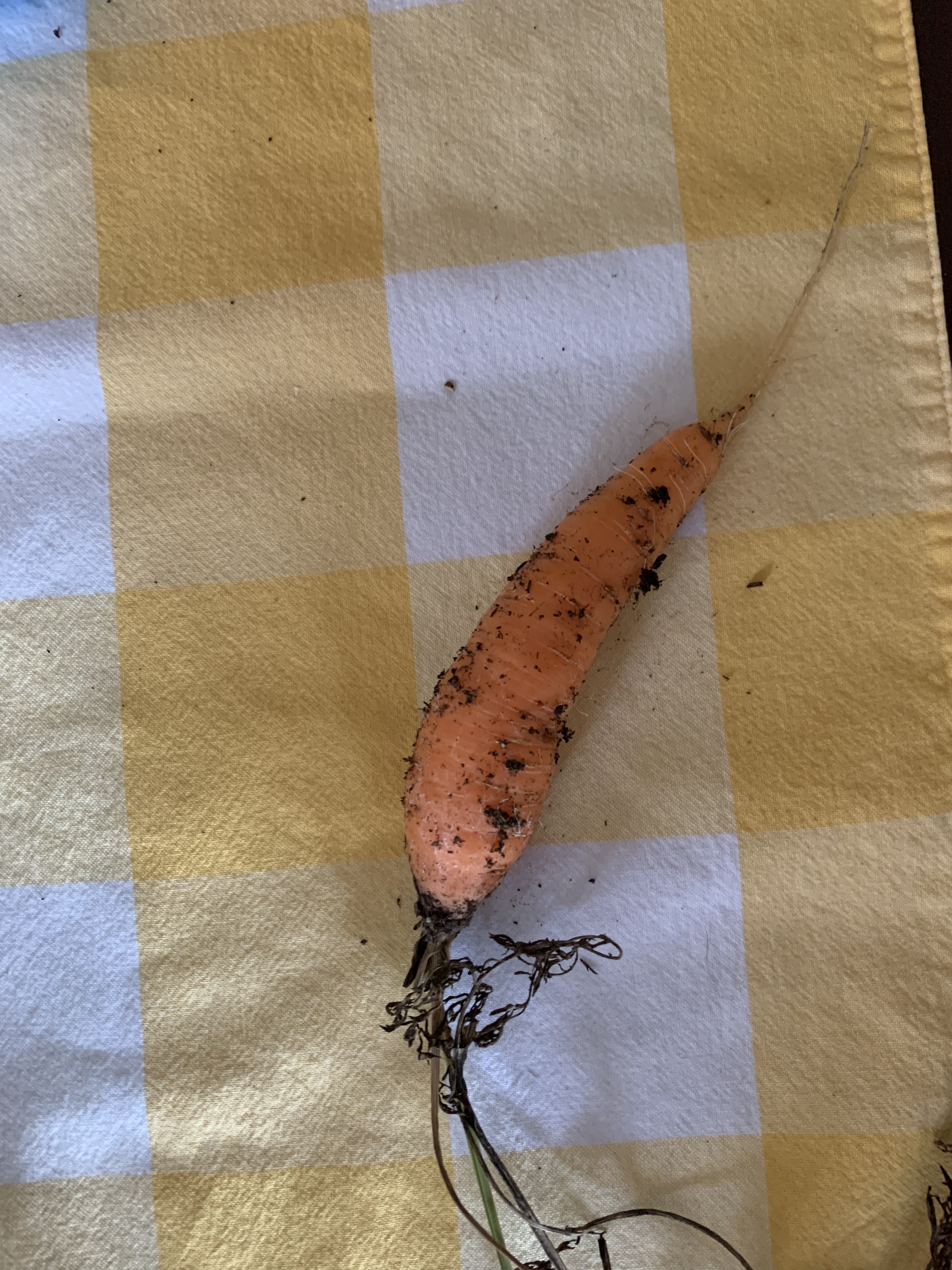
First, I noticed some orange poking out from the ground. I pulled a bit and there it was: the first carrot I was able to harvest. In March, I had scattered little carrot seeds in a special seeding medium. About 5 days later, watched seedlings emerge. Six weeks later, I carefully planted the ones that had grown well in the ground. I was not confident at all that there’d be anything to show for that effort–we have had no luck with carrots before. This one is cleaned and ready to go into the salad I will savor tomorrow night when the Mallowman and I celebrate our anniversary.

My First “Seed to Table” Carrot

Then, I checked on three babies I’m holding by breath for, as they continue to grow. They’ve got plenty of maturing left ahead and I know how unpredictable the weather has become. Growing things does not mean there’s any guarantee. Nonetheless, every day they continue to do well is a good day.

Two Baby Cantaloupes
A Baby Butternut Squash

Some of my planting has not gone so well. A fennel plant didn’t make it. An orange bell pepper plant hasn’t died but it suffers from failure to thrive. Of course, this is what the garden is all about and tonight, tired, hollowed out as I feel, that handful of produce I’ve been responsible for and has been doing well brings real consolation. And promise.

Meanwhile, back at the farm…

Sunflowers and Blessed Rain

Our two horse friends, Gus and Jack, no longer live with us. Their humans decided they were finally at an age where tending to horses was simply too tough on them and a young family with children would welcome the horses with open arms. It was a sad day when they were loaded into their trailer and headed down the road to a new life. My dad would have been heartbroken and so was I, not just for my own self, but on behalf of my dad who loved those horses dearly.

Their departure has brought a lot of changes–M, their person, and we, had worked out how to share the pole barn so the two horses could have a paddock of sorts, where they were fed, where the farrier could tend to their hooves and the vet could also work with them, but especially Jack, who suffers from equine COPD. Gates and partitions, equipment and hay are all gone now. The little space where M kept the feed and other supplies for Jack and Gus is now empty and we are looking at how to covert it into a larger, safer chicken coop and yard for the our girls, who are aging now, to have more space to enjoy the last years of their lives. We are also looking at getting maybe as many as 10-12 chickens next spring–though no rooster!!!

The Future Palace of the Mighty Mother Cluckers???

And of course, the fields on either side of the house are empty now. We’re planning to allow our current vegetable patch to lie fallow next year and put down our spring garden in the east pasture. I’m squirreling away money so my part can have raised beds–these knees and hips do not appreciate a bunch of kneeling to weed! There’s a lot of space to take care of (about 3 acres) and I keep telling Sherod some pygmy goats, a mean white goose, and a donkey, would offer yet more entertainment and keep the fields from getting overgrown. I have visions of little ones wearing PJ’s like these on Christmas morning!

Can’t You Just See It On Christmas Day?

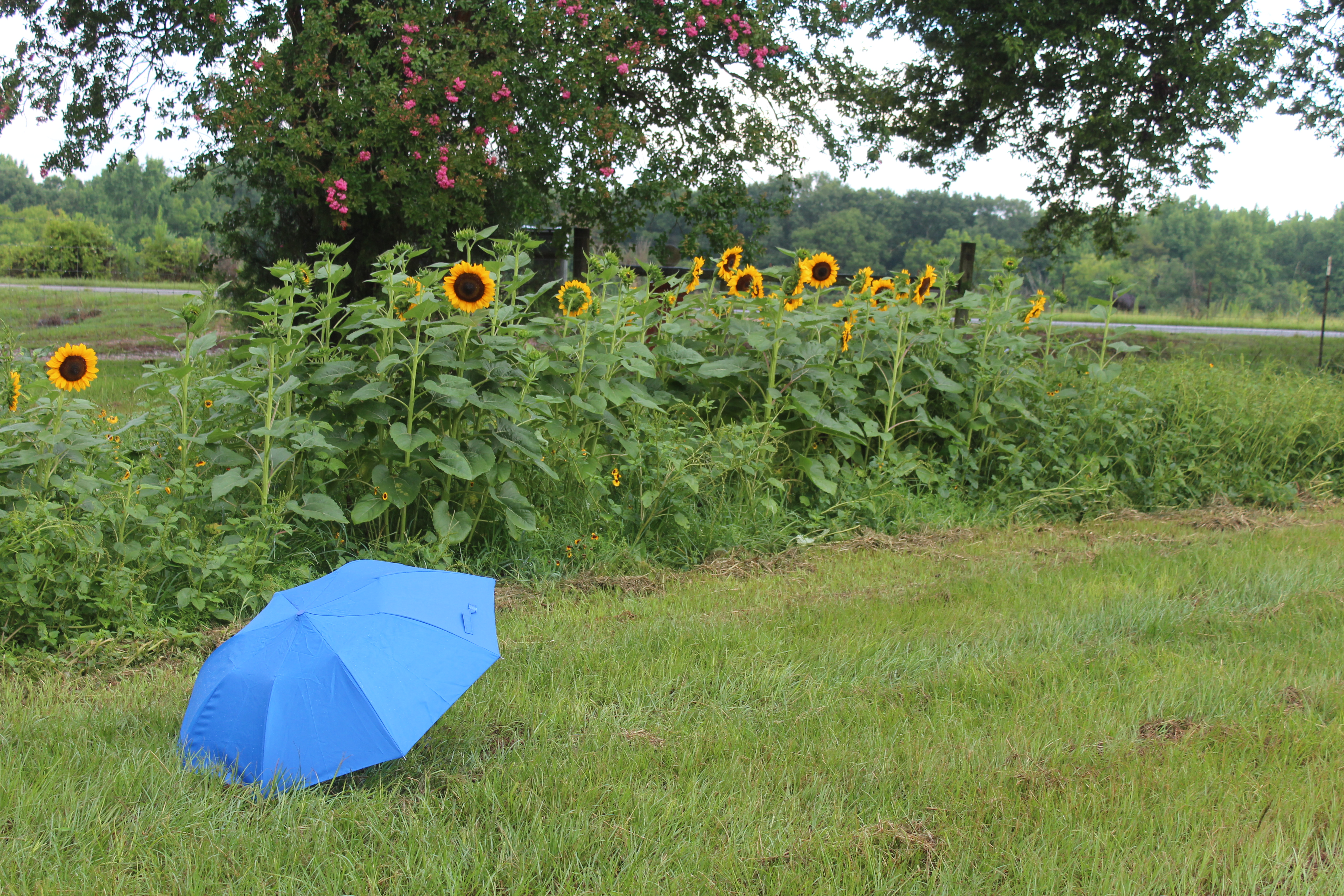
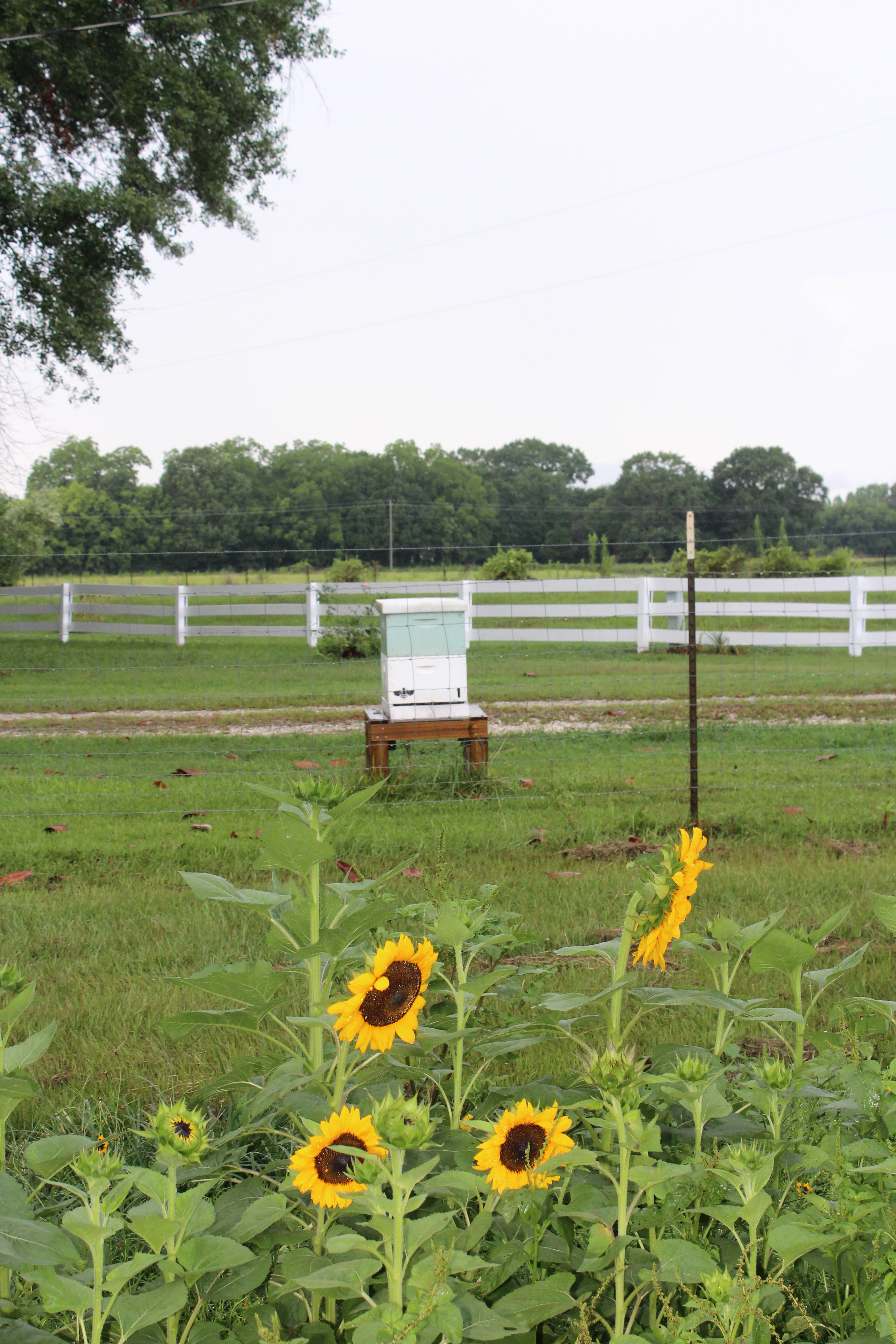
All that is fun to dream about and in the meantime, Sherod plowed a swath of land close to the house in late May and scattered a bunch of wild and sunflower seeds. They are flowering now and the patch almost shakes with the buzzing of our bees early in the morning. This picture captures a tiny bit of the beauty they have brought to our home.

Sunflowers and the Bee Condo Minus the Top Two Levels

And then, there are the bees. Sometime they annoy the heck out of me. I go by the hive on my way to take garbage out to our dumpster. I have been seen running like the haints are after me when the bees are upset and cranky and decide to dive bomb me.

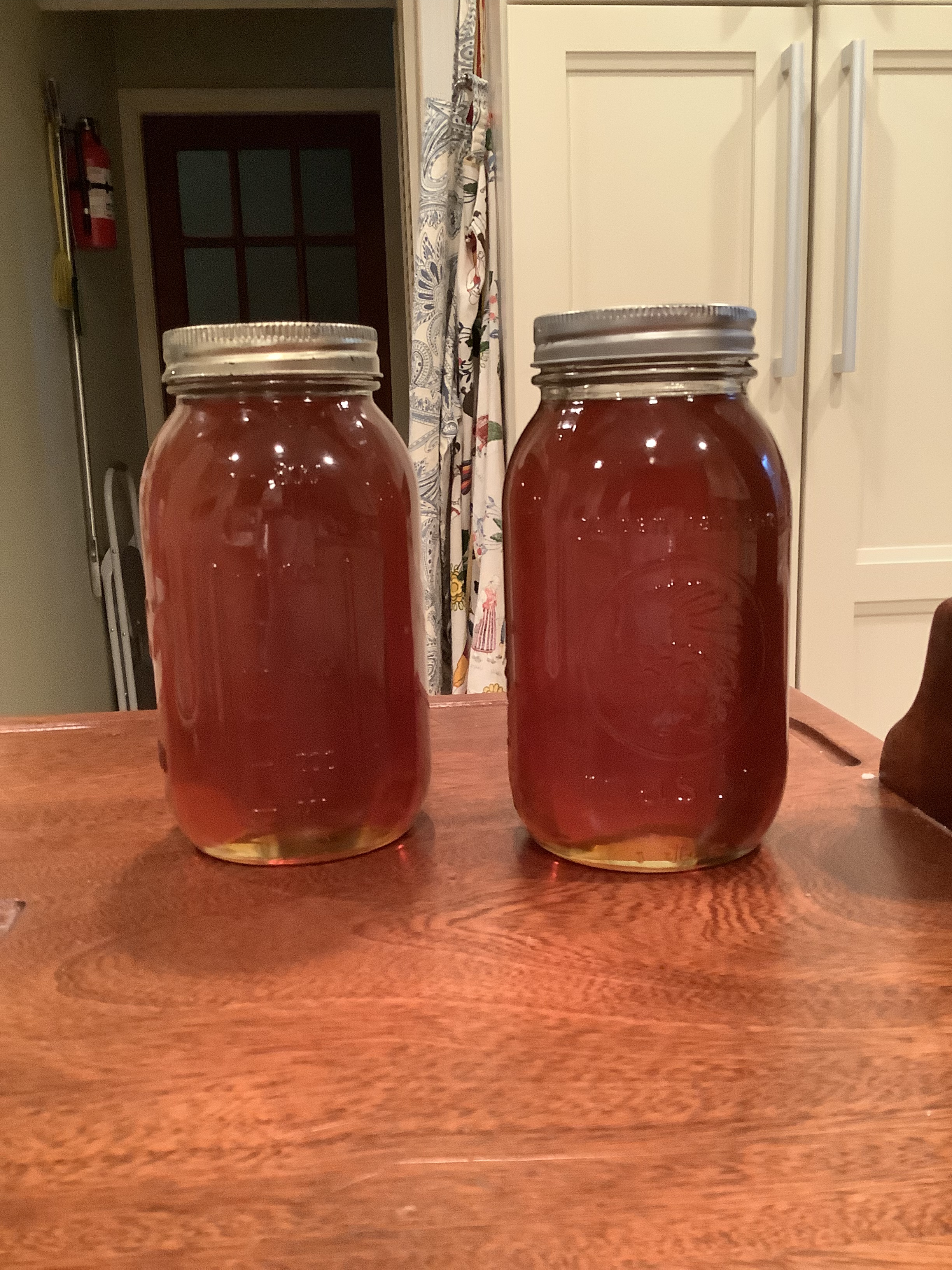
The hive is a collaborative venture between the Spouseman and two neighbors and friends.Today, they gathered around a centrifuge to collect the first honey. The colony has thrived on our land for over a year now and the honeycombs were rich, rich, rich with honey. There’s plenty left and more will be produced during the rest of the summer and early fall to keep the colony going in the colder months.

The three guys share the honey in equal parts and we got the first installment of our allotment this afternoon. Another moment, even in the midst of the bleakness of most days now, when “my cup runneth over.”

The Way the World Could Be

If you have spent any time at Camp McDowell in Nauvoo, AL, you have heard this phrase: The way the world could be. What started as a typical Episcopal summer camp has evolved into a lot more over time. It became the diocesan conference center, and then emerged as the place where the Alabama Folk School resides. A sustainable, organic farm came into being, along with an environmental learning center, a preschool for the children from Winston County that live close by.  This is an impoverished county at the very end of the Appalachian Mountains, in coal country, so that program was a true gift to the area.

And then, there’s Bethany Village. A complex of lodges that can sleep up to 22 people each, along with summer-camp style cabins, an enormous gathering space called “Doug Carpenter Hall,” and other charming gathering spaces. “The Doug” is like an extraordinarily beautiful barn. None of that is so different or remarkable for any diocesan camp and conference center except for the fact that Bethany Village was built to be as welcoming and inclusive as possible for people with all different abilities and needs. Whether it’s about canoeing, or swimming, or getting in and out of the shower with no fuss, there’s a place for you, full stop.

For the past two weeks, Bethany Village has hosted a set of summer camp sessions that open space for fragile people with varying abilities to experience the joys and mosquito bites (🤪) of a summer camp program. Under the direction of McDowell staff, I was the co-lead member of a program team that served a combination of regularly and differently abled children in the 4-8th grade. We had 21 one young ‘uns, 11 of them, what you’d call ‘mainstream.’ There were a number of Downs Syndrome children, a couple with autism and a few others with additional vulnerabilities.  We also had 26 “Camper Buddies,”10th-12th graders who are asked to wrap themselves around the campers to provide the care, assistance, and support our campers need to thrive at camp. I watched the camper buddies grow in love and devotion for their younger buddies, and it was beautiful.

On the last night of the session, we did what almost every session at Camp McDowell does: we had a talent show. It began with F., who had been rehearsing with her mom before camp to sing “Amazing Grace” at the talent show. She decided that was far too tame and ended up belting out “Hello” by Adele instead. She brought the house down. The raucous cheering and standing ovation were so loud it made my ears hurt. Another act brought the camp staff person in charge and a petite, peppy young camper buddy together for a burp throw-down. The duration and strength of burping that young woman was capable of left us all slack-jawed and then on the floor laughing. Only at camp.

But it was the most fragile and indomitable of the campers whose act was transcendent.  This young person walks within inches of the line between life and death all the time. Her needs are so significant we ask a parent to be along for the session in case A has a medical emergency. There is so much our culture would describe as “wrong” with her, including Downs Syndrome and several other health issues. She is nonverbal and requires help walking. And she is a scrappy, determined survivor of the worst health issues can throw at us.

Before her performance, the MC of the talent show asked the audience that was growing noisier and rowdier by the moment, to quiet down. He announced A. would be performing and showed us how to raise our arms and wave our hands to demonstrate our appreciation for her performance, rather than hoot and holler and whistle.  Everyone understood. All the campers, all the buddies, all the adults. The space went so quiet you could hear a pin drop. Then, A’s two camper buddies brought her out and “Let it Go” from Frozen began to play.  One of the camper buddies held the microphone up for A and we were gifted with a series of grunts and groans and yowls—no other way to describe her vocalizations—and there wasn’t a dry eye among the older camper buddies and adults.  

Her mom got to see her daughter do her own version of belting out a song with glee. Her mom got to see a crowd of young people (the very ones who are of an age where it is so easy to be callous and indifferent) spellbound by this one young girl who, every day, defies the odds stacked against her, who was now transcending and transforming those odds, by getting to be nothing more than a kid at camp.  

For a number of us, there was an almost unbearable tension and paradox as we watched the talent show continue to unfold in all its glory.  The words, “the way the world could be” were made flesh in the most beautiful way imaginable. And right before the show started, word had started trickling in about the shooting at St. Stephen’s in Birmingham, we heard at least one person was dead. Some of our campers and camper buddies are members there. Every single one of us knew at least one person at St. Stephen’s. After the talent show and late into the night, my fellow clergy person, a couple of other adults, and I, were up listening to, praying with, trying to remind our camper buddies of God’s unending efforts to heal all that is broken and battered in our world. 

Then, for most of the rest of the night, I lay in bed asking myself over and over again, “What kind of world are we sending these amazing and beautiful young people back into? What have we done to our children’s world…”

How It Is

This Daughter Of My Heart

Another morning began in the usual way for me–coffee, out to check the pool (one hapless little frog needed to get pulled out of the water), then to see how my vegetables are growing. My eggplant bushes are flowering quite profusely and one has two babies on it, one of the cantaloupe plants is flowering too, and my pride and joy today: there is a teeny-tiny butternut squash that looks healthy and strong on its vine.

I was up earlier than usual and the house was still quiet so I came back in to read the online NYTimes. One article caught my eye; an article about parents dealing with Sabrina, a young girl on the autism spectrum. You can read the article here. I hope you will. Every muscle in my body clenched up as I read the article. I didn’t exactly have a flashback but, dear God, I knew what was being described down to the core of my being.

There is a ‘severe mercy’ for parents like the Benedicts, like Sherod and me. We discover that there is nothing, I mean nothing, our child can do that can separate him, her, they, from our love. In our experience, love was not enough. When we finally found a behavior therapist who understood what María actually needed, she explained we simply had to quit trying to discuss her episodes of out of control rage with our girl. Insight would not lead to behavior changes. Whatever understanding she might gain from us trying to talk about the rage reinforced the behaviors we so dreaded. Once she had de-escalated after these episodes, we needed to learn to go on as if nothing had happened, even if she had left us, or herself, bleeding, bruised, and overwhelmed. The only way I was able to follow that guidance was to let go–of my fear, my anger, my despair, my very primitive instinct to strike back. This was a kind of radical forgiveness I could never, ever have learned if my daughter hadn’t been entrusted to my care.

Carol, the behavior therapist who worked with us, helped us open space for María to live in our home until she was about to turn 16. That NYT article paints the picture pretty thoroughly–adolescence on steroids is not a pretty thing. And then, one day, Carol and the rest of our girl’s support team sat us down. María was now too strong, she was becoming increasingly cunning, she was at high risk for running away, and the SIB (self-injurious behavior) was becoming unmanageable. When María turned 16 a few weeks later, she would qualify for placement in BARC Housing–an intermediate care facility in Davie, a few miles from our home. ICFs are actually nursing homes. This one was geared to individuals with cognitive and behavioral challenges. Providentially, a bed had opened up at BARC, which in and of itself was sort-of miraculous. If memory serves me correctly, at the time there were only 1000 beds in ICFs in all of Florida for people with all the challenges María was burdened with–and in that year, Florida’s population was close to 19 million. Think about that ratio!

In the very last week before she was able to move to BARC, our girl spun out of control worse than ever, and on the advice of her team, we Baker-acted her, had her admitted to a psych unit as a stop-gap measure while the last pieces were put in place for her move. On June 5th, 10 years ago, our girl was taken to BARC house from the hospital. That day was especially anguishing because it was the first anniversary of my mom’s death. And along with the anguish and grief, there was a relief I felt more than a little guilty about. For the first time in over a decade, Sherod, María and I were all safe.

Every few years, we tremble. A note will go out to the families of BARC residents to ask for help to plead with the state government. All across this country, the push has been to move to a model of ‘community based care.’ On paper, it sounds fabulous; you and your loved one will be wrapped in all the support necessary so everyone can thrive. You’ll get help all the way from folks to cut your loved one’s toenails to behavior specialists, to highly trained home assistance. But all that costs money. A lot of money. And state legislatures all across the country have cut, and cut, and cut, funding so you end up being on endless waiting lists just to get the most basic services; 5 or 10 year waiting lists are not unusual. When Florida’s legislature moves in the direction of cutting funding to ICFs, it is a matter of life and death for our girl and for most, if not all, the residents in need of the care she gets at BARC. So we plead, we ask friends, neighbors, anyone and everyone we can think of, to help us lobby so those cuts won’t go through. To date, our efforts have worked. That in no way reassures me that cuts won’t come that will jeopardize the sustainability ICFs

I share all this because it falls under the umbrella of “Mental Health.” There simply are no words to describe the white-hot rage I have felt since last Tuesday, hearing so many politicians in Texas and in the Senate, talk about the Uvalde massacre in terms of “issues of Mental Health” that besieged “one evil young man.” The ones who squawk the loudest, trying to frame what happened in terms of a single individual with mental health issues are the exact same ones who have made it brutally difficult for our most vulnerable to get the help and support they need. In that regard, those politicians have as much or more blood on their hands as Salvador Ramos.

If you read this blog post, I hope you will consider sharing it with others. Even more, I hope you will read and share the NYT link with others. I know we don’t, and I suspect the Benedicts don’t, ask for sympathy or pity. Rather, I hope our story and theirs might help someone see the kinds of hell-scapes that exist around mental health in this country. It will take a lot of us for asking more of our elected officials for anything to change.

The Parable of the Pear Tree

In the autumn of 2014, Sherod and I had just finished moving to Lowndesboro. The last moving boxes had been unpacked, the renovations in our house were almost done and we were expecting Sherod’s son and his family, along with our girl María, to come for Thanksgiving. We were also getting our minds around the opportunities for gardening and growing our own food, giddy with anticipation. 

One of the first things the Mallowman did was buy some very young saplings: three pear trees, three peach trees. We fenced in the back third of the back yard and began to get that space ready for spring planting. The 6 saplings went into the ground in a single row. There was already a fig tree growing close by, three blueberry bushes that have been faithful in giving fruit each year and a scuppernong vine. A couple of years after we planted the saplings, Sherod also planted a blackberry bush that has now flourished so we have 3 vines growing all along the fence. I think we will be able to start picking the blackberries next week and the harvest promises to be massive.

It took a while—about 3 years—for our peach trees to start producing fruit, though before that, they did have blossoms on them each year. A trip up to one of my favorite places in Alabama, Petals from the Past, meant we came home equipped to provide better care for our peach trees and over the next couple of years, we had a small crop of peaches from one of the trees. Then, two of them produced sweet, delicious fruit—the kind you eat fresh off the tree, with peach juice running down your face and you just don’t care because the fruit is so delicious.  This year, all three trees are loaded, so much so that Sherod has had to cull them all. Fewer fruit have more intense peach flavor, are healthier and bigger.  At the Curb Market last Saturday, the baskets of peaches I used to buy for about $8-10 now cost 15 or 16 dollars and I am grateful that we will be able to provide for ourselves this year.

And then, there were the three pear trees. They grew more slowly. And year after year, nothing. Not even a single blossom on any of them. No sign that they’d ever bear fruit. Sherod and I took to walking by them to issue a quick reminder:  ‘y’all remember the fig tree in the Gospel? Y’all remember that a tree that doesn’t bear fruit is cut down and thrown in the fire? Just sayin’…”  For the last 3 years, every year, Sherod has announced the end is near, he is about to cut down those danged trees.  

Early this spring, one morning Sherod called me out to the garden. We stood looking up at the middle of the three pear trees, amazed and thrilled. There were blossoms on it. And then, after the blossoms had dried, teeny tiny little pears. There aren’t many. Of those, quite a few show signs that insects have had a feast. But there are maybe a dozen that are perfectly pear shaped, with just a small blush of red, that keep growing and growing.  Pear harvest usually happens in August and September. There’s no telling whether or not these beautiful little fruit will be good for picking. I can’t feel bad if critters that need them get to them first. I don’t know if we will get to feel that special joy we always feel as we feast on food we’ve grown ourselves. But that doesn’t matter.

One of the laws of physics says “If an object A exerts a force on object B, then object B must exert a force of equal magnitude and opposite direction back on object A.” I wonder if for every parable of woe, there might be an equal and opposite parable to be considered. If so, the message for today is this:

The parable of the pear tree.

Once there were pear trees that yielded no fruit. For years and years, they were tended carefully, they had been planted in rich soil, they grew tall and slender and beautiful but yielded no fruit. The farmers grew weary of all that tending with nothing to show for it. They threatened to cut the trees down. They fumed sometimes. And yet. And yet there was something that hesitated, at the thought of simply destroying a living being that had beauty all its own, even if it bore no fruit. It wasn’t necessarily grace–perhaps just inertia–that kept those fruit trees alive, but the trees bore another fruit it took a while for the farmers to see. The trees showed the farmers that along with care and all the other things they did for them, the trees needed patience. An abundance of patience. Patience. A gift of the Spirit. So many second chances, we lost count of how many. But enough that at least one finally bore the fruit we so wanted. In the end, isn’t that the truest truth about the one we call our ‘God of infinite love and mercy’…