Writer Gonna Write

I’ve been on Facebook for a bunch of years now. Around 2011, Facebook became a ‘portal’ for my efforts to write—a quick and easy way to point people to the blog I’ve kept for 6 years now. It has also been an incredible tool to reconnect with people I had completely lost touch with. Perhaps the moment of greatest Facebook glory came in 2012 or so, when I went to a mini high school class reunion in Fort Lauderdale; that would never have happened without Facebook. I have gotten to read amazing pieces, learned a whole heck of a lot and made new friends through this social media giant. All those things make me grateful.

Today, a post of mine got too close to doing harm and sowing division I had not intended. I took the post offline and realized, this just isn’t how I want to do things. I will continue writing on my blog (www.revrosa.org) about once a week. It’s a blog folks can subscribe to if they want to keep track of my musings, for what they’re worth. I won’t, however, link any more blog posts to my FB account. I’m not completely dropping out either; I will check FB about once a week as well. I belong to a couple of groups that are really important to me and I can see where, from time to time, I might send someone a PM. Now though, the work I have is to  keep writing my book. Life is short and I hope to practice more kindness and truth. There are better places to do that than Facebook.

So, Another Yes

dscn3299

Earlier this afternoon, I submitted my application for another summer writing workshop at Collegeville. This one is a continuation of the workshop with Lauren Winner I got to participate in last year. The title for the workshop she’ll lead in June is Revision, Christian Spirituality and the Writing Life. The focus of this one is the painstaking, less glamorous and yet, profoundly spiritual work of trying again, then again, and then one more time,to get closer to what the writer has intended to write so the words really shine, really illuminate, really draw the reader onward in pilgrimage.

Hitting the send button, I felt the same trepidation that made it almost impossible for me to complete my application last year. I am as insecure as ever, though now I am doing more to overcome the nasty little voices of ‘no’. I have been able to achieve some clarity and peace about the low-residency MFA program Lauren encouraged me to consider as part of a move towards greater depth and professionalism in my writing.  This year I have learned to say out loud that writing is an essential part of my vocation. I have also come to see that the bottom line for now is, I can’t start on that MFA. Maria still has enormous needs. I see my dad’s fragility daily, and I have learned I can’t anticipate when he will need more of my time and attention. Work is endlessly surprising and there aren’t enough hours in the day to do the work I want and need to do to honor and serve a community that’s put their faith in me as a member of the leadership team. And most of all: the time I have with my squirrel-whispering guy is beyond precious to me. I don’t take it for granted.

So, I am not jumping into an MFA. What I am doing is finding other ways to sharpen my skills and become a better writer. I have found a person who is well prepared to serve as a writing coach and does so incisively and with love. I’m putting together the reading list of a Creative Writing MFA program and I will work through it on my own time table. I’m pushing myself to keep writing even when it seems those shitty little negative voices scream louder when I get closer to breaking through another barrier to luminescence, which is what I aspire to, in my writing.

Like last year, I have no guarantees. All the workshops at Collegeville are rather fiercely competitive.   Now though, I’ve been, I’ve seen just how much I received because I kept taking the risk of rejection. I will keep writing, while I wait to hear, sometime in March, if there will be a place for me this year. And in the meantime, I know, having also gotten their gentle no in the past, how life and writing will go on. It’s a whole string of yeses of my own that now ground my work.

This is the way I have to begin a new year, “filled with truth and grace” as the prologue to John promised once again on Christmas Day.

Then There Was Rocky

When I woke up this morning, there was a message that had come in late last night.  A neighbor’s daughter’s cat had gotten a baby flying squirrel. At first, Kelli thought the end was near but the little one had rallied. I checked in with her after I read the message and heard he was still alive.  Baby squirrel has now come to join our menagerie and is comfortably settled in Mama Sherod’s pocket. I am waiting for the roads to get a little safer (had us some freezing rain/sleet last night and my temperature gauge says it’s 21 degrees outside) before I trek into town for some more formula.  Kelli got to name this little one.  Meet Rocky.  

My Town

The population of Lowndesboro is under 150. I can drive through it in less than 5 minutes.  And it seems there’s always something new to discover. I had heard there was a very small graveyard in town and had tried to find it a couple of times before.  A week or so ago, with the leaves all fallen and a better line of vision, I got a glimpse of a small building and fence in the general location where I’d been told I could find the cemetery.  Yesterday, I went exploring.  This is my town.

fullsizeoutput_e83

fullsizeoutput_e77

fullsizeoutput_e80

fullsizeoutput_e76

fullsizeoutput_e7b

Under the Shadow of Thy Wings

15747842_10154230233237914_7625275935484467569_n

This Christmas was no different from others, stars of joy against the quiet darkness of solitude and sorrow. My daughter far away and we here, my dad’s grief in the absence of my mother, for whom Christmas was all light and wonder.  Those flashes of joy still light up the night, a thoughtful email, the laughter that just can’t stop when old friends fuss and then make up. There have been deaths, as certain as the birth we remember; one defined the age-old meaning of blessing—to die rich in years and descendants. The other two are tragic, totally unexpected, incomprehensible. All of it the night sky.

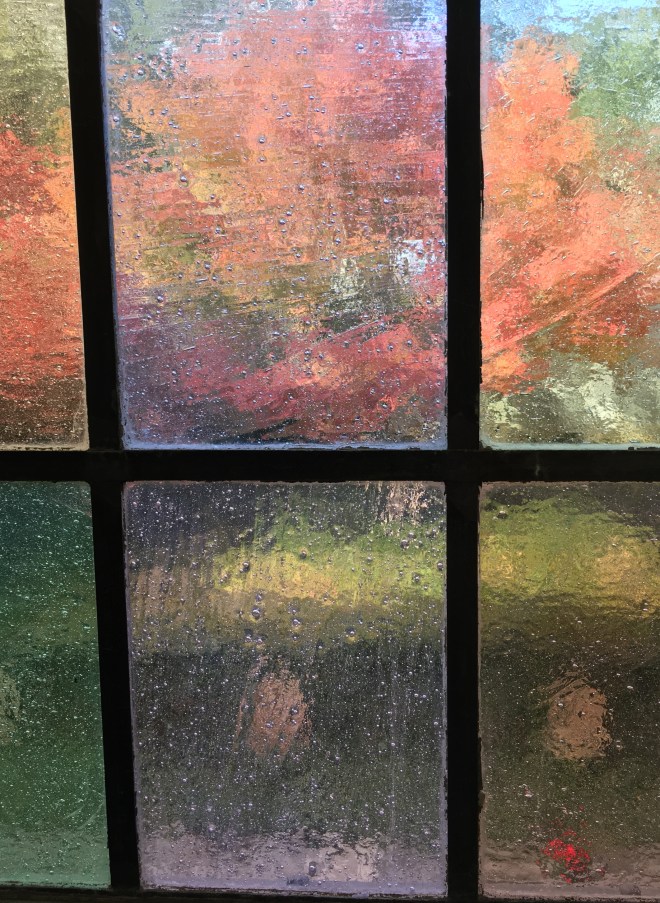
For the most part, I am the celebrant at the Wednesday evening services and I have come to deeply love those services, held in our small chapel, usually with very few people; it is more participatory and more flexible, much more reflective than other services we hold week in and week out. This picture was taken in the chapel on Christmas Eve. It  captures the beauty of light and dark, simplicity and shocking color that receive us each week. These days, even when things feel rocky, unsure, so terribly confusing, with the darkness of winter gathered around our small congregation of night visitors, it is as if we are enfolded in wings of mighty and gentle strength.

Freedom, But Not Too Much


fullsizeoutput_e70

Cardinals Abound Here-And That Is Still Amazing To Me!

When Krista Tippett interviewed Michael Longley, one of the great poets of the Troubles in Northern Ireland, they had a fascinating exchange about “the mystery of place.”  Longley and his family have a cottage in County Mayo that they have returned to year, after year, after year since 1970.  It is remote and difficult to get to but he, his wife and their progeny have continued to return to that place, and he expressed his delight that his children are now bringing their children too.

Speaking about travel, he acknowledged that it can ‘broaden the mind’-but he went on to add that it can also “shallow the mind”; for Longley, returning year after year to this cottage, undertaking a journey that includes fording a stream by foot, and crossing a channel before hiking through fairly arduous terrain, has taught him each return “does not exhaust the place”, but rather allows him to go ever deeper into it. (http://www.onbeing.org/program/michael-longley-the-vitality-of-ordinary-things/transcript/9026)

Earlier this year, Sherod and I began to dream up a trip to Normandy in the late Spring. I felt real joy imagining us in a small Airbnb flat, with a pair of rented bikes and access to the local bus system to get around. I wanted to taste Calvados, an apple brandy of that region, in a small local cafe, having seen where the apples grew that were used to make it.  I knew my husband would find great meaning, standing in the American Cemetery.  But since those dreams began to take shape, some tough realities and new possibilities have emerged and I don’t think we will ever get there and we certainly won’t in 2017.

In fact, I am no longer certain how much travel we will ever do, except the trips that take us to our girl, or help us bring her to be with us, the shorter trips we’ll take to see the people we love in Indiana, in Kentucky, in Georgia, sometime soon, in Louisiana.  I think each of us will be called to make the changes they can to help our fragile Earth survive a period of massive environmental deregulation and disbelief in climate change.  Air travel has enormous impact on our carbon foot print; I can make a difference by staying home.  I am more serious now about being self-sustaining.  I don’t know how much difference it will make to put more money in savings, but I can’t shake the sense that doing that has become even more important than ever.

Over dinner tonight, Sherod and I talked about the ways in which the weeds and weather defeated our gardening last year, and what we might do differently this year.  There was also something thrilling about realizing we’re going to make a really big pot of gumbo later in the week, and the tomatoes the recipe calls for were put up midsummer, freshly picked from  our garden. The thyme to season it with will also come from my little herb patch. I am drooling over pictures of the flowers in the seed catalogs starting to come in the mail.  You just don’t leave a farm, even a small one, at the height of the growing season.

But most of all, there is the fact that living in this little corner of the world, I totally understand what Longley means when he talks about how each return to his cottage is a going deeper into the wonder of it.  Each time I drive into the farm after work, I discover something new to marvel about. There are so many small and large dreams I have for living here.  I have travelled a lot in my life.  Were circumstances different, I would want to keep traveling.  I am content, though, to be where I am.

Early this morning, I let my chicken girls out to range, and because our office was closed at Ascension and I knew I’d be here most of the day, I planned for them to be out for several hours. After the encounter with an eagle in the spring, that resulted in the death of one of my Buffs we got very cautious and only allowed them out of their coop when we could supervise the hens.  I’d decided a few weeks back to be less obsessed with keeping them safe and more concerned with letting them dig and roam and be real chickens.  I’ve been trying to let them out for longer and longer periods, though Mo, the 85-lb Canine Torpedo, is mightily interested in them, so after a time, they have to go back inside when he needs to go outside to take care of business.

About three hours after I let the girls out, I went out to check on them. I started at the end of the garden that’s the farthest from Fort Yolk.  No chickens.  They know my voice well and when I want them to come to me, I always say “Hello Ladies, how’s it going? Y’all ready for some nice worms ?”(I keep 5-lb bags of mealy worms as a treat for them).  I began the conversation as I headed back towards the coop. Nothing. (Except a tendril of anxiety).  When I could see the periwinkle outline of the coop, I breathed a sigh of relief.  They were all back inside, on the perch, on the roof and one with her little head tilted back, chug-a-lugging a nice drink of water.

Freedom. But not too much.

While Shepherds Kept Their Watch


fullsizeoutput_e6e

                                                Huh? Huh? What? What? What’s That? What Is It?

Less and less is Christmas about holly, jolly—or even spectacular and beautiful—for me. I understand the shepherds, doing the unglamorous work of keeping watch, of tending, even to what is no longer lovely or exciting. During the regular evening Eucharist on Wednesday, we did a modified version of the “Blue Christmas Liturgy” that recognizes how complicated the holidays can become for many of us. As I prepared the liturgy, I ran across this piece by Ann Weems (Kneeling in Bethlehem) that spoke to my heart:

Into this silent night
As we make our weary way
We know not where,
Just when the night becomes its darkest
And we cannot see our path,
Just then
Is when the angels rush in,
Their hands full of stars.

On my watch, the visits have all been made for now. By their very nature, these were visits to the most vulnerable amongst us. Those with dementia. People struggling with life threatening illnesses. The very old. The widowed. Some who are not able to hide their heartbreak. Yesterday was a bit harder, with a funeral and at the end of it, the devastating news that the daughter of one of the people attending the funeral had died unexpectedly as we were entrusting C into our Lord’s arms. Then, an unplanned trip to the hospital, only to find out the person I had understood was in the hospital and very sick, was home and doing relatively well. I took the back roads home, with the night so very dark and bones aching in the chill.

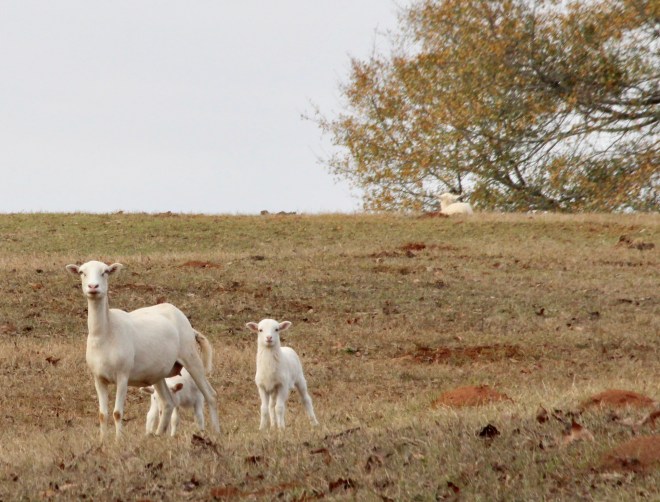
There are family responsibilities to tend to now; later, some simple cooking for a simple meal with my husband and father tomorrow evening after services, a sermon to finish, and some more quiet. On my way home a while ago, I came by one of the farms with sheep. I try to carry my camera most days now and I was amused, watching ewes grazing and their little lambs literally frolicking about, on this day before Christmas Eve. It is good work, the work of keeping watch.  My hope for all of us is that we too may see the angels rush in with hands full of stars in the nights ahead. When the unexpected call comes, may we be, as Daniel Ladinsky suggests,  “the midwife of God. Each of us.”

Sectarianism and Hope

I got off the plane on Saturday, in my usual worried hurry, knowing I’d need to find my car in that enormous space known as the Atlanta Airport parking lot. Each time I park at Hartsfield, I feel like Hansel and Gretel—not so much dropping crumbs as picking up fragments of sight and sound that I will use to find my way back to my car when I return because I am always so convinced if I don’t, I’ll be lost in the parking lot for hours, rush hour will being, it will be dark, and I’ll never make it back home—my own small version of the apocalypse.

My harried, worried self also took note that I should make a restroom stop; this would make it easier to get home with no stops and minimal delay on a day when I desperately needed to feel my husband’s arms around me. For that same reason, perhaps I should make an exception to my usual walks through the underground passage-ways from Concourse C to Baggage Claim and take the train instead. Yet even with such focus and determination, I could not miss how all around me, people were on the move with a look of expectation that you only see in airports at Christmas, when everyone’s finding their way home, already one flight closer, and we allow ourselves to think,

“ Maybe the weather will hold up and next leg of the journey will be uneventful.”
“ I bet my luggage makes it this time.”
“ It sounds like we’ll actually have a white Christmas,” and,
“Maybe, just maybe, this will be the year when we all click, we all like each other, we all find some joy together—maybe this is the year of the most perfect Christmas of all.”

It’s etched on so many of the faces with eyes straining to look into the future: all those enormous expectations, inarticulate hopes, the magical thinking that causes us to soldier on from one terminal to the next.

Soon after I deplaned, a young soldier walked towards the gate I’d just left. He was young and white and reading something on his smartphone, when the woman right in front of me, an elderly, African American woman, reached out, touched his arm with her hand, said “thank you”. He literally bucked to a stop, looking stunned, before muttering a thanks without looking at her, his cheeks bright read; he quickly picked up pace again. My eyes stung.

When I reached the women’s restroom on my concourse, there was a bit of a mess. Perhaps a toilet had overflowed, or someone had dropped a bottle of water that spilled across the floor under two stalls; a very slight young woman dressed in janitor clothes, was leaning over, mopping the floor while women in a hurry sighed and muttered and waited. This young woman, African American too, was so thin, no more than 5’1” with an industrial mop and mop bucket that should have been way too big for her to manage. Her face was drawn and you could see her hands were chapped. Again, my eyes stung, this time worse than before because I don’t think anyone actually saw her or the hard work she was doing. My quick thank you and well-wishes for a happy holiday season sounded so very hollow to me.

Because the way home by road is long (it takes me half as long to fly to Atlanta from Lauderdale than to drive from Atlanta to Lowndesboro) I queued up one of Krista Tippet’s interviews from her radio program On Being—this one with Michael Longley, a poet of the Troubles in Northern Ireland—and headed down I-85. I found myself listening intently to a conversation about sectarianism, how, as Northern Ireland has been striving, albeit, humanly and imperfectly, to move beyond that scourge since the Good Friday Peace Accord of 1998, the past few years have seen the rest of the world move in the opposite direction. Just its definition knocks the breath out of me: “Sectarianism is a form of bigotry, discrimination, or hatred arising from attaching relations of inferiority and superiority to differences between subdivisions within a group.” (https://en.wikipedia.org/wiki/Sectarianism).

This is what I see playing out, day in and day out in our country. I heard from a dear, dear friend how she, her husband and gay son were out walking when a car pulled up next to them, the driver rolled down the window and shouted, “die, faggot”. Another friend tells how someone she knows well, who still has stickers on her car from having campaigned for Hillary, found an equally vicious, more subtly threatening, note on her windshield, that gloated over winners and losers. The weekend after the election, at least two Episcopal churches were vandalized and threatened for being too welcoming, too inclusive. Sectarianism.

I’ve said plenty elsewhere about how unnerved I am with this new normal. I have watched friends all around me commit and start living out a new level of engagement with the political structures and systems of our country. Daily there are reports, and calls for help, for action, for money, on my Facebook page. I have felt guilty that, at best, my response has been in bits and pieces, in fits and starts, with less energy than I had hoped or promised myself I’d offer. Then, I heard this exchange between Tippet and Longley:

TIPPETT: …It seems to me, you became, in a sense, one of the people who people would call one of the poets of The Troubles…

LONGLEY: Yes. The poets of my generation, Heaney and Mahon and Simmons — we were very cautious. There was a kind of pressure. During the Second World War, people said, “Where are the war poets?” And a cry similar to that went up here. And I’ve written somewhere that a poet is not like some super reporter, that the raw material of experience has to settle to a new depth, an imaginative depth where it can then come out as true art.

TIPPETT: It seems to me that the distinctive place that you carved out for a poetic voice, an artistic voice, in the midst of this atrocity, was this quiet insistence on celebrating normalcy, and noting normalcy, and the persistence of human activities in life and all its aspects, including the garlic, right? The enlivening details that remained?

LONGLEY: Well, have you read any concentration camp literature? The greatest book of the last century, for me, is Primo Levi. And in that kind of nightmare, what kept people sane was thinking of the ordinary things back home. And what made things slightly less nightmarish would be securing a toothbrush or a woman’s things for sanitary purposes. And sanity itself depends on these banal, commonplace little things. No doubt about that.
http://www.onbeing.org/program/michael-longley-the-vitality-of-ordinary-things/transcript/9026

Now, let me be clear. I do not presume to place myself in a league anywhere close to Longley’s. But I do find myself becoming more and more serious about trying to write, not just as a hobby but as a response to vocare—the present, active, infinitive of vocō, which means “to summon”. I write this small piece, not necessarily thinking I will have a huge audience or profound impact, but because in the midst of a new version of the country I swore my loyalty to, a version where an incredibly large number of the people I know and love are seen as inferior and worthy of little more than contempt, I am committed to “celebrating normalcy, and noting normalcy, and the persistence of human activities in life and all its aspects, including the garlic… The enlivening details.”

As much as I dislike them, airports are amazing places, overflowing with those “enlivening details”. I have become more accepting of the sting in my eyes that seems to come frequently right now—it used to make me crazy, I felt like a maudlin, sentimental fool and now, I am not so sure.  I am certain that it is in the details we could too easily overlook that the beginnings of a hope can be found, hope that may lead us back, like the people of Northern Ireland were led, out of sectarianism, into the messy, gorgeous, amazing place that’s only possible when we see our shared humanity, when we help each other, all of us, be more human.

Advent Words

fullsizerender

On Sunday morning, as I was vesting for services at Ascension, I looked through the opaque glass of the window in the clergy vesting room, out toward the columbarium where someone had left a poinsettia and the last beautiful colors of autumn had not yet faded. I could have opened the window for a crisper view, but this is how I see these days. At best, dimly.

Words are not coming easily. This isn’t writer’s block; it goes deeper. I have steeled myself against the devastating outcomes of the election where one person won the majority of the votes and another won the presidency. After the crisis our girl went through in October, we will not be able to bring her home to be with us for the holidays; we are too mindful of the risks of her losing control with us out in the country, with limited resources to respond. I write this sitting at the airport with my flight several hours delayed, and wait to get to hug her and be with her for a couple of days, all the Christmas we’ll have with each other this year. We haven’t figured out what’s causing my dad’s intense pain and we’re gearing up for a round of specialist appointments to try to get some answers. When I go into the ‘buck up and shut up’ mode, the words leave.

Instead, I am doing the work of parish ministry that is far more about listening than saying anything at all. This year, in the middle of considerable busy-ness at church, I have been able to carve time out to go visit the people in our community of faith who have become too frail to attend church. I call my communion kit, ‘meals on wheels’ and some wonderful parishioners have been coming along on these visits. There is a starkness to the rooms where we visit, most of them in nursing homes or assisted living facilities. A stripping down to sturdy furniture capable of holding up from one person to the next, a few things, a picture, a piece of art, a beautiful quilt, that serve as reminders of a life once lived much more expansively and now, more basic, much more quiet.

Yesterday in one such room, a wife and son, two other women, and I sat around a beautiful, withdrawn man who was once at the very center of life at my church. He very seldom talks these days but as his son played “Hark the Herald Angels Sing”, Mark perked up, became more attentive and I saw him mouth “glo-oooooo-ooooo-ooooo-ri-a” when we got to the refrain. When gently prodded, he fell into the cadence and rhythms of the “Our Father”, knew exactly how to hold his hands to receive communion. Like the good priest that he still is, he consumed all the wine in the chalice, because that is what a priest does after everyone else has received and there’s some wine left. And finally, as we sang “Oh Come Emmanuel,” we were graced to hear him sing, frail, reedy, somewhat hesitantly. But one who is easily labeled uncommunicative, sang ‘rejoice, rejoice, Emmanuel shall come to thee, oh Israel’ with certainty, not having to think, to know the truth of those words.

In the twilight, in what Ronald Reagan described as the sunset of his years, Mark helped me understand Advent. He had spent all his adult years serving in the church, proclaiming, as in the Gospel of Matthew, that “the blind receive their sight, the lame walk, the lepers are cleansed, the deaf hear, the dead are raised, and the poor have good news brought to them”–here. Now. In this very place. And yet. We, who were gathered around him, aware of who he had been and how much has been lost to dementia, could also be forgiven for yearning for a time not yet realized, when all that had grown old will be made new.

Mark had few words and perhaps in this in-between time we call Advent, that is as it should be. I see dimly. I see through the window how someone who loved and lost someone, remembered and celebrated with a beautiful fluff of color. I see how, even after some fierce rains and wind, beautifully colored leaves are still on a tree for a few more days. It is a privilege to see and listen. And wait.  Wait for my words. Wait for the Word.