A Child’s Prayer…

A Child’s Prayer…

Gud som haver barnen kär,
se till mig som liten är.
Vart jag mig i världen vänder
står min lycka i Guds händer.
Lyckan kommer, lyckan går,
du förbliver, Fader vår.

My friend Robin has been reflecting on prayer here.  That got me thinking about mY childhood.  It was quite startling to remember that at bedtime each night, my parents gathered my older brother and me to say a prayer in Swedish that’s hundreds of years old. At the end of the prayer, still in speaking in Swedish, we’d ask God to bless Mormor, Morfar and Mormor’s Mor–my mother’s parents and her grandmother. Then we’d switch into Spanish and thank God for lots of other things. What is so amazing to me is how far into agnosticism my family drifted and how completely that ritual faded from our family’s memory and conversation.  Yet it was at the tip of my tongue as soon as I thought of it.

The prayer is simple: “God who loves the children well, watch over me who am so small. Whatever corners of the world I may wander, great my joy if I be in God’s hands. Joy may come and joy may flee, You abide, Father of ours.

That is my faith.

What is your earliest memory of prayer?

En Caso de Incendio –>

En Caso de Incendio –>

I realized that there was one last story I wanted to tell about my mom’s death before moving on to other things.  I want to record it because it stands in such sharp contrast with the experiences I have of death and dying as a priest in the United States.

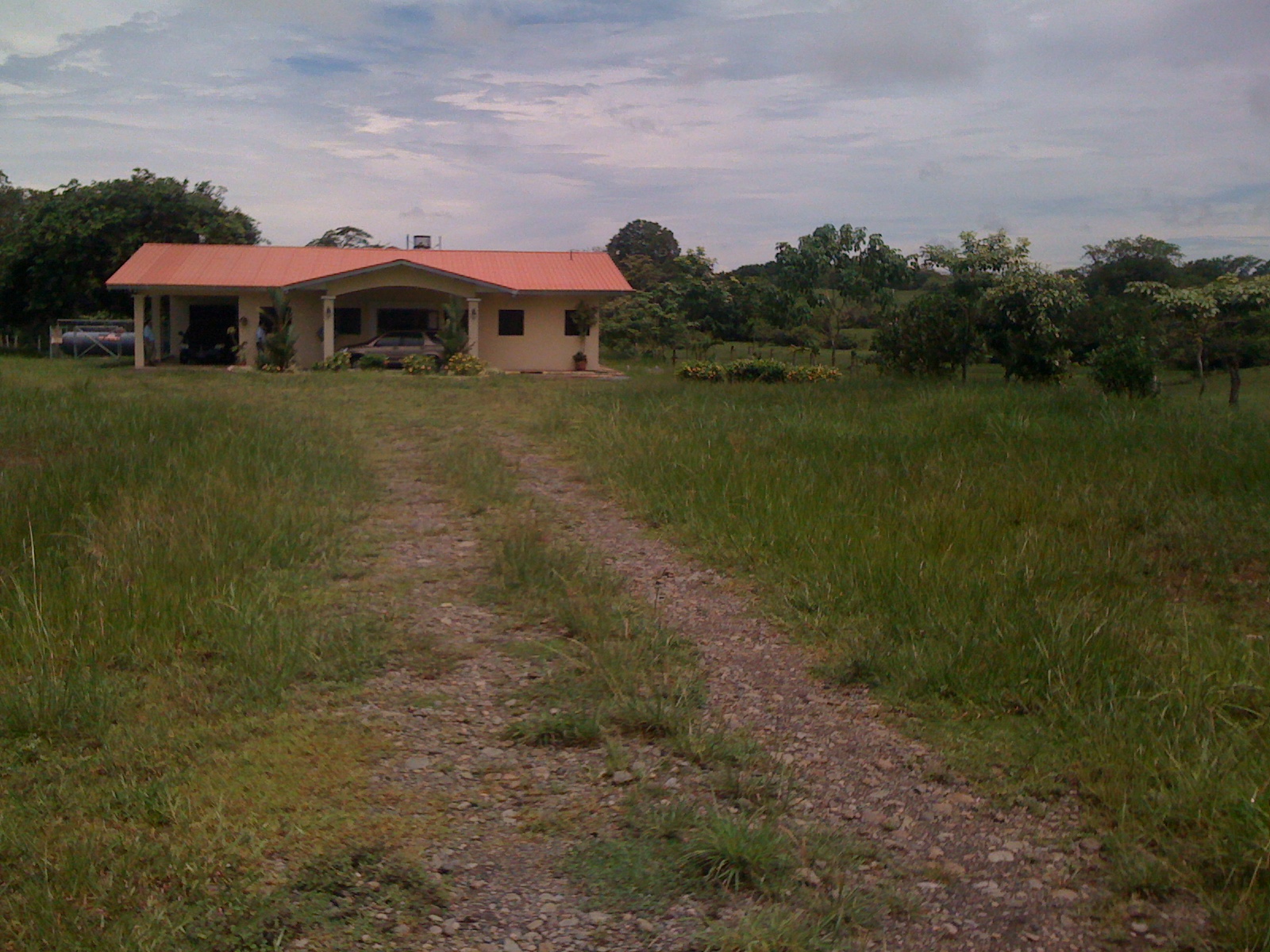
We had always known that my mother’s wish was to be cremated after her death so her ashes could be scattered in the Caldera River, that wonderful and wild mountain river that sweeps by the remains of her childhood home in Boquete and then past the house she and my father built after they moved to Panamá.

In the early years after we found out that Mom’s cancer had metastasized, we planned, with some dread, to have her body transported to Panamá City, the only place in Panamá with a crematorium.  About 3 years ago, one was opened in what we jokingly call “The Fair City of David”— capital of Chiriquí, the province where my parents had built their house.  When it became clear that the end was near, my older brother Hans went down to David to make the arrangements with “Centro de Cremación Paz y Gloria”.  After my mom died, her body would be transported to David, we’d bring a long list of required paperwork to their main office and would then follow the hearse out to the crematorium, located “just outside the city.”

Mom died on Sunday night, and about 10:00 the following morning we found ourselves in the offices of Paz & Gloria.  Offices is a generous description.  Tucked into a warehouse, little more than a cubicle with furniture that might have been salvaged from a recycle bin, Paz & Gloria had two staff people:  the driver of the hearse (actually, a refitted, if slightly battered Toyota van), and a sweet young woman who was the administrative assistant.  Hans, my brother, and I were the two official witnesses so we had to give the young woman our passports.  My brother explained that the “Paises Bajos (Low Countries)” mentioned on the cover of his passport referred to the Netherlands.   The young woman looked puzzled and asked why it was called the “Low Countries.”  Hans explained that they were in fact, low.

–“How low?

–“Well, quite a bit of the Netherlands is below sea level”

–“How is that possible?”

–“Well, they have these enormous dikes that keep the sea out of the land”

We could tell that the young woman could not quite wrap her mind around all that but she finished the paperwork and cleared us to follow the “hearse” to pick up my mom at the morgue and take her out to the crematorium.

The Fair City of David

The first part of that journey is something of a blur.  David is defined by lots of zinc corrugated roofs and would be a dusty town if it weren’t for the hot humidity that defines that part of the world.  So instead, there’s this paste of grime on everything. I don’t think I have ever seen an uglier town than David and frankly, I didn’t want to look much.  It  was a relief to think that we would be taking my mom away from there on her final journey.
The Panamerican Highway goes right through David; it begins in Canada and extends all the way to Argentina, linking the Americas to each other.  We took the Panamerican and headed out of town, my dad, my brother, our driver and I  following the van that carried my mom.  Soon we were out of town and my brother and I, sitting in the back seat smiled at each other.  When we were little, my mom loved nothing more than to put a picnic basket together, and get the kids in the car and go on an adventure.  Cali, the city where we lived, is in a valley in the Andes and often, our adventures led to picnics by rivers or up in the mountains.   At first this Monday morning, it was sort of cool to be headed out like that because it was so reminiscent of our childhood.  But after a while, it started feeling like we sure were going way, way out of town.

Finally, the van turned off onto a side road.  About 200 feet off the highway, the pavement ended and we started jouncing along a truly tropical back road.  Later we realized that silently, all three of us had apologized to my mom for such a bumpy trip though we reminded her that this had always been what it had been like when we were on one of our really good adventures.  The van and we had to stop when a bunch of chickens decided to cross the road.  We drove by a mule, tied to a post by the road, swishing flies away.  And we drove, and drove and drove, further and further out into the middle of nowhere.  After 20 minutes, we pulled off onto a set of tracks in the grass that ended in front of a little building that shimmered in the heat.  The van pulled up to a bay while we pulled our car into the main entrance.  The van driver got off and tried to open the bay door but found that it was locked.  When we tried to go through the front door, it too was locked, though we could hear “chunga-chunga” music coming through from inside—maybe a theft-deterrent?
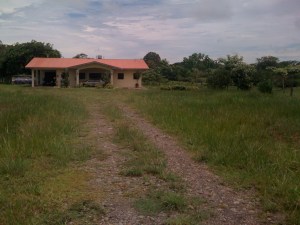
Crematorio Paz & Gloria

A heated conversation by cell phone ensued with the van driver trying to convey urgency as he whispered—“But I told you, you have to be here. I don’t care that it’s lunch time!”.  He got off the phone and tried to look calm, cool and collected as he explained, “He’ll be here in “un momentico” (in just a minute). I know about momenticos like that but there wasn’t much to do but wait.  It was probably 95 degrees plus humidity, there were so many flies and mosquitos the air buzzed.  My brother looked down at the ground and saw a dead coral snake and asked if that was a regular problem.  The driver explained that no, not really. A bigger problem is all the cattle that comes in the front that they have to shoo off.
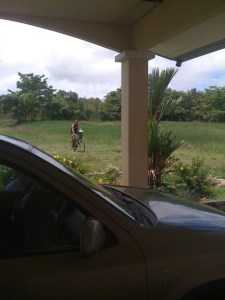
The Undertaker Has Arrived

A while later, amidst quite a lot of clatter, we saw a young man churning up the tracks in the rickiest bicycle imaginable.  He was wearing a tank top and he had a light blue plastic bag hanging off the bicycle handle, presumably his lunch.  He pulled up to the front door and without looking at us hurried in, then came back out slipping on a more official looking shirt. Trying to look very  formal, he shook our hands and introduced himself as the undertaker.

He led us into the waiting area and turned on an air conditioner that could have been a prop from “The Night of the Iguana”.  The furniture in the room was probably pulled out of the same recycle bin as the office furniture in town—a tattered sofa and beat up old living room table littered with burnt-out light bulbs.  My dad’s face was a map of heartbroken anguish.  For Hans and me, it was a step into a Gabriel García Márquez story of magical realism that was both mind-bending and strangely exhilarating. All the years of living in the quiet, tamed domesticity of life in Europe and the United States was turned on it’s head and we were back where we came from.

Just a few days later I came back to the US and in the next few weeks had 5 more funerals I had a part in.  I worked with the smooth, well-oiled funeral industry of this country, always aware that nothing was quite as it seemed—from the made up, carefully composed bodies, to the solicitousness of funeral directors who were orchestrating an event.  My younger brother does a lot of work in semiotics related to the topic of “heterotopias”, organizations that construct false realities with the intent to mediate a particular experience that will maximize profits for the organization.   The funeral industry in this country is like Disneyworld, mediating the experience others think we will be most drawn into, not because it is what we need in our grief, but because it is what will yield the best financial rewards.  Along the way, I have met some fine, gentle caring people who are in the business.  They are often capable and compassionate. But I never lose sight of the ultimate goal and reason for their work and the efforts of a whole culture to gloss over and sanitize the experience of death.

That hot, horrible, wonderfully absurd morning in Panamá, we got the real thing.  Unvarnished, strange, terribly disorienting but undeniable.  We were taking the final steps in that bittersweet journey with my mom and the distance between life and death was almost non-existent.  In that bizarre little crematorium, in the middle of nowhere, so no neighbor might be spooked at the thought of what might be happening to an infinitely precious body next door, the coup de grâce for any pretense about what we were doing was this:  in that waiting area, right next to the front door, there was a big red sign, with an arrow pointing towards the door.  The sign said, “In case of FIRE”.

Caminante

Caminante

My retreat is over now and I am making a long and slow journey back to Fort Lauderdale with lots of in-between times at airports. It’s good having some sorting out and reflection time. I wrote what follows late at night a couple of days ago.

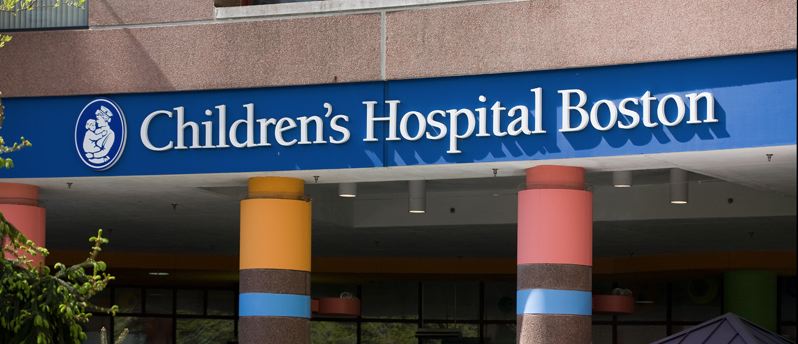
Looking back on my stop at Children’s Hospital in Boston, I am struck by the absence of bad memories.  I am sure they are there somewhere, lurking below the surface of consciousness.  But I had no flashbacks or moments of terror or dismay when I arrived. Instead, something inside me went very still.  I asked for directions to Prouty Garden and walked towards it filled with awe: I was back.  Much of the front lobby has been redesigned and rebuilt but it was as if my body knew, knew, where I was. I looked at the children around me and realized I was once that fragile.  I was once in need of the extraordinary measures only a hospital like Children’s can offer, a gossamer thread of hope that ties a moment of desperate need to a future full of promise.

Then I got to the garden.  The day was fiercely cold, in the 20’s, with a nasty wind blowing.  No one was out but the sun.  I walked along the path slowly, each old friend revealing itself; I hadn’t expected to feel such joy.  After I had been there for a while, I called Sherod, my husband.  Sobbing, all snotty-nosed, choking on my words, I tried to explain how they were all there, like I remembered, and that my mom, especially her voice, was everywhere.  I took pictures, said some prayers and then got cold.  I was also headed for my retreat in Gloucester and had developed an infection that needed attention. I knew I had to see a doctor before the retreat began in the late afternoon, so I walked back into the hallways of the hospital and left soon after without looking back.

Later that day, I got a text from Sherod saying he wished he could have been there with me.  I’ve thought about that.  No one could be with me that day.  It was a journey I needed to make alone.  The things I went through as a child could have left me crippled not only physically, but emotionally and spiritually as well.  Instead, they made me strong, stronger than I sometimes give myself credit for.   To walk back into that hospital and experience nothing but gratitude was another part of the gift of my life.  To leave when it was time instead of trying to linger with the memories of a mother I simply adored, or lean on a husband—or anybody else, for that matter—my ability to get on with life, was my own small witness to a grace that redeems and heals us each in our own specificity and particularity.

I have spent every afternoon since I got to Eastern Point Retreat House walking.  I walk six or seven miles a day, going up and down hills, some of them pretty steep.  I have seen an amazingly beautiful part of the country with landscapes that tend to my heart.  It seems to me that these walks are a continuation of the gift and the response.  Walking allows me to be in the world and not just in my mind, as I was for such a significant part of my life.  Literally, I see in a new way.  The things I see take my breath and my words away.  At the same time, it is a daily exercise in cajoling, coaxing and pushing myself to go out and take these walks.   The days are cold and though the sun has been out most of the time, the wind coming off the water cuts through me.  Lassitude and inertia are seductive.  Two of my toes are blistered and my feet are sore.  Each day after lunch, when comfortable chairs all over the retreat center invite me to curl up and read or sew, I remember that I came here to pray.  The walking has become the prayer that takes me on a path that stretches far beyond my sight.  Ad majorem Dei gloriam.

The Journey: Slideshow of Pictures From the Week  (You might want to let it load completely before watching)

Haunting.  Healing.

Haunting. Healing.

This is my last foray into the internet until the 13th.  I am sitting at a Starbucks close to Children’s.  It is as I remembered, for the most part, seen through new eyes.  How small the stretchers and the wheel chairs are.  How sick and frail the children all look.  I remember going into one of the WC stalls in the restroom of the main lobby with my mom one time.  It was my turn to be there as an adult–the tile has not changed.  My mother is everywhere.   It feels like I have lost her and found her all over again.  How extraordinarily, outlandishly, privileged I was as a young child to get access to care in this kind of place.

And the garden?

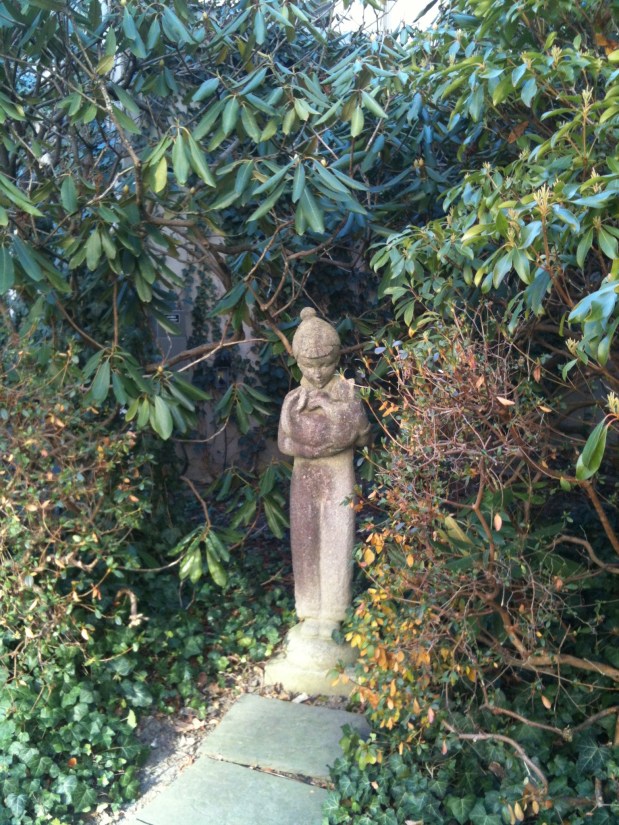
The bunny with stars for my mom.


Hans. I had forgotten the cat in his arms.


What consolation looks like to a child. And to me today.

Now, “Into the silence”.

Christmas Sermon-2011

Christmas Sermon-2011

Sometime as the sun was setting, late in the afternoon here in Fort Lauderdale, a person sat in the Sistine Chapel, maybe for the first time in their life, waiting for midnight mass to begin and stared with wonder at the frescoes up in the ceiling, especially the one that shows God reaching out for Adam’s extended hand. One of the striking, very revealing aspects of Michelangelo’s depiction of this relationship is that we see God doing most of the work, straining towards Adam while Adam seems to barely have the energy to lift his hand toward God’s.

It is also striking that, while the distance between hand and hand is infinitesimal, it is frozen in place forever.  As long as that fresco is that fresco, distance and separation will be inescapable for God and Adam.  I think we all live much of our lives as if that image defined our relationship with God—hopeful, yearning, never quite connecting. Imagine when Midnight Mass began with its bold and joyful proclamation that the distance and separation are not the last word between God and humankind.  Like the people gathered in the Sistine Chapel earlier this evening, we are here to celebrate that God has accomplished so much more than close that gap.

It is not just the wonder of God choosing to dwell with us and know completely what it means to be a person.  It is the profound mystery that Mary was capable of receiving God.  She was an ordinary young woman from a tiny speck of a place in the world and so were the shepherds who came to witness the birth of the holy child of God.  They were like you and I.  For that reason, this story tells us so much about our own selves.  It insists (like the Book of Genesis that takes us back to the beginning) that humankind, created in God’s image, is good.  In fact, we are not just good.  We are very good.

The story of Christ’s birth also reminds us that the gift of life is the gift of embodiment; that our bodies were wise and wonderfully made by our Creator.   Mary carried the child to term in her body.   Even though the spare, simple story we just heard doesn’t give us all the details, surely, Mary’s arms shook with the exhaustion of labor, when they put her little boy in her arms.  Don’t you imagine that Joseph sat up all that first night, from time to time gently prodding this impossibly small little person to make sure he was breathing?

The story of Christmas has no meaning if we try to pull it away from the pure gift of embodiment—

the gift God gave to God’s own self,

the gift you and I have received,

the gift and miracle offered to Mary, of getting to kiss that baby boy the first time and to feel the heft and weight of him in her arms.

No matter how much we want to fall into the trap of the split between spirit and flesh,  no matter how old and creaky and imperfect our bodies might be, Christmas is all about incarnation—flesh, bone and body.

Those little strings of Christmas lights that I preached about a couple of Sundays ago, that I said were so inadequate in comparison to the true light of God?  They are inadequate. They are nothing in comparison with the Light of the World; but  it’s amazing, the Christmas wonderlands a bunch of strings of lights strung together can create.

The aromas in the kitchen,  the music we listen to, at once sublime and absurd, the feel of pine needles against our hands as we place an ornament on the Christmas tree—all of these are nothing if not celebrations of our incarnation.  An incarnation that Genesis reminds us is very good.

This story tells us yet another truth about ourselves.  It reminds us of our ability to receive God’s grace into our lives.  I learned something quite lovely this year.[1]  The word for mercy in Hebrew is “racham” and in Arabic, it is rahma.  Both of them come from the word “rehem” which means womb.  The ancient prayer of the Rosary has a whole new meaning if we say, “Blessed are you, and blessed the fruit of your mercy.”  That doesn’t detract anything from Mary’s grace and courage.  But as someone far wiser than I suggests, this amazing image helps us understand that if mercy means anything, “it means that our well-being is bound up with the well-being of another, even if it comes at great cost or with a great amount of discomfort.”   When we remind ourselves that we were created by a God who looked at this creation and said, “It is not just good, it is very good”, we cannot deny that part of our goodness is our capacity for mercy.

We can’t hurry to Bethlehem to see that child who was born this night.  But we can nurture love, we can allow our mercy to be available for God’s work.  On this night filled with great joy and celebration, even here in our midst, there is grief and loneliness.  So much in the world is broken and in need of healing.  Our mercy, our willingness to tie our well-being to the well-being of those around us, even if it comes at great discomfort and cost, is our way of saying the yes that Mary said.

It is Christmas Eve.  After we have feasted at the Lord’s table where there is a place for everyone, I hope you will go home and revel in the aromas of Christmas, that you will listen, really listen, to the Christmas music.  Feel the laughter rumble inside you and look hard at the world around you.  Hold, and allow those you love, to hold you close.  We were wise and wonderfully made as flesh and bone and body.

But above all, remember that wherever people of faith and goodwill are willing to nurture and care, wherever the arms of mercy are open, a love capable of creating, redeeming and sustaining all that is and is to be, can grow and flourish.  Allow mercy to meet love.  Let Christmas come again…

Incarnation

Watercolor of Prouty Garden, Boston Children's Hospital

Preparing for my Christmas Eve sermon this year, it is the wonder of our embodiment that I keep returning to.  I imagine what it was like for Mary, kissing her son for the first time, what it must have felt like when her lips touched the petal softness of his cheek.  I still remember in the first weeks after Maria came to be our daughter how there wasn’t enough time in the day to marvel at the feel of her skin, her hand with those long, graceful fingers slipping into mine, how tightly she held me when I carried her.  It’s all about the body, the gift of embodiment.

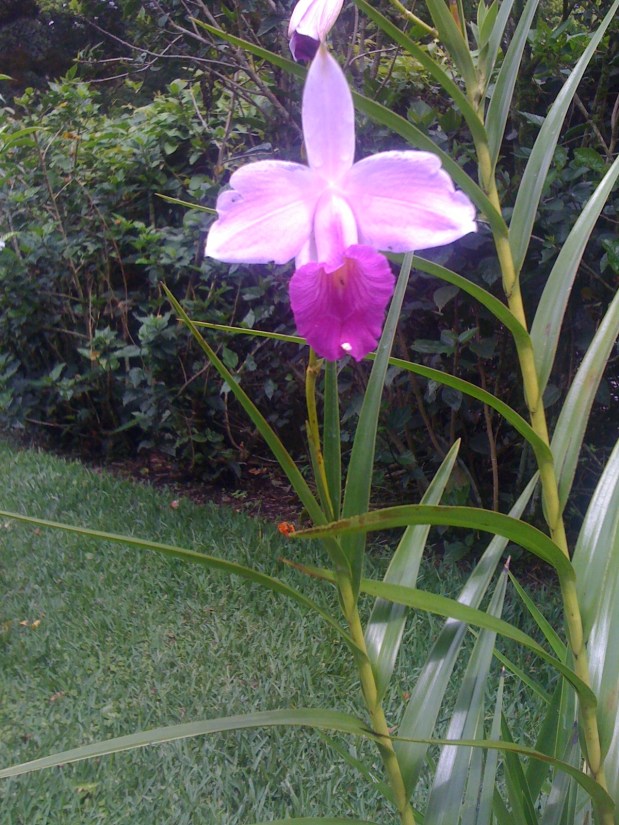
I can’t help also thinking about my mom’s last weeks.  How the skin, bruised and mottled, hung off her arms, how gnarled and bony her hands looked, how deeply appreciative she was when I began to give her back rubs. I winced each time I saw how the cancer had so deformed her spinal column and felt so grateful that at least I could do this small thing.  I’d hold her hand gently as much as I could, each time thanking God for having been given one more time to do so and each time trying not to cling to it as if that might allow me to keep her.  After she died, and we had cleaned her and laid her out, waiting for the hearse to arrive to pick her up, I looked down and her face was purely, beautifully still Ann.  Mother, daughter, friend, lover, wife, orchid expert.  Still there and already so absent. It is all about the body, the gift of embodiment.

I walk a lot these nights, in the quiet and gentle night of Southeast Florida, with breezes usually blowing, late enough to be still and quiet for most of the way.  I feel like I am preparing, walking my way toward Gloucester and the silent retreat I will make right after New Year’s.  I’m going to FedEx my bag to the retreat center so that I can travel relatively unencumbered.  I’ll get into Boston in the middle of the morning and I don’t have to be at Eastern Point until 4 or 5.  In that in-between time, in that thin space, I am going on a small pilgrimage.  That day it will be seven months since my mom’s death and I will be in a city that redefined embodiment for me in profound ways.

In 1961, when I was 18 months old, I was diagnosed with a dislocated hip.  The story of what followed is long and tedious, but it revolves around numerous surgeries and stays at Boston Children’s Hospital. Dr. William T. Green was a world-famous pediatric orthopedic surgeon who called me “Mystic Rosa” and would tell me, a small and scared baby girl, that if he could,  he’d buy me emeralds for my ears (most baby girls get their ears pierced at birth in Colombia, and all my baby pictures show me with little pearl earrings.  That seemed to amuse Dr. Green immensely).  He made it possible for me to walk, performed a minor miracle after a doctor in Colombia got sloppy with my post-op care and caused the bone in my femur to start dying.  He was also the person who had to tell my mom, not yet thirty, that while he thought he’d salvaged my hip, I would need to be in a hip-spike cast, chest to toe, for at least 4 years and he could not guarantee that I would ever walk.

Before that reconstructive surgery, I had pins in my thigh bone, that were screwed tighter every day to force the bone to grow.  In the sixties and seventies, parents at the hospital were considered a nuisance so my mother had to leave at 6 every day.  I don’t remember the pain, though I understand it was intense.  I do remember the fear and desolation every day, when my mom got ready to leave.

I also remember the ritual that made such an unbearable moment of daily abandonment bearable.  My mom would get me on a stretcher and we’d go down to the garden of the hospital.  The garden was surrounded on all sides by the buildings of the hospital, and it was quite large, at least to a child’s eyes.  All along the pathway around it, there were sculptures of animals, a bunny, a squirrel, a fox, a deer and a frog in fountain. One of the sculptures was a little boy, whom we named Hans, after my brother.  Each evening, my mother would wheel me past them all and together we would say, “hasta mañana” to each one, saying good night to Hans last.  When I was at Children’s in 1968 for my last stay, we went back to that routine and I have never forgotten those walks, the grace and beauty, the way my mom tried to give me what comfort she could, allowing me to feast my eyes on the garden, even when she couldn’t hold me close because of the cast.

So on January 5th, in the dead of winter, I am going to go back and visit that garden.  I am debating whether or not to ask to be allowed to go back up to the Orthopedic surgery unit.  My memories of that particular space are still scary—I was there when iron lungs were still in use; the little girl next to me the last time I was there , Amy Schultz, was in one. I was terrified of the sounds it made and the isolation it represented.  But I will get to walk through that garden, not get wheeled around it on a stretcher.  I am walking not in orthopedic shoes, like the ones I despised all the years when I was growing up, but in regular people shoes.  I won’t be limping.  My hip replacement surgery took care of that.  Last night when I walked at a fast clip for over an hour and a half, I marveled at the strength of my legs and the absence of pain.

I am going to that garden to say another thank you to my mom, to Dr. Green, to Miss Cornell who did my physiotherapy in 1968, while her husband fought in Vietnam.  I am making that pilgrimage deeply mindful that in this season, the Church insists to itself and to people like me, that redemption is incarnate; redemption extends not just to mind and spirit but to flesh and bone and body as well.  I’m going back to that garden to thank God for the body I was given and the body I have now.

A Very Good Day

Candidates for Confirmation & Reception; New River Regional Ministry

This is one of those days I want to remember. I am dead tired but I have to write it all down while it is is still fresh in my mind.

Almost two years ago, El Centro was in a good place in many respects.  We had offered the first wonderful summer reading camp program, our worship was lively and we had just begun a partnership with the Department of Families and Children so we were starting to process foods stamp and Medicaid applications for people in the Latino community.  We also didn’t have much room to grow and would soon be looking at a move to another storefront.  At about the same time, life had gotten awfully scary at St. Ambrose just 10 blocks away from us.  The organization that had been renting a large part of the property was moving away and taking 2/3 of the parish income with them.  On a lot of faith, with nothing but a handshake between us, the Diocese of Southeast Florida, St. Ambrose, and All Saints/El Centro agreed to become what we now call the New River Regional Ministry–something more than a parish, a bunch of people whose focus would be on ministry, an experiment in grace capable of transcending every sociocultural difference imaginable in order to serve God and our neighbor.

Last year was brutal. More than one of us still carries the scars, probably still has some wounds that have not yet healed all the way.  The future is fragile and uncertain.  But oh, today…

Today began with the service at 8.  In most Episcopal Churches this is the service attended by “God’s Frozen Chosen” according to many. In fact, I have found a warm, loving community and because of the special needs of our newest member to that service, we arranged to have our bishop’s visitation and annual confirmation service at this service.  The service was beautiful.  There were so many people, so many people being welcomed into the Anglican Communion.  The energy!

We wouldn’t be Episcopalians without good food so we all feasted on the wonderful breakfast Angel and Diana had worked on till almost midnight last night.  We had the regular 10 o’clock service where we celebrated the 93rd Birthday of one of our dearest members.  We remembered the loved ones we’ve lost.  I forgot to take communion down to Edith, our birthday person who is too frail to come to the rail, and when I realized what I’d done I almost burst in to tears but recovered enough to take the bread to her while Angel carried the wine.

Then at noon, members of El Centro and St. Ambrose who are working together on a redevelopment project sponsored by the national church came together for a working lunch.  We discussed the liturgy we are going to test during Advent. For months, several of us have felt the gentle nudging of the Spirit, reminding us that “a house divided cannot stand”.  Members of El Centro and St. Ambrose used the same worship space but very rarely even saw each other.  We have identified the essential elements of unity in the Sunday service of the Episcopal Church.  We also think we’ve found a way to honor the need for each part of the community  to pray in their own language. We’ll start with the Liturgy of the Word in English.  Right before Confession, the Centro community will come into the service, along with all our kids who will have been at Sunday School. We’ll do communion and our English speaking members will recess out while El Centro folks will stay on for the Liturgy of the Word in Spanish.

At our meeting today, we put two more pieces in place.  During the Liturgy of the Word in English, we are going to have a special bilingual advent program for the children of both services.  During the Liturgy of the Word in Spanish, the children will now have Coach Hudson and Coach Harman who will supervise soccer, jump rope and other games that kids can play with a large rubber ball.

It is hard to explain to someone who is not part of this journey how scared we all were when we started down this road, how hard it has been at several points, and now what a deep joy is beginning to spread in our midst. Being willing to surrender the comfort of our familiar rites and rituals on Sunday morning to something far more risky, just because we want to learn some more about what it means to abide with each other is a brave, profoundly gracious act of faith.  I am in awe of the way God makes all things new.  On this day when the church celebrates the communion of all saints, we aren’t just remembering the ones that have gone before us.  We’re trying to follow in their footsteps.

Paradox: A Sermon for Pentecost 20A

This week more than usual, I found myself almost begging for the right heart, the right words, the spirit with which to speak to you from this pulpit, a place of such honor and such enormous responsibility.   I have this almost irrational belief in the transformative power of words.  Today I want my words to have that kind of power and the paradox, of course, is that even as I try, I have to be willing for my words to be absolutely powerless so that it will be the Spirit that will fill your heart with the true Word of God.

In a little while we will have our parish meeting.  You will hear good news.  As I gathered information, looked at a lot of numbers and tried to put them in the context of the last few years, a few things struck me.  We are doing so much more with so much less that it is nothing short of a miracle.  Out of despair and disappointment, God has made us new. We may not feel we’re new, but there is something new at St. Ambrose that is worthy of celebration.  Finally, on that gray and dreary day in December of 2009, your leadership showed such courage when they decided to accept help from others, even though you didn’t really have much reason to trust the hand that was being extended to you.  That willingness, which some might see as weakness, is what made this community so strong.

Here is another paradox.  All the good news is just enough to prepare for this:  As much as we’ve accomplished, all we’ve done is take a tiny baby step forward.  We are being called to take the next step.  El Centro and Saint Ambrose need each other in ways that we have not yet acknowledged to each other or even necessarily to ourselves.  We need each other because we have complimentary gifts and weakness and God needs us all working as one to pull this ministry through. We need each other because we can call out the best in each other and surprise ourselves, and others, by what we can do. Today’s readings underscore the magnitude of our call.  We have to do mercy and practice justice.  Each of us is tempted all the time to engage in empty piety and easy faith, so that the things we say we believe and the things we actually do must make God shudder.  We can be for each other a community of hope and accountability.  Finally, we need each other because each of these communities by itself is simply not viable, it is not viable financially, it is not viable practically, it is especially not viable spiritually.

One of the times when we most need each other is Sunday morning.  Eucharistic Prayer C is so eloquent in this: we gather to receive the solace and strength, the pardon and renewal that can truly make us one body and one spirit in Christ to then go back out to serve the world in God’s name.   We need each other because St. Ambrose needs the energy and life that young families and children can bring and the folks of El Centro need the wisdom and grace that come with having been through a lot and lived to tell the story.    We may not see it clearly but we know that trying to continue to go it alone will not carry us very far.

A small group of folks including Carl, Wayne and Jeanne, a member of the Altar Guild, and Carmen, Tania, are going to work with me to develop a liturgy for Advent that will bring the two communities together for part the Sunday Eucharist.  We will move forward slowly, carefully, reverently.  We will listen carefully and we will do everything we can to be both respectful and hopeful.  I have to tell you honestly, that I lead you into this with fear and trembling– I understand those words of St. Paul’s with a new intensity.  But I am also quietly confident that God will show us the way.

After I prayed and prayed and then prayed some more this week, I began to feel like Donkey harassing Shrek.  As so often happens, what  I heard was a gentle silence in response.  But while I was out on a walk, I remembered a piece of music that I first heard about three years ago and that I love. The pieced is called “Kyrie Litany of  Praise.” It captures yet another of the central paradoxes of our faith.   The words are very simple:  We praise you oh Lord you give us  living waters, Lord have mercy.  We praise you oh Lord, you open our eyes, Christ have mercy.  We praise you  O Lord, you give us life eternal,  Lord have mercy.    If there was ever a time when we needed to praise God for all our blessings and at the same time, to beg for mercy this is it.  As you listen to it, imagine—this could be us.

A Poem by Mary Oliver with Thanks to Patricia through Robin

Look, the trees
are turning
their own bodies
into pillars

of light,
are giving off the rich
fragrance of cinnamon
and fulfillment,

the long tapers
of cattails
are bursting and floating away over
the blue shoulders

of the ponds,
and every pond,
no matter what its
name is, is

nameless now.
Every year
everything
I have ever learned

in my lifetime
leads back to this: the fires
and the black river of loss
whose other side

is salvation,
whose meaning
none of us will ever know.
To live in this world

you must be able
to do three things:
to love what is mortal;
to hold it

against your bones knowing
your own life depends on it;
and, when the time comes to let it go,
to let it go.
Mary Oliver