Forgiveness: A sermon for the fifteenth Sunday after Pentecost

You’ve probably been a witness to or part of a familiar drama. A child does something hurtful to another child and we tell him, “say you are sorry” then hear the somewhat grudging, muffled words that sound pushed out through gritted teeth and pouty lips, and is little more than a response to threat and obligation, “I sorry”.

In a bit, together we will say the confession and I will stand before you to say your sins are forgiven. I have said the words of absolution so often that most of the time, they slip through and out of me like they’re the most obvious thing in the world, and quite honestly I don’t stop to question or consider this responsibility, simply taking for granted that this is one of the things I do on a Sunday morning like today.

Elie Wiesel who died a little over a year ago, confronts that ever so easy version of one of the central acts and fruit of faith.   In one of her podcasts, Krista Tippet reminded me of one of the most harrowing parts of Weisel’s memoir, his description of watching a young child slowly die of hanging, in Auschwitz. Wiesel not only sees God’s very self hanging from those gallows but recognizes how absolutely that moment confronts any easy and cheap version of forgiveness. Talking about the Yom Kippur that was approaching when he did that interview for On Being—just as it is at the end of this month, Wiesel said, “we plead with God for forgiveness, and God forgives, I hope. But one thing He does not forgive: the evil I have done to other fellow human beings. Only they can forgive. If I do something bad to you, I cannot ask God to forgive me. You must forgive me”.

Just like that, we are reminded that the business of forgiveness is about our agency and our intentions, not the magic of a sappy version of God. It is about our willingness to directly, humbly, honestly, engage each other without guile, or pretense or protection. We stand, face to face, the one who has hurt and the one who has been hurt, to be as real and true to what has been as we can possibly bear to be.

If I am the one has caused the hurt, I have to understand that we go into that kind of moment with no guarantee that the forgiveness will be offered. In fact, one of the things Wiesel said was all his life was that he simply could not forgive what had happened in the Holocaust, but what he could do instead was to tell the truth, and to sensitize other people not to repeat history. He did not accept the notion of corporate guilt and spent a lot of time developing relationships with the children, and the children’s children of the generation of Germans that participated in the mass extermination of Jews.

Then there is the experience of being asked for forgiveness. Another very wise woman, Sharon Salzberg, describes how forgiveness can be bittersweet: It carries with it the sweetness of the release, the freedom from, of a memory that has caused so much suffering, but it may also be a poignant recognition that relationships can shift so much in the course of our lives that we will not be able to reclaim the way we were to each other in the past. Ecen if we accept the apology, even if we wish the person only well, even if we can be grateful for the time during which the relationship existed as strong, and warm, a vessel for giving and receiving of love, often, the new freedom carries with it loss as well. There will be no going back to an easy intimacy that once existed. There will only be the freedom for both parties to get on with their lives.

I am convinced that it is against this kind of clarity and honesty that we must listen to the words from today’s Gospel. The work is not easy. I suspect each of us could pause for 2-3 minutes and find places in our lives where the absence of forgiveness is like a leak, perhaps small, perhaps a large, a hole in our existence, through which joy and hope constantly escape, robbing our lives of the abundance the one who Created, Redeemed and Sustains us, would wish to give us. And we allow ourselves to get used to those never-ending losses because they feel more comfortable, more manageable than the alternative, the act of asking for, or giving forgiveness.

It isn’t just individuals who struggle with all that forgiveness requires. Communities, especially communities of faith, do too. How do we, this church, this place and people we call Church of the Ascension, become a people of forgiveness in the complexity, confusion, and brokenness of the world we live in?

First, we need to understand how and why we avoid the practice of forgiveness.

I think faith communities are an odd combination of strength and fragility. Ascension knows this only too well; when a congregation has faced into a time when it fractured under the weight of differences, that very fracture creates a space where fear can take hold, and it is a very specific fear that says, “we can’t let another fracture like this break open because this time we might not survive”. And in the face of such fear, we seek anesthesia to dull the anxiety. It’s an anesthesia with several elements.

The anesthesia for this fear has several elements. We tell ourselves “we can’t change too much”. After a time of tremendous uncertainty and distrust, we have learned to navigate in a space that at least feels safe and because we know it so well, allows us to sidestep land mines. If we avoid the land mines, we will limit our capacity to be hurt or hurt each other.

Another element says this: “let’s not talk about the differences already present, here in our own midst. Let’s not talk about those things because they will open all kinds of new cans of worms and we will never close those cans again.” Talking on a more superficial level, telling reassuring stories about ourselves and how we all love and get along with each other, will also keep harm at bay we keep telling ourselves.

And last but not least, let’s hope and pray we attract people who, for the most part, are like us. It isn’t that Ascension is not hospitable, generous or kind. Look at me. I am a woman priest from Latin America who not only got called to serve here but has been welcomed with extraordinary warmth. This isn’t about bad people, but when that fear of what might hurt, what might fracture, has taken hold, we want to think we can add to our safety by welcoming people people who share our values, our way of seeing things, our way of being the church because they will know what it takes not to cause hurt.

The awful paradox is that avoiding the danger of being hurt will more often than not mean the death of a congregation. I’ve become convinced that fear becomes the proverbial elephant that grows and grows in the middle of our shared life, an elephant that sucks the very life and oxygen out of a community. And perhaps ironically, it is the practice of forgiveness, it is the willingness to allow this place to become a laboratory for the practice of forgiveness, that helps us break out of that trap.

If we choose life, if we are convinced that ours is a future full of hope and promise, we can start moving forward by becoming less risk aversive and more comfortable as people of forgiveness.

We gather on Sundays because we give each other strength and courage, but we also gather to hear the stories that can lead us out of dead ends. Today’s readings can help guide us to a place where our differences are not our weakness, but rather, our strength. Right off the bat, the passage from the book of Exodus reminds us that it is not we, but God, who will have the last word. This scene where a bunch of brothers who’ve really wronged Joseph, feel themselves backed into a corner realizing their very survival depends on the largesse of the one they’ve wronged, tells us something of great importance. It isn’t that Joseph says, “ah, it’s water under the bridge, my life turned out so much better that so all is forgiven.” Instead, he recognizes what you and I so easily forget, that even what we as humans have intended (and sometimes not intended) for harm, God can use for good. That’s grace!

And the grace that God promises, that grace is the only real antidote to fear. In today’s reading from the letter of Paul to the Romans, we hear the promise of God’s love like this: We do not live to ourselves, and we do not die to ourselves. If we live, we live to the Lord, and if we die, we die to the Lord; so then, whether we live or whether we die, we are the Lord’s. Along with, and despite, all the differences that might split us not just in two but in a million small pieces, each and every one of us are God’s, we are God’s children. We are God’s beloved. Whether we are monolithic, speak in one voice, represent single perspective, one single set of values and beliefs, or are complicated and confusing, sometimes annoying and uncomfortable community that hopes to be faithful rather than thinks we’re already the best there ever was, we are claimed by God’s love, all of us are. We belong to the Lord! Think about the astounding grace of this statement. That is what grounds our work of forgiveness.

Against that backdrop, we hear Peter ask how often must he forgive and Jesus answers, seventy-seven—an even bigger infinity than the infinity in seven. All the time. All the time. Full stop.

If we were asked to forgive seventy seven times in order to earn God’s love, that would not just be impossible, it would show God to be unspeakably cruel. But we have been reassured over and over again, you are loved, you are loved so much that you will be given the strength and grace to forgive those seventyseven times seven. Said another way, we get seventyseven times to practice forgiveness. We may not get it right the first time, we may not even get it all the way right ever, but we will get to try again, and again, we will get to keep practicing and it is with practice that we develop the muscle we need. Along the way, we will discover a kind of freedom from the burdens of fear, anger and guilt we didn’t know was even possible. It is slow work. It is hard work. But it is work we can do together, a little bit at a time.

The work of forgiveness is the work of building up a community humble enough, resilient enough, capable enough of learning from its mistakes, that it can move mountains rather than huddle in fear in a bunker. The work of forgiveness is the work of giving ourselves to one another and to God in ways that free us up to be instruments of God’s peace and love in a world that knows next to nothing about forgiveness.

The message for us today, is this: “Do not give in to fear. Do the work of forgiveness, be a people of forgiveness, for, as today’s Psalm reminds us, we belong to a God “full of compassion and mercy, slow to anger and of great kindness…” That God not only will teach and guides in the ways of forgiveness, that God will be by our side each and every time we try again, so that together we will be able offer peace. We will be able to offer love in a world that so desperately needs both.

It’s all about love…

IMG_5849

The ability to stand and live even in fierce wind

fullsizeoutput_1248

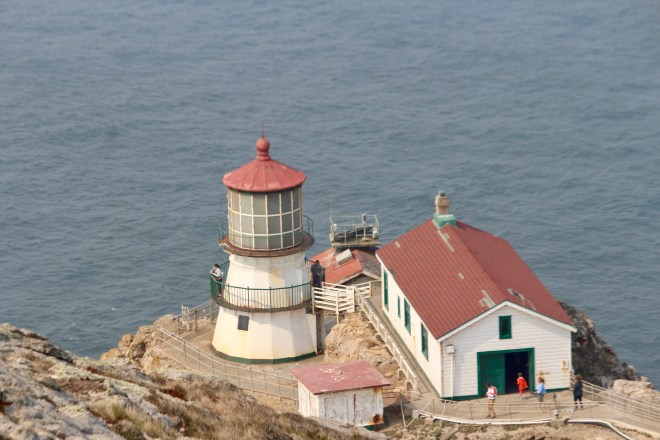
And a light house to guide the way…

There will be more stories to tell, but the story today is about what it means to love our woman-child María.

Last year, María ended up having to be Baker Acted—that is, checked into a psych unit by the police—when she lost it right before a much-anticipated hurricane that ended up being a non-event in Fort Lauderdale. For a host of reasons that had almost nothing to do with her actual state of mind, and so much more to do with the limitations and fragilities of even the best of systems and institutions that care for the vulnerable in a time of crisis, Maria ended up hospitalized for 13 days.

A couple of days after we got to California, Irma started registering on our ‘girl-radar’–that part of us that is always attuned to what comes next for María. We reached out to two people with access to a quality and level of meterological information that we knew we could trust. We’ve stayed in touch and this afternoon, as we were driving down towards Monterey, one of them just flat out said, “if it were my child I would see about getting her out sooner rather than later.”

We pulled off to the side of the road and began the work of turning around the good ship “Lindahl Mallow” so it could head way, way east, instead of a few more miles south. By the time we were done, we had reservations to fly out of San Francisco tomorrow, early in the morning. Sherod will go on to Fort Lauderdale tomorrow evening, pick up María and  fly back to Atlanta with her on Wednesday. Meanwhile, tomorrow I’ll continue on to Montgomery to get our car out of the airport parking. I’ll drive to Atlanta on Wednesday, in time to pick up my peeps in the early afternoon and bring them home for dinner. We will watch, and wait, and especially pray, for the people we love and served through the years in SoFla.

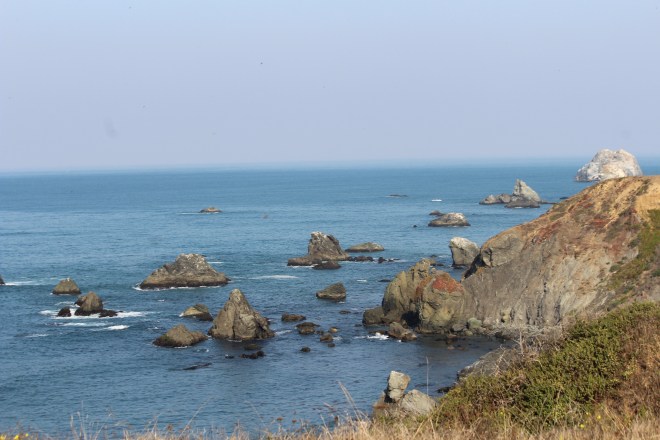
All our other reservations for this vacation trip are cancelled and we are now at the airport Hampton Inn, waiting for early morning to arrive. I want to cry, but I can’t. The truth is, taking care of Maria is so much more of who we are and what we are about. We had four lovely days in Bodega Bay and today we made it all the way to Half Moon Bay on Hwy 1 before turning back; the Pacific shoreline is beyond beautiful. We stopped at the Point Reyes National Seashore and I was able to hike to the observation deck over the Point Reyes Lighthouse. I felt more than a small stirring of regret that I am not in good enough shape to try to venture down and back on a set of stairs equal to those of a 30 story building. But the hike I did get to take was fun and strenuous with a the wind blowing so hard if I stopped and relaxed at all, the wind pushed me around this way and that.

Life is good. Tough things happen. You’re sometimes faced with binary choices and only have a small window of time and limited information to make the call, so you do your best and don’t look back. My daughter will be safe, whether or not Irma blows through Southeast Florida (and Lord knows, I pray it will head up north and east and out to sea instead of wreaking its havoc anywhere). The glorious roar of the surf against the shore still rings in my ears. The pictures I got to take  go with me, as do the bits and pieces I got to write, that will become more complete stories in the days and weeks ahead. And my husband is still my husband, now with us in our 30th year of marriage, and laughter found us again and again in these past 5 days. Love wins.

Pure Delight

I was awake before dawn this morning but it was still a gentle, slow start, slowly grinding the coffee beans I roasted before we travelled to California, eating the most amazing strawberries our Airbnb hostess left in the cabin we rented in Bodega Bay.

IMG_5604

By about 7:30, I was headed out the door to Shell Beach up the road from us, to hike on a trail that runs south along the cliffs that overlooks the Pacific and then follows a fold down to a small cove beach far below. It’s a loop when the tide is low but even at higher tide, the climb down to the small beach, though strenuous, is so beautiful you hardily even notice. I sat on a large piece of driftwood, played for a long while with shutter speed and aperture on my camera, as I watched the surf dance with the enormous rocks that dot the coastline and took dozens of pictures. Few of the pictures are any good but that’s ok because I will try again tomorrow.  When it was time to head back up the trail and home, I was delighted once again by tiny succulents growing in the crags and crevices of the California shoreline.


There were deer and quail and butterflies along my path and behind me, beautiful young surfers riding their waves and their bliss.  Not that the suffering isn’t real and the brokenness of the world harrowing, but that one in my vocation needs a reminder that even so, all creation rejoices in the beauty of a new day.

fullsizeoutput_11fa

I came home in time to shower, with the window open wide and a hummingbird bush and rose vines waving in a gentle breeze.  The utter luxury of having a beautiful view as I washed my hair!

IMG_5642

We got ready for one of two extravagances we are allowing ourselves on this vacation. This weekend, Sonoma County hosts something called “Sonoma Wine Country Weekend”. It’s a somewhat bacchanalian celebration of good food and good wine that lasts for the weekend and includes all kinds of events. Most of them will involve massive numbers of people so at first we thought we’d sidestep this extravaganza. However, to launch the weekend, local chefs and better known vineyards in the area joined forces today to offer luncheons for small groups of people. Sherod and I decided to buy tickets to attend a luncheon at Balletto Vineyard with the meal prepared by Thomas Schmidt of a restaurant in Sonoma called John Ash & Co. Along with 22 other guests, almost all of them locals who know their wine and were so warm and kind, Sherod and I had lunch on a beautiful patio.

fullsizeoutput_1213

The food was spectacular and the wine, what you’d expect from a vineyard that’s won a number of awards–I could have sat all by myself in a corner, with a bottle of their Pinot Noir or their Brut Rosé, though I hardly ever drink. Anthony Beckman is the Winemaker at Balletto who entertained us with stories about making the wines we enjoyed. Though it was hot as forty hades (104 according to the temperature gauge in the car when we left), the people we sat with were so charming that it really didn’t matter.


And again, it wasn’t the amazing vistas that really moved me. It was the vines laden with grapes and the apple trees loaded with the most beautiful fruit in the area, the bees busy at work among the small flowers of a rosemary bush in the patio of the Balletos’ house, that I could have spent hours photographing and marveling over.


In a while, the Mallowman and I will do what we did last night: pack some olives and nuts, a bit of cheese and sourdough bread, apricots, strawberries and a nice bottle of wine in my backpack. We’ll head over to a picnic table on one of the cliffs overlooking the ocean and talk a bit, laugh (God, I’d forgotten how much fun it is to laugh with my husband), and then call it a day.

fullsizeoutput_11f6

A vacation day pretty close to perfect.


Of hummingbirds, Chicken Little and “Suite Française”

IMG_5250

At some point, when most days have been warm in the weeks between April and May, Sherod takes down the bird feeders that hung all winter in front of our deck. Then, he makes simple syrup, carefully washes out the hummingbird feeders and puts them out instead.

This year, he and I were out on the deck, visiting in the early evening, when the first hummingbird, back from its migration south, hovered for a bit and then settled to help himself to something to drink. We’ve had lots of visitors to the feeders all summer long and about now, especially in the evenings, the two feeders are crowded with birds dive-bombing each other, jostling and pushing each other away to get another chance to eat. It won’t be too much longer before another season of migration begins and there’s that sense of urgency building, as birds do all they can to prepare themselves to withstand the long journey ahead.

I sat on our deck with my camera, watching, waiting to get a good shot, listening the buzz of their wings in the air, noticing how the lightning bugs were slowly floating out of their burrows in the grass, thankful that summer is not yet all the way over. But everyone’s back in school, and the truth is, there’s little left of the season of sunshine and growth. Usually, I would have felt the quickening of excitement at a new season approaching, how the winds from the north will begin to blow before too long, and how fall will come behind.

On this day, as Harvey has been pouring its misery on Texas, as I think of my transgender friends after that vicious and unnecessary ban that’s been reimposed, as I think of the men and women I have served through my work in Latino ministries, especially in Fort Lauderdale, and the pardon of Joe Arpaio, I have this weird sense of far deeper, more desolating, endings and beginnings as well.

It is not my intention to play Chicken Little and run screaming, “the Sky is Falling, the Sky is falling.” Neither can I say this is comparable to the situation Irène Némirovsky describes in her remarkable book, Suite Française, a novel about members of the Jewish community as they to flee from Paris when it is about to fall to the Germans.

I read Suite Française many years ago and still remember my heart racing in one section in particular. A woman of considerable privilege, is standing next to her car, finishing up the family’s preparations to drive away from Paris. She is worried about trying to get all her Porthault linens and the silver into the trunk, unwilling to part with any of it, so she makes her household staff load and unload the trunk this way and that, losing precious minutes to flee, while all the while, with impeccable precision and order, the Nazi death machine marches towards Paris. Perhaps because fine linens and silver were greatly valued in my mother’s family, and I have inherited so much that is beautiful and fine in a traditional sense, I found myself getting more and more frantic as I read on. “Flee, flee, flee,” I kept wanting to implore her, “None of that matters. The world, as you have known and loved it, is giving out under you and all that stuff is worth nothing.”

It is not so much that I am afraid (though sometimes I do feel afraid), as I am aware of how easily we pay attention to precisely the opposite of what matters. That poem by Martin Niemöller, “First they came for the Socialists…” has made the rounds on Facebook to the point that it is easily dismissed as trite by now. But Martin Niemöller, a Lutheran pastor, spent 7 years in a German concentration camp and spoke a truth that cuts to the quick if we let it.

After hearing about Joe Arpaio’s pardon, I made myself read the DOJ investigative report on the Sheriff’s Office of Maricopa County when he was Sheriff and then, other pieces about him. I read how he jokingly talked about his “concentration camp” –the “prison tent city” where, between 1996 and 2015, there was no explanation given for how 73 people died. I had been reading about him on and off for years now, nauseated by his sheer cruelty and at the same time, always mindful of the need to speak carefully and gently as a priest of the church, so as not to offend. I am infinitely capable of finding distractions that allow me to look the other way.

I can’t any longer. Arpaio was found guilty of felonies that directly undermined our constitution. By pardoning him, Trump has once again thrown his lot in with advocates of a kind of racial supremacy that can only become more hateful and destructive with each nod from him. He has gone another step in subverting the rule of law in this country.

The sky is not falling. For most of us, today, tomorrow, and the next will be pretty ordinary. The Nazi’s aren’t marching into town either. It’s just that in too many ways, I see true evil and darkness gaining a foothold in the country I so love. I will give witness against the harm I see being done. I will resist my temptation to be comfortable at the expense of others’ pain. And I pray for God’s strengthening grace to persevere as I find ways to be part of an alternative to all the hate, the despair and desolation taking hold.

Self Care, Self Comfort

IMG_5221

I don’t remember if I wrote about this recently or not, but I have heard a very helpful distinction between self  care and self comfort. Self comfort is intended to anesthetize, numb us, when we are in overload. It’s easy to figure out mine: snacking, and not snacking on healthy food, either. Self-care is more actively finding the things that will give us a sense of ourselves, of our agency, of our capacity to keep on keeping on, even when the impulse is to crawl into bed and pull the covers over our head.

I woke up and quickly got overwhelmed, listening to the news. I definitely had a choice since today is my day off: get in the easy chair with a book and goodies, or get going. I’ve had a busy morning. I cleaned out my closet, something I hadn’t done since I moved here in the summer of 2014. In some respects, doing that work made me sadder. I’ve gained way more weight than I should have since I left Florida. I play that weight game with myself: I’m going to hold on to my skinnier me clothes because, by golly, I’m going to lose that weight! Today, it seemed so much more obvious that it really is just that: a game. So one by one, I took skirts and blouses and dresses and pants I can’t use and bagged them up to take to a clothes closet in one of the churches in Montgomery.

I started going back to my vegan ways with the help of a good friend a couple of weeks ago. It’s been both energizing and rocky going, especially in the last week. But it’s a start; my intention is to be back in a largely vegan food plan moving forward. I’m also doing a bit more exercise. That too is a start. Cleaning out my closet meant confronting the shame and the disappointment in myself. And asking myself what I can do differently that is not gamey, or unrealistic, or unsustainable, in an effort to choose self-care over self-comfort.

That closet work was hard but it is done; I fit in all the clothes I kept, and my closet is sparkling clean. While I was at it, I realized it was the week I wash our sheets. That bit of work brought me enormous joy. A few years ago, my brothers and their spouses, my dad and I vacationed on one of the islands in the Stockholm Archipelago in Sweden. We stayed in a cottage with a lovely umbrella clothes-line outside in the garden. Though it was cool, the sun shone for so long each day that the clothes dried quickly. As I’d pick them off the line and bring them in, memories of how laundry smelled when I was growing up, because everything was line-dried, came flooding back. The smell is simply glorious.

As we got settled here, I asked my spouseman to put up a clothesline for me, and it went on his to-do list though we both struggled to figure out a good place to put it. Then one day, the solution came to Sherod and he buildt this contraption that folds up when we are not using it, and gets let down to allow us to hang our laundry in the sun and breeze on wash days. Today I used clothespins to hang the pillowcases and got the Mallowman to help me with the sheets. We “wrassled” them up on the lines together and there was this exquisite sense of shared purpose and camaraderie. The sheets have since all dried and I’ve remade our bed so tonight, we will slip in between sheets smelling of light and gentle breezes. A very small way, but none-the-less a way, to make our carbon footprint smaller. Self-care.

This Sunday, the Gospel reading ends with the story of the Canaanite woman who importunes Jesus long enough to make him change his mind and respond to her and her needs. I’m preaching and am both deeply disturbed by the passage with its confrontation not only of what’s happening in our country right now, but also of my own hardness of heart, and grateful. There is wisdom and hope to be found in that story. I’m trying to hold on to the realization that the kind of willingness to open the doors wider, to be more generous, to see myself and the Other in a new way as the Gospel suggests even Jesus had to learn to do, requires self-care, while self-comfort makes it far, far easier to simply look away.  I can’t look away.

Taylor Swift, Laurie Penny and Anger

fullsizeoutput_11b7

Many women you know are angrier than you can possibly imagine. Most are pretty good at hiding it, having been taught to do so since childhood. Laurie Penny

There are two sisters in me.   One speaks a lot. She is reasonable. She is nice. Sometimes, she is described as sweet. She is also resilient and determined to make the best of what she’s been given. So I get up on a day like today, delighting in the small joys of life.

On Friday night, Sherod and I sat at table in what can only be described as the Montgomery version of “Babette’s Feast”—lovely company enjoying a slow and sumptuous meal, candle light, wine that was wonderful without being pretentious, laughter. Anne Sexton, in her poem, For John Who Begs Me Not to Enquire Further, talks about “my awkward bowl, with all its cracked stars shining”—a wonderful description, it seems to me, of all our lives; so there we sat, late into the evening, cracked stars shining, in a quiet, beautiful, gracious place.

Today has been much more about the domesticity of a day off for a priest like me. Doing laundry and roasting my coffee for the week. Talking to our daughter who is still sick in Fort Lauderdale, so far away I can’t run my fingers through her hair and give her comfort, but connected enough I can order chicken noodle soup from the Tower Deli close to where she lives, have someone it run it over to her, and imagine how that quintessential mama’s cure for so much gives my girl some kind of sense of of the warmth of love.

We’re starting to teach our new family members, Gilbert and Sunny, about finding their way outdoors so Sherod and I stood amused for a good while, watching Gilbert romp the grass, convince himself he’s big and bad-assed enough to stalk one of the chicken ladies, before turning tail and running like his life depended on it as soon as she clucked. I’ve folded and cleaned and breathed in deep enjoying the lavender candle I lit in my office a while ago. It is not hard to be grateful, and sweet, and kind when you are just this side of heaven.

The incredibly hard question for me these days, is ‘what about the anger, the sister of joy’? It seems like everywhere I look right now, there are women holding our awkward bowls with cracked stars shining, trying to keep the light of anger from shining too bright, too harsh in the places where we live, and move and have our being. A peer I respect enormously shared this article on Facebook recently.

That article, and getting to hear bits and pieces of the Taylor Swift trial, reopen the door to an anger that is kept tightly locked in me. There is one small story I am now strong enough and old enough to tell that describes the anger I am talking about.

When I was at seminary, each seminarian had to preach once a semester; we did so at daily morning prayer with the whole community. It was not unusual for a member of the faculty or administration to invite the “preacher” into her or his office for a visit and to give feedback about the sermon the seminarian had preached. It happened once that I gave a sermon about the call to pick up our cross and follow Jesus.

I was invited to visit with a person with considerable authority so I was quite flattered by the invitation. We sat in his office and it turned out that what this man wanted to discuss with me was that  after chapel, he’d been thinking about what “picking up your cross” might mean in his life. His conclusion was that his cross would be if his wife was seriously injured and could no longer have sex with him. He went on at some length about why and how hard that would be and I was left wordless. I was 25 years old and far less experienced than many women my age. All I remember thinking was that I wanted the earth to open up and swallow me because what in God’s name could I say?

I had come to seminary without being a postulant for holy orders but still very much wanting to find a way into that possibility. This person would have very significant influence on my ability to make that happen. There were no witnesses and you figure out quickly as a woman, that in ‘he said/she said’ scenarios, especially with the kind of power differential that existed between the two of us, I wouldn’t stand a chance. So I mumbled some inane bits of response, the conversation ended with him congratulating me on the sermon, and I walked out wanting to scrub myself down, wash myself clean of his garbage.

In the larger scheme of things, this was not a huge deal—this person did not try to grope me, he did not make any advances to me. I am not even sure it would qualify for any claim of harassment. But what I see now, that I only sensed then, was that the difference in power and authority between the two of us was so enormous, that a conversation about his sex life with his wife not only missed the point of my sermon but was beyond inappropriate. I am proud of Taylor Swift, and Laurie Penny, and all the young women coming into their own, who have a clearer voice and stronger sense of their worth—and for a world that has opened up a tiny bit more space for a woman’s anger to matter.

As for me, if you grew up, as I did, fearing my own anger so I got far more comfortable with grief and sorrow, it isn’t only that the light shining out of a cracked and awkward bowl has been refracted and dimmed, though that has happened for sure (and all the while so many of us murmur, “you know, rainbows are so pretty aren’t they? And they are a reminder of God’s promises to us aren’t they?”). But it is more than that. As light broke into a multitude of colors, too many of them, but especially the red, got painted over with pink.

Perhaps the work of women like me is to wrap our hands around the too-dim, too monochromatic light, as if it was a rope, to draw it back in, slowly but surely, hand over hand, “un-refracting ” the light, reclaiming a much more complicated and colorful version of ourselves. In the spaces where fear and a desire to be liked no longer reign supreme, maybe we have the opportunity to weave the anger back into the fabric of our being, and along the way, we can take the time to make sure the light becomes more concentrated. More focused. More steady and unwavering, so what shines out through the cracks and fractures of a carefully constructed life is truer and more complete. And also shines brighter.


For a friend, walking with her mama

DSCN0211

Grace Cathedral

This is what I learned in the spring of 2011: When a terminal illness finds its way into the life of a family, we become remarkable resilient finding our way through changing “new normals”. We have time to build up reserves of courage, though we don’t know we are doing that. Then, there comes a point, a tipping point, and we know down in our bones that we have started walking the last length of the journey. That moment came in April of that year. My mom, mami, as I called her, had been through several lines of hormone and chemotherapy, for metastasized breast cancer. Each line lasted a shorter amount of time, each had harsher side effects. The options were dwindling. Mami and Dad were scheduled to fly down from Boquete to Ciudad de Panamá to meet with Mami’s oncologist because the blood work results were getting dicey again. I decided to join them.

I had seen my mami in January and she had looked more fragile, been more emotionally vulnerable than ever, but still lively and engaged. The mami I met at Hotel Plaza Paitilla, our ‘home base’ in Ciudad de Panamá was grey, exhausted and also somehow, clear-eyed. She had had enough. The purpose of this round of doctor visits was to advise them she was done with chemo and ready to move into palliative care.

The first doctor we saw was her neurologist, the person who first figured out my mami’s cancer had metastasized. It was an amazing moment, to sit next to the woman who had been so strong and unyielding in her effort to help me through the childhood challenges of a bum hip so I might have ‘life abundant’. Now, I heard that strength and determination in her voice as she told a middle aged woman doctor that it was time. Dr A. responded in the most respectful, supportive way imaginable. She had no fear in her voice as she applauded my mami’s decision. She made it clear that if my mami needed any further consultations with her, she would be glad to help. And then, she stood up, along with us, came around her desk and hugged my mother, told her how glad she was to have worked with her, and said good bye. No candy coating, no pretend like, just the quiet and freeing truth that it was OK for my mami to say her body was too worn out to withstand any more chemo.

The doctor who my mami had become profoundly attached to was her oncologist, a much younger woman who’d just returned from Australia where she had attended a world congress for oncologists, who, throughout the time she worked with Mami was always on the lookout for any new possibilities for therapeutic intervention against the cancer. My parents had gotten close enough to her that Dr. P travelled to the town where my parents lived when my parents celebrated their 50th anniversary. Encouraged by Dr. A’s response, I went into that second appointment filled with peace, in awe of what was unfolding. My dad and I sat on either side of my mami, each holding one of her hands.  Those hands had become bony little birds, lying weak and tired;  I was filled with dread that if I squeezed even a little, I’d break a cancer-riddled bone.

My mami had a carefully prepared little speech; she’d already practiced with Dr. A so it came even more easily with Dr. P., whom she cared for so much.  We had all been looking at Dr P as Mami told her about her decision, and then Dr. P gave her response. “Pues no, Doña Anita, yo quiero seguir peleando”—Sorry, but no Miss Anita, I still want to fight.”  There was a window behind the doctor’s desk; I could see a tall building  as I turned to look out; relieved, I began to count the windows, one by one, floor by floor. Count. Breathe. Be quiet. Count. It’s going to be OK. Count. Breathe. God d%&n. No—you can’t go there. Breathe. Keep counting. Don’t stop counting. The adrenaline pinged through my body, I felt my chest about to explode, and the room got claustrophobically small.

Mami seemed to draw further into herself and now, all the confidence and clarity was gone from her face. Instead, there was this struggle back and forth between unexpected hope, confusion, and the exhaustion that could not be wiped away by the thin and false thread of optimism offered by Dr. P. My mami’s voice became hesitant as she said, “If you think I can have more time, you know so much more than I do. Yes, I’ll do what you recommend”.

Me? Inside my mind, I turned on my mother. I wanted to shake her,  disrespect her even more than her doctor just had, strip her of her dignity by yelling, “Mami, that is the craziest thing I’ve ever heard you say! It is your body, not Dr. P’s. It is your choice, not hers. Think about Dr. A’s response and how meaningful that moment was. This is a travesty and I am about to reach out and wring this woman’s neck!” I thank God for the strength I dug out from down deep to sit quietly, to let my mami have the conversation she needed to have with the doctor she’d entrusted her life to 5 years earlier, when the metastasis had been discovered.

My father and I talked a few times during the next 24 hours, struggled to make peace with something that seemed to go against all the brave work my mom had done; it is a fearsomely courageous bit of agency to say, “I will now allow myself to die.” We shared our horror. Our dismay. Our anger. My mother only had the strength to sleep, and wake for short periods of time, distracted and distant. Plans were put in motion to go return to the city a couple of weeks later to start the new line of treatment.

Then it was time to leave. My parents headed back home in the morning and I had a late afternoon flight back to the USA,  so I was able to go with them out to to the airport where they’d take a flight to David. I watched my dad wheel my mami into the security area, her body so thin and bent over now that she was lost, almost swallowed up, in a wheel chair.

I had scheduled a deep tissue massage in Fort Lauderdale for when I returned from this trip, and I kept the appointment the next day. Never before and never after, have I experienced a massage where every single place in my body the massage therapist worked on hurt, and hurt excruciatingly.

Away from Dr. P,  my mami regained the clarity she’d lost in that sterile office, filled with books and magazines, and charts and pharmaceutical samples but little humanity. She did not return to Ciudad de Panamá. Mami died some weeks later, in early June. During the two weeks I was with my parents before her death, the neurologist, Dr. A called 3 times to ask how my Dad and I were doing and check on my mami. At one point in those final days, we tried repeatedly to reach Dr. P because the local doctor needed to check something out about my mom’s last round of chemo as he perscribed palliative meds. Dr. P never returned our calls.

Here is some more of what I learned that awful week in April: I was a tiger ready to pounce on anyone who messed with my mami. But sitting in Dr. P’s office, I had been ready to snatch away all my mom’s agency, her ability to make the decisions that worked for her, because I thought I knew what was best for her. It was my mother’s life and death, not mine. I am grateful for the grace that made it possible for me to sit quietly through that meeting, be polite to the doctor, lead my parents out to the cab that was waiting for us.

My mami, even as she was dying, had the strength and wisdom she needed to honor relationships that were hers, not mine. But it was important and a part of me honoring my relationship with my mami to talk about the beauty of the meeting with Dr. A., to reassure my mom that we’d follow her lead, do whatever she decided.

One of my dearest friends is walking towards that kind of hard place with her own mama. As one who’s already been in similar places, I think I know a bit about the confusion, the warring hopes, fears, needs, the sheer mind-numbing volume of decisions, large and small, that are hers to make now. I don’t think it’s perverse of me to see this as a time of deep holiness in my friend’s life. I don’t regret for her that she finds herself in such a place. Walking with my mami tempered me. Made me have to go deeper to find the living waters and in the process, stripped away a lot of games and half-truths I had clung to in the past. Those days, and the weeks that followed, gave me a connection with my mami that neither angels or principalities, or things present, or things to come, or life or death, will ever break.  I pray for such a gift for my friend.

Our Joy Complete

IMG_5220

When María first arrived from México, she was extraordinarily self-contained. She’d had to be. As one who grew up learning to ‘read the instructions’, I had immersed myself in the literature of reactive attachment disorder and already knew that María not liking to be touched or held was a symptom. I’d also read that one way to break through some of the resistance to being touched would be hard at first, and then something powerful and good for her and her family.

I’d pick María up against her will and get into our pool in Florida, slowly walking with her to where it was deep enough that only my head and shoulders were above water. María would scream bloody murder but would cling to me. I’d stand there singing to her, holding her at first fairly loosely and then more tightly. It worked. María became more willing to be consoled when she needed consolation. She also fell in love with swimming and water games and hanging out in the pool. For a while, her games got rough, but year after year while she was a child, there were endless games to invent with each other, all of them wonderful for their ability to allow me to draw close to my girl.

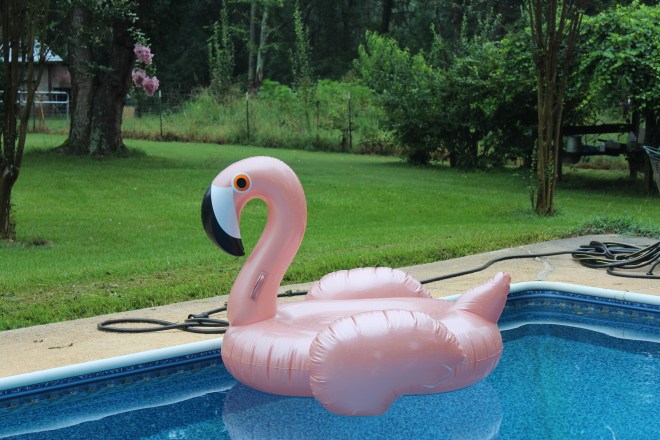
Occasionally, Sherod and I grumble about the pool in our farm—pools require so much upkeep and are of use for a smaller window of time each year. Nonetheless, last year I stumbled on a flamingo float that made for a perfect Christmas present for the spouseman. We have given each other flamingos of all kinds through the years. Yesterday, while I drove to Atlanta to pick up our girl for her last summer visit, Sherod finally pulled out his present. Soon after María and I got home, we stood around him watching him use an air compressor to blow the float up. Mo went nuts. The chicken girls, who’d been out for their afternoon stroll, totally freaked, squawking, flying away as far as they could from the monster that had appeared out of nowhere. I gathered the girls back up into the chicken yard. Sherod tried to reassure Mo (who remains highly suspicious even this morning, looking out the window while he growls at his most fierce). Then, the three of us jumped in the pool and had the time of our life, figuring out how to get on the flamingo and stay on her, playing shark when any of us managed to get on and stay on, laughing and hugging and, in my case, marveling at the power of water to heal, to hold, to renew and refresh and baptize us as beloved.

I Will Change Your Name

IMG_4881

Ordinary things made holy by the children at Camp McDowell

It doesn’t happen often. A moment, or in this case, a stretch of time, when it seems that all the different strands of life have woven together into something seamless, sturdy, ever-so-real, and also of transcendent beauty and joy.

If you’ve read my blog with any regularity in the past few weeks, you’ve probably had some sense that this was a hard summer, with the departure of the rector of Ascension, the uncanny number of deaths in the parish. At one point a couple of weeks ago, death got mixed up with the kind of messy church politics that are inevitable, and really human, and sometimes painful and confusing. I’m now seasoned enough to know when to refuse to allow myself to take it in the least bit personally so very quickly, the questions resolved themselves and life went on. But that happened in the midst of the grief of euthanizing my sweet cat Dot, and as I was taking time to visit with a gentle man who’d been released from the hospital with hospice care, who was struggling mightily with fear and desolation as he slowly walked that lonely path of dying. It happened on the day a very dear friend and remarkable priest of the church, Stefani Schatz, died as well. On the very next day, I had another funeral to do. That was a lot, and then, my duties at Ascension were done for long enough to get in my car to go be program director and chaplain for Bethany’s Kids, the inclusion summer camp program I wrote about in my previous blog.

I had started to plan and prepare for the session with a small group of women a few weeks ago. All of them were either trained, or knew a lot about the Catechesis of the Good Shepherd. One has a daughter with some special needs. Somehow, we all clicked and though I had the responsibility for coming up with an overarching theme, what came together was so much better than anything I could have done by myself. Our theme was “refreshed by living waters”—a 5 day exploration into the holiness of water. That thing that happens when a team clicks and its members call out the best, most creative selves in each other? That happened and though we were all probably more than a little apprehensive about what we’d prepared and whether or not it would work with the very broad range of needs, abilities and maturity levels of our camper peeps, the plan worked remarkably well.

Then, the week began, and the team grew to include a set of college students who are working as core staff members at Camp McDowell this summer. I get so disillusioned so often, that when a bunch of young people blow me out of the water with their kind competence, their sense of humor, their beauty and the faith-driven commitment with which they work, I just want to stop and stare.

I was acutely conscious of the responsibility I had to help us all see through the lense of faith, hope, charity and love—in other words, I knew I was there as a priest. In a post I left on this blog several years ago, I shared a portion of the sermon my friend Michael preached at my ordination to the priesthood, as he switched back and forth between English and Spanish, as he and I had done throughout our friendship. This is part of what he said:

 Ahora entras en el sacerdocio, donde lo que Dios pide de ti es una confianza sobrehumana: la capacidad de alzar tus manos, levantando las plegarias de un pueblo y distribuyendo el consuelo y la bendición de Dios por medio de los sacramentos.  Creerás de un momento a otro, que no eres digna, que hay algo impuro en este atrevimiento.  Pero ya el serafín, si te atreves a creerlo, te ha limpiado en el brasero de tu vida.  Cree, a la vez, que lo que has sufrido te ha simplificado y abierto y es, con paciencia y humildad, el tesoro que depositas en el templo.

Now you enter the priesthood where, what God asks of you is a superhuman confidence: the capacity to raise your hands, to hold up the prayers of a people and offer the consolation and the blessing of God through the sacraments. You will believe from one moment to the next that you are not worthy, that there is something impure in such audacity. But dare to believe that the seraphim has already cleansed you in the crucible of your life. Believe that what you have suffered has simplified and opened you, that this is the treasure, which, with patience and humility, you will bring as a gift to the temple.

I have never understood those words like I did at Camp McDowell. I drew on everything I have—my education, my life, my parenting of a special needs daughter, the things I’ve learned about work and friendship, and beauty, and liturgy—to do the work of the week. There was a sureness in my work, and the work we were all doing together, that was possible because in the words of the woman who runs this program, it had required “we plan tight and hang loose” once the week began.

On Friday night, when all there was left was one more morning, we gathered for our evening worship. That day, we had talked about baptism, about the ways in which we are washed clean, given new hearts throughout our life. Allie, the young woman in charge of the music for the week, who is studying to be a biochemist, chose the closing piece, a song I’d never heard of. It’s called “I Will Change Your Name”.

Allie’s clear voice melded with the voices of many in the space who also knew the song. Who was priest and who was being ministered to blurred in that moment. The words come as close as any I’ve ever heard to describe what being a part of the Episcopal Church has done and been for me.

This is not to deny the failures, the disappointments or the very real brokenness of the church. And still, God’s grace runs like a clear and clean river of life, enough to have changed at least one person’s name. AMDG