Two Tiny Tales of the South

fullsizeoutput_ec9

A Bunny Story.
Some months ago, our sweet neighbor’s daughter and grandchildren came to us with Rocky the baby flying squirrel who’d been caught by their cat. Now, Rocky was in bad shape but Sherod’s success as the squirrel whisperer gave our friends hope for this injured little creature. The story did not end well, but we took good care of little Rocky while we had him, and understood that in the country, that’s how it goes sometimes. A bit of time went by, and as winter became spring in fits and starts here in Alabama, another crisis. This time, our friend’s dog–a great big ‘ole dog–was found to have a baby bunny in his mouth. The bunny was rescued, and, because bunnies become more self-reliant much sooner than squirrels, he was released back out in the woods to find his way to a life worth living. A couple of weeks ago, it happened again. The bunny. The dog. The mouth. The way I heard it told, the dog has such a big mouth it was like a cavern with a pair of bright eyes peeping out from way inside. Bunnies can holler to make your skin crawl, and he wasn’t about to stay in that mouth! Again, the little bunny was rescued, and this time, kept at home with a pair of young twins to watch over him.

You have to know your Bible pretty well to know what name fits when, and around here, people do. Surely, that little bunny could have swapped stories with someone who was once swallowed by a whale. It’s only right then, that his name is Jonah. One day, his human friends hope to release Jonah back into the woods. For now, though, he likes being held.

IMG_0020

Durwood the Donkey

A Donkey Story.
It’s a long-held tradition at Ascension that a donkey is part of the procession on Palm Sunday. In fact, for many years there were two donkeys that walked with a certain stateliness down the aisle. They were devoted siblings who had  always been together; it seemed unkind to choose one over the other for such an important occasion. What’s more, all that loud All Glory, Laud and Honor and palm waving would be disconcerting to a simple country animal.  And surely, it is good for a donkey to not be alone. So down the aisle they came, side by side, and then out the south transept door, their work done for another year. This year, the two fellows have a new set of humans to tend to them, friends who do not have a trailer, so the donkey boys pretty much stay put.

For weeks, we advertised on Facebook and through Constant Contact E-news bulletins for a donkey. For weeks, all we got was dead ends. Andy, our rector, thought he might dress up as a bull (he has this great bull outfit). Others suggested the Papier-mâché camel   on wheels we use for our Epiphany parade and blessing of the thresholds. Then on Thursday, a break: a short text announcing “Who do I need to talk to; I think I have a donkey”.   A flurry of communications later, this morning, Durwood the Donkey joined in the procession. He was a good sport about a walk he didn’t particularly enjoy, but he minded his humans, delighted us all (and had no accidents—whew!). The children were beyond thrilled, greeting a gentle, forbearing, new friend.

Here’s what got to me: I stopped to thank one of his humans before the service started. All around us, people were waving palmetto fronds and he wanted me to listen to something important about them. He pointed to one and said, “those palms there saved my kin”. He went on to explain that in the worst of the Depression in the 30’s, the Porch Band of Creek people suffered death-dealing hunger. While people around them got government assistance for food, his kin did not. It was the root of the Palmetto Palm, carefully dug out, peeled, boiled, and mashed, that sustained his great-grandparents, and grandparents, through those brutal years. To this day, it is a staple for this man and his family.

I’m not exactly sure why these tiny little stories are the ones that continue to knit me more and more thoroughly into this place which is my home. The humor. The hardship. The stories that are so heart-breaking and so beautiful they make it hard to breathe for a moment. The silenced voices, as well the squeaking and hollering voices of squirrels and bunnies, all crying for salvation. On this Palm Sunday, the ones I hear and the ones I don’t but are surely waiting for someone to listen, make real the original Hebrew meaning of “Hosanna”: “I beg you to save me”…
Richard Bolles, RIP

fullsizeoutput_ec7

The vocation I had envisioned for myself in college, to be an Episcopal priest, began to unravel in seminary. I was too naïve, too immature, too unknowing. By the time I graduated from the School of Theology at Sewanee, I was certain I’d never be a priest. I thought, though, that perhaps I could be a seminary professor and began my doctorate in theology at Vanderbilt. But the truth is, I started that work because it meant getting an extension on my student visa and buying myself some more time to figure out what I wanted to be when I grew up; the only thing I knew for sure in those days was that I wanted to stay in the US and the only way I could do that was by staying in school. I am deeply saddened now,  when I consider the missed opportunity to do the kind of rigorous thinking a doctorate would have required of me.

Sherod and I had begun to date and we reached the place where a long distance relationship (he in Florence, AL, me in Nashville) was not enough and we knew how much we loved each other so I say with some humor, that my ardently feminist self traded a PhD for an Mrs.. I kept telling myself, though, that I was only taking a leave of absence at the end of my second semester and I’d be back as soon as life settled after our wedding. About 6 weeks after our we got married, things got tough for Sherod’s daughter and it became clear that we needed to have her come live with us. To be 28 years old, with a 14 year-old stepdaughter at home, meant a lot of things, including accepting that I would never go back and finish that degree.

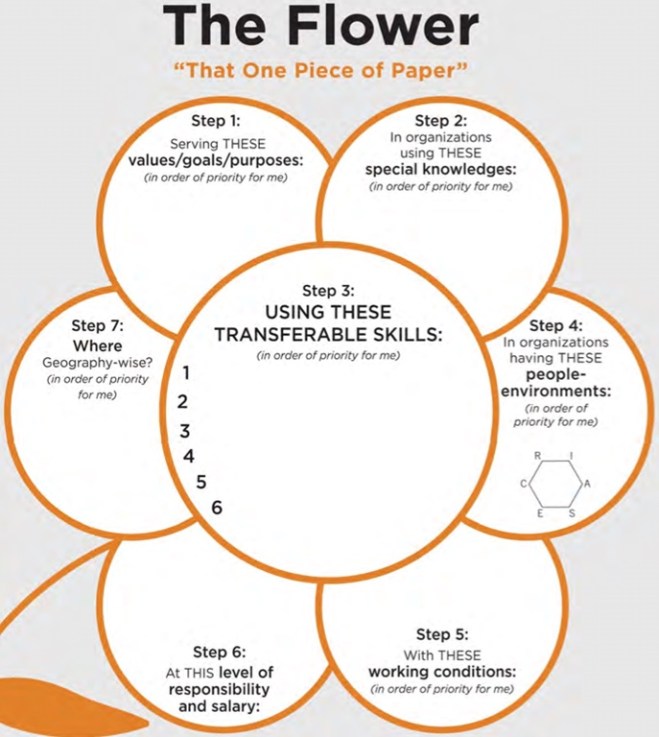
It also meant we needed me to be gainfully employed. I was doing some translation work but that was very part-time.  Somewhere along the way, someone (and I wish I could remember who) recommended I take a look at a book called, What Color is Your Parachute. I got a copy of it and realized it was a painstaking, tough, grace-filled way of taking a good hard look at myself to figure out what I might be called to do and be, now that everything I had figured on was upside down.

What I remember most is that there were several areas of work I had to do. Working close to eight hours a day, each one took 2 or 3 days to complete and at the end, when I had worked through each area, I  had a few simple, well-distilled verbs or phrases I entered into a small circle. And when I had finished filling each of those circles, I ended up with a remarkably complete snapshot of my vocational self. The circles all came together to form a flower, and if that seems a little kitschy today, I desperately needed that kind of affirming vision of myself then. Funny how the flower itself was almost as important as the work I’d done.

The results were clear: I was particularly suited to adult education/training and organizational development. It would take a couple of intermediate steps, but I ultimately ended up doing—and loving—the work What Color is Your Parachute pointed me to. It also turned out to be work that has been enormously helpful as I’ve come back full circle to be a parish priest.

Richard Bolles, the author of this book, was an Episcopal priest. Bolles has just died at 90, after a life rich in years and blessing. His obituary in the New York Times gives a fascinating account of his life.

Although working through What Color was solitary work, there was a sense of having someone with me who could both instill hope and insist on accountability for the reader/worker of his book. Bolles knew his book had been a best seller for years on end. I imagine he heard from lots of people that his work had been transforming for many. It feels important to acknowledge that Bolles’ book took that confused, insecure, sharply angry young woman I was, and launched her on a path that has allowed her to flourish. Rest in peace, Fr. Bolles. Thank you.

As the Day Wanes

IMG_0691

These last two weeks pushed hard. Friday before last, as I settled in for one of those naps you take when you are early into having a bad cold—desperately needed and also not enough—I heard my email ping. It was a brief note from my dad about the rough night he’d had and his sense that he might have a bladder infection. My first impulse was to burrow even deeper into bed, respond to him with the suggestion that he take Motrin and let me know how he was feeling in the morning. Instead, I burst out of bed, threw on some clothes and got to his casita quickly, all business, to inform him we were going to the urgent care place in Prattville. Those of you who are my friends on FB know he was actually extraordinarily sick with severe sepsis. Had I followed my first impulse, my dad would more than likely have died. It’s still discomfiting to remember how each doctor that saw him over the course of his hospital stay underscored just how sick he had been.

Along with tending to Dad, there was a cold to get through, a house to get ready for a friend of his who’d been planning for months to come see him, other pieces to put in place since, the day George was leaving, Maria would arrive and two days later, my brother Hans from Holland. I was stretched out on the sofa in Dad’s room on Sunday when I got a text from a parishioner who recently moved out of state. I had gotten to spend time with her sister who had been through a series of tragedies that would devastate anyone. Now, she had had a very serious stroke and was in the ER by herself because all her family was out of town. I made sure my dad was resting comfortably and headed down to see her. Her situation was almost too much to take in.

Over the next few days I visited with her whenever I was in the hospital with Dad, received George, schlepped him back and forth between the hospital and home. He was so incredibly gracious and generous, helping to tend to my dad while I got to put in a couple of days work. George was a staff photographer with National Geographic until he retired and as we drove in and out of town, he told the most marvelous stories. This time, I had to ask for some help; several members of the parish I serve were extraordinarily gracious, preparing dinners for my family that were delectable, and gave me breathing room as George left and my peeps made their way here. I could be with them and not worry about cleaning up the kitchen.  I could steal a little smooch or hug here or there from the Spouseman, and could sleep enough to shake off the cold.

On Tuesday, Maria went to the church with me and had an absolutely glorious day with one of the true saints of Ascension. We got back way late that evening and sat down to eat our dinner. Hans, Dad, and Sherod, all joined us around the dining room table and Maria told them about her adventures that day (that included singing and dancing in the foyer of the office area of the church). She seemed to get more and more reflective as she spoke and the next thing we knew, she was telling Hans about the arc of her life, unsparing in her description of the ways in which she had been out of control, destructive and hurtful many times as she was growing up. There was regret in the story, and also glimpses of her indomitable spirit, that has never quit trying. After speaking so honestly about the earlier part of her life, she continued on to say, “Now, I am almost 21 and I am going to be an adult and I am working not to loose control, and learn to fold clothes, and cook, and use the microwave, and make the bed, and be responsible, and get a job, so I can have a good life.” For quite a while, she talked about the future she now dreams of for herself. The rest of us were spellbound. Every chance we got, Sherod and I snuck looks at each other. In astonishment. In more gratitude than I can express. We surreptitiously wiped tears off our faces. This daughter of ours is an absolute miracle.

Morning came very early yesterday, and after tight hugs and re-hugs with each other, Maria and I did what we always do now, when it is time for her to leave. First I made the sign of the cross on her forehead: “I bless you in the name of the Father, and of the Son, and of the Holy Spirit” and then she marked my forehead and solemnly repeated the words of blessing, before getting in her daddy’s truck to go to Atlanta.

I have taken this afternoon off, walking out in my garden before the rain came, sitting and watching the weather turn: first it was soft rain that got progressively steadier and louder on our metal roof. My brother and Spouseman went off to a community gathering and I just settled a little further into my chair, thankful my introvert self is able to have some time alone. The wind picked up to gusts of 30-40 mph according to my weather app.

When the squall line had moved through, just as the sun was setting, the sky lit up with incredibly beautiful colors, and in the midst of all those soft pastels, I saw as fierce a rainbow as I’ve ever seen, the colors so true, the boundaries between them so much starker than usual. It was as fierce as the relief of ending a week knowing my dad is on the mend. My daughter continues on her journey, going deeper and further and with more courage than most people I know. I love my brother and his awful sense of humor and I love the way my husband’s face no longer looks haggard or worn out, how much more frequently he flashes those smiles that melt my heart. Promises made. Promises kept. A reminder painted bold in the sky, of Steadfastness, even as the wind was howling all around me.

A Lenten Epiphany

IMG_0589

Epiphany at Ascension, 2017

On Sunday evening, two friends and I were cleaning up in the kitchen after dinner. The spouseman and a couple of other friends were sitting around our dining room table, laughing and talking. I was struck by a thought that, to some, might seem morbid but was as filled with wonder and gratitude as I could ever imagine. To give it a bit more context and meaning, I need to harken back to conversations Sherod and I have had in the past.

One of the questions for people like us, who got used to living in border spaces, has been “where will we be buried when we die”? That, in some ways, points at what we define as home and for the longest time, we had no answer. We’d come to spend a holiday in Selma and I’d marvel at family plots with generations and generations of a single family buried together. Generations being born, living and dying in one place is far, far removed from the realities of my family, where each generation for at least the last four, has literally moved to a different continent than where the previous generation lived. In my generation, my older brother will likely be buried in Holland and my younger brother in the U.K. I still wish there could have been a place that marked my mother’s life, a place where I could see her name and get as close to her as is possible when all you do is use your finger to gently follow the letters of a name on a little plaque or tombstone. Her ashes went swiftly and playfully down to the Pacific Ocean after we sent them on their way in the Rio Caldera and the most I can do is gaze at a picture my younger brother took as he left Panama after her death, a picture that shows where the Caldera empties out into the Pacific.

On any given day, I would have answered differently if asked where Sherod and I would want to be buried or have our ashes buried or scattered. I was OK with that—after all, it reflected how lightly we held to place as a definition of home.   Now, there is much less doubt and in fact, sometime soon I have to make some arrangements because we know where our final resting place will be. We’ve even talked about filing funeral plans at Ascension.

I hadn’t realized until Sunday evening that there was a corollary to the sense of rootless-ness that defined most of our life together. With a husband 14 years older than I am, it is fairly reasonable to consider the possibility that I will outlive Sherod. I have never given much thought to what it would be like in the wake of his death, if in fact, I do outlive him. What came rushing in, uninvited and unexpected, as I stood laughing with my friends, as I looked around my kitchen, was a certainty that I’d be OK. I’d be able to find my way through that particular devastation. There would be people to walk with me, there would be other parts of my life that would demand my attention, that this small farm, and all the new responsibilities I would have to shoulder, would provide comfort and consolation.

In Fort Lauderdale, with the partnership in ministry Sherod and I developed, if something happened to him, it happened to me as well, when it came to my work situation. Even if I could continue working in the ministries we were involved in, I would not be able to earn enough to hold on to our house and the life we had built together. I am so liberated by having found and been found by Ascension on my own merits and on my own, by the fact that our vocational paths have broken away from each other definitively. I am my own person in ways I don’t think any woman before me in my family has ever experienced. I am also part of a community that I belong to and belongs to me. If it is true that I dread losing Sherod and even pray that it will be I who go first, I am so incredibly thankful that I can bear to consider such a possibility.

And really, such thoughts are grounded in something even deeper and more new to me. I have never had more of a sense of belonging, never been less lonely, than I am now. That is quite simply stunning. AMDG

The Work of Wind and Winter

fullsizeoutput_e65

Early in Winter

fullsizeoutput_eb7

As Spring Begins to Bloom

In succession
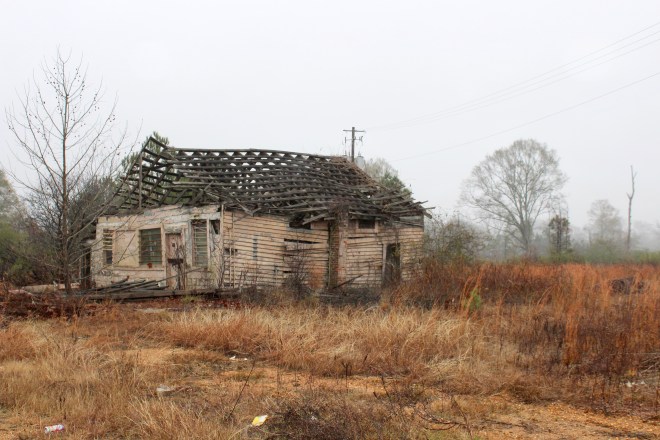
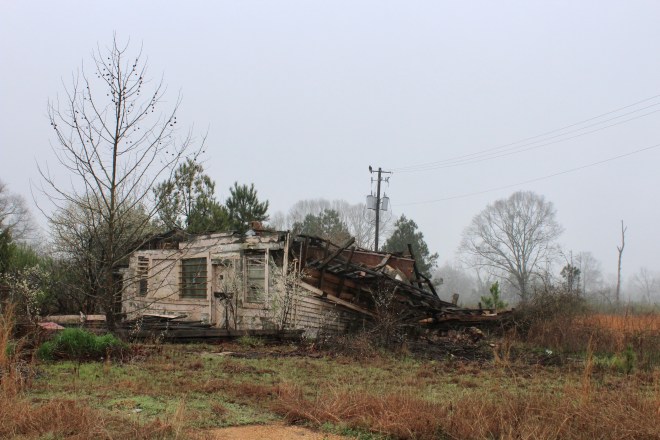
Houses rise and fall, crumble, are extended,
Are removed, destroyed, restored, or in their place
Is an open field, or a factory, or a by-pass.

Houses live and die: there is a time for building
And a time for living and for generation
And a time for the wind to break the loosened pane
And to shake the wainscot where the field mouse trots
And to shake the tattered arras woven with a silent motto.

T.S. Eliot, East Coker Four Quartets

Another Year

IM000080.JPG

Luli and Polly, 2001

On Saturday, we will celebrate Maria’s “Gotcha Day”. Sixteen years.  At this time in 2001, I was furiously tying up loose ends at FedEx-LAC to start maternity leave.  I’d go home in the evenings and open the closet where little girl dresses hung in perfect formation, at attention, waiting to be chosen.  I’d open the drawers of the dresser and pull out a sparkling white pair of skivvies and marvel at how tiny they were.  I’d stand in the middle of her room imagining.  Just imagining.

Of course, I had a lot wrong about what motherhood would be like.  Yesterday at church, Andy, the Rector, talked about reformation and transfiguration–how we are capable of reformation, that is, turning in a new direction, trying again.  But transfiguration? That’s God’s work with us.  It’s been a bit of both, I think, in the work of motherhood.  Our daughter has helped me become a better person.  March 4, 2001.  The. bestest. day. ever.

To Show Up

img_0615

These haven’t been an easy couple of weeks.   Part of my work includes walking with people when they get the most devastating news imaginable. And holding hands with a daughter as she walks into a “chapel” at a funeral home to positively identify her mother’s remains, laid out on a “serving table” (that’s what the funeral director called it). What was worse was sitting through the meeting with the funeral director. We were finalizing the details for a pre-paid cremation for her mom; a process that should have taken no more than 30-40 minutes took almost 2 hours because the funeral home was attempting to get a grieving woman to spend more money as the means to truly honor her mama. Sitting there, late in the afternoon on Sunday, I was ready to jump out of my skin. Monday, a day off, I spent time working on the service for the baby boy with no name we buried in the Pauper’s Annex at Oakwood early on Tuesday.

My dad has had some minor health issues that made my days longer and more complicated and I am facing into the truth that I have not done the things I need to do to take good care of my own health. I’ve already started to take the steps back to health but those little voices about worthlessness—boy, they get loud.

Last Thursday, those voices, sharp as needles tore deeper when I heard back from Collegeville. I have not been accepted into this year’s workshop. I got the news when I had eked out a couple of hours off to make up for lots of time at work. I was able to carry my disappointment with me, out to the garden and started preparing my flowerbeds for some spring planting and sowing. It is only natural to want to know why I was not selected and of course, there is no way I can get that feedback. Nonetheless, I was able to step back enough to understand this about my writing: I think the focus of the workshop requires the participants to be further along in the process of writing a manuscript than I am in mine. I am certain Collegeville made a good decision.

For me, though, the next challenge is dealing, not with itty bitty mean little voices, but with a deep current of awareness about my age and circumstances. I am in a demanding, a really demanding, job. The kind of pastoral care and ‘capacity building’ work I am doing these days is draining, unpredictable, and relentless. I struggle to find the energy and focus for the kind of writing I want to do. As I worked around the plants in my flower bed after I heard from Collegeville, trying to pull out the root structures of the weeds, discovering a fire-ant nest, realizing my favorite daisy plant did not make it through the winter, I wondered about the life I have built for myself. What might I be able to change, how I could open more space for the writing? I am no longer at the place where ‘do overs’ and ‘resets’ are reasonable and realistic. Even what’s in place right now is not particularly amenable to any significant change—small adjustments and tweaks is about it. I wish that weren’t the case. I wish I could change my life enough to sit and write for 3-4 hours a day until I finish my book. A lot of wishes and far more practical and immediate needs and responsibilities.

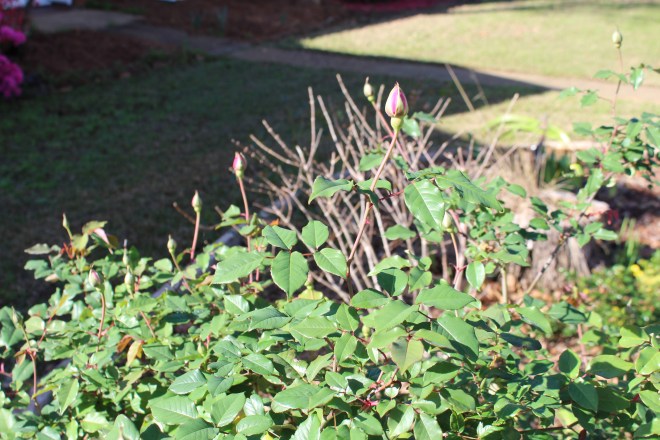
My flower bed was instructive. Wishing won’t take the weeds away—there is simply persistence. I can pour highly toxic poison on the ant nest and leave an awful legacy to those who will follow behind Sherod and me in tending to this corner of heaven. What I choose to do instead is work around that nest, be careful, share a space I wish were mine alone with some rather unsavory small creatures. The branches on the rose bushes in the bed are weighed down with more buds than I’ve ever seen on any of them. Amaryllis spikes with buds closed tight are pushing out and up at amazing speed. New seeds for ‘forget me nots,’ and ‘painted daisies,’ and ‘blanket flowers’ are already here, ready to be sown. And all of this requires one thing above all from me: I have to show up.

So today, I’m showing up for my garden and my life.

Allow Not Our Hearts To Be Hardened

img_0941

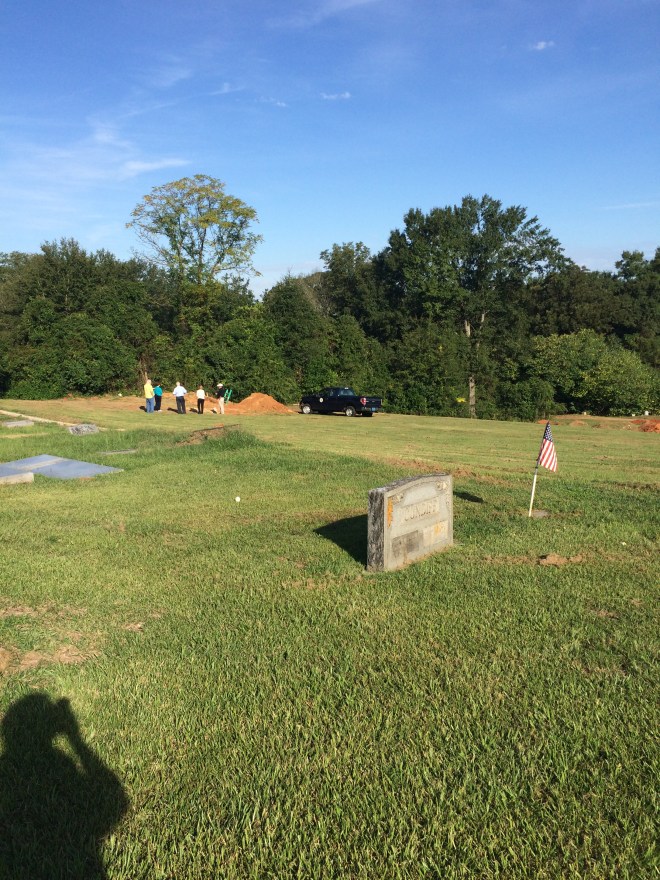
Pauper’s Annex, Oakwood Cemetery

The email started out like the others I’ve received when Oakwood Cemetery has reached out to us to officiate at a Pauper funeral. But this one tore me.

Name – LIVESTONE BABY
Sex – Male
Race – Black
Date of Birth – October 22, 2016
Date of Death – October 22, 2016

This time an infant. An infant who died with no name, who lay in the cold and dark of a morgue cooler for four months.  Did he lie there unclaimed, or has his mama tried frantically to find the means to pay for his burial? We don’t know.  I understand tomorrow he will be brought to us in a small cardboard box.  Perhaps family members will be present as well.  For sure, members of the “Children of God Cemetery Guild” will help me return him to his Creator.

Although we have a standard Office of Burial for people who ended their days utterly alone and with nothing left to call their own, I have spent time today preparing an Office of Burial For An Infant. We will begin with the resurrection anthems from the BCP. I have taken the liberty of writing a collect:

The Lord be with you.
And also with you.
Let us pray. Loving God, who created, redeemed and always sustains us, we come before you this day with broken and convicted hearts. We know not this little one’s given name, yet, we are assured by psalmists and prophets alike, that even when he was in his mother’s womb, you already knew him and you called him by name.  Now we return him to your abiding compassion. Be with his mother, in whatever her circumstances and condition. Be present with us who have gathered to celebrate a brief life and the little light that shone forth in world, though none could see it. Strengthen our resolve to be tireless in our work on behalf of your kingdom, where every single one of your children, young or old, rich or poor, will be honored and called, “Beloved of God”. In Jesus’ name we pray. Amen.

Together we will read a part of Psalm 139 and hear the Gospel of Matthew that reminds us of Jesus’ infinite love for the little children.  We will say the beautiful prayers of commendation that also come from the Book of Common Prayer, and then we will commit that small, infinitely precious, cardboard box to the earth. Like a mama hen, may God hold that little boy safe beneath strong wings, and may God have mercy on us all for our blindness, willful and not, for our fear of scarcity that makes us so stingy with our abundance, and for all the ways in which we dishonor the loving kindness with which we were created and called to be builders of God’s kingdom.


flowers, grief and e.e. cummings

IMG_0298

It’s a grey, chilly, winter day in Lowndesboro.  I’m not sure why, except that I love them both, but my friends, Liz and Bob, have been on my mind. It is around this time that Liz lost her beloved nephew quite a number of years ago now.  For Bob, the loss came suddenly, much more recently: a man who could say “sugah” better than anyone I ever met,  with his wonderful art, his dogs, his foibles, his infinity of tchotchkes, was Bob’s love and companion.  None of us ever know, really, because most of us learn to carry it well, how disorienting, how grey and colorless grief can be for years on end.

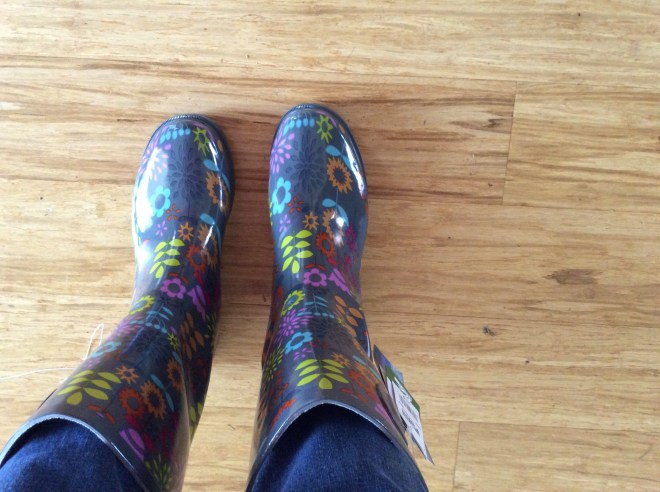
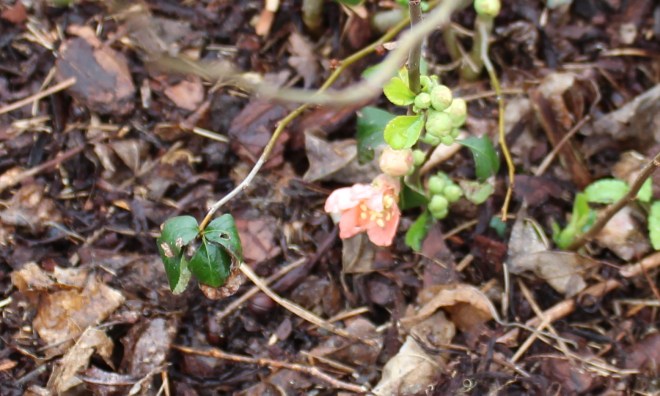
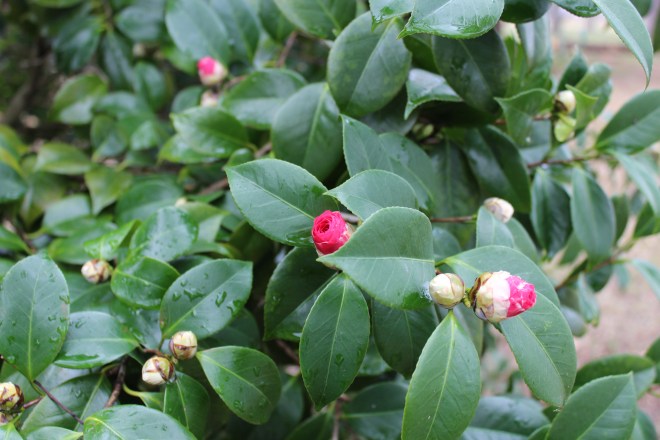
I pulled on my funny-silly Wellies, the ones I bought for 19 dollars at Tractor Supply and still look good and work good too. Then, I headed out to capture tiny bits of color that have found their way to Lowndesboro already.  The forsythia bloomed early, fast and fierce this year, so fast I almost missed the bloom.  The peach and white flowering quince are also blooming; the camellia bush is about to explode in its riot of pink.  And the daffodils. My Lord how I treasure those sweet, ordinary daffodils, with their yellow insistence that bleakness does not have the last word,  nor death. I took these pictures for my friends and for anyone who grieves and finds the world too awash in gray and grim these days.

we need to remember, we need to remind each other: that queer old balloonMan whistles. even now.

fullsizeoutput_eaf

fullsizeoutput_eb1

img_0602

img_0611

Wonderful, Wonderful Camp McDowell

img_0489

Yesterday morning, Maria sat next to me while I filled out an application for her to attend summer camp at Wonderful, Wonderful, Camp McDowell. Earlier in the week, I’d had a great conversation with the director of Special Session at McDowell , a camp program for people with varying abilities. Although her behavior will need to continue to be stable, and she’ll certainly need to keep her little self out of the Psych Unit, if all works right, Maria will come here for summer camp in June.

Camp McDowell has been the heart of life in the Diocese of Alabama for decades—when we lived here in the late 80’s, I heard a lot about it and resisted going to McDowell on principle—anything mainstream Episcopalians in Alabama liked was suspect to this angular, combative person who wanted nothing more to do with the church. We left and the mission and focus of McDowell continued to expand and become more generous. It hosts the Alabama Folk School now, has an amazing working farm and programs on environmental stewardship. Then, Kee Sloan, our current Diocesan, became a bishop after years and years ministering with tenderness and insight to special needs folks. On his watch, a few years ago, McDowell made the circle even bigger, more bold and generous, so it now holds space in a new area, Bethany Village, where all kinds of people with special challenges have a place to play and experience Sabbath and community at its best.

That’s why Maria will, God willing, be there in June. In July, it looks like I may get to serve as chaplain for another program, Bethany’s Kids Camp, which is brings together special needs children in elementary school, with ‘mainstream’ children and together, they get to have camp like camp’s supposed to be—filled with laughter, mosquitos, new friends, funny songs, swimming, canoeing, a little bit of homesickness and grace.

I am tired of wringing my hands and getting into a lather over each worrisome bit of news that comes from Washington. I am doing what I can (which isn’t a whole lot) to let my elected leaders know where I stand on the issues. I’ve taken off work for Maria’s visit; these days at home with our beautiful girl, I am being reminded of the urgency of working with, and supporting the people and community efforts where even the most vulnerable have a place at the table. It’s in those places I find my humanity stretched, and I hope, formed more truly in the image of the One who created us.