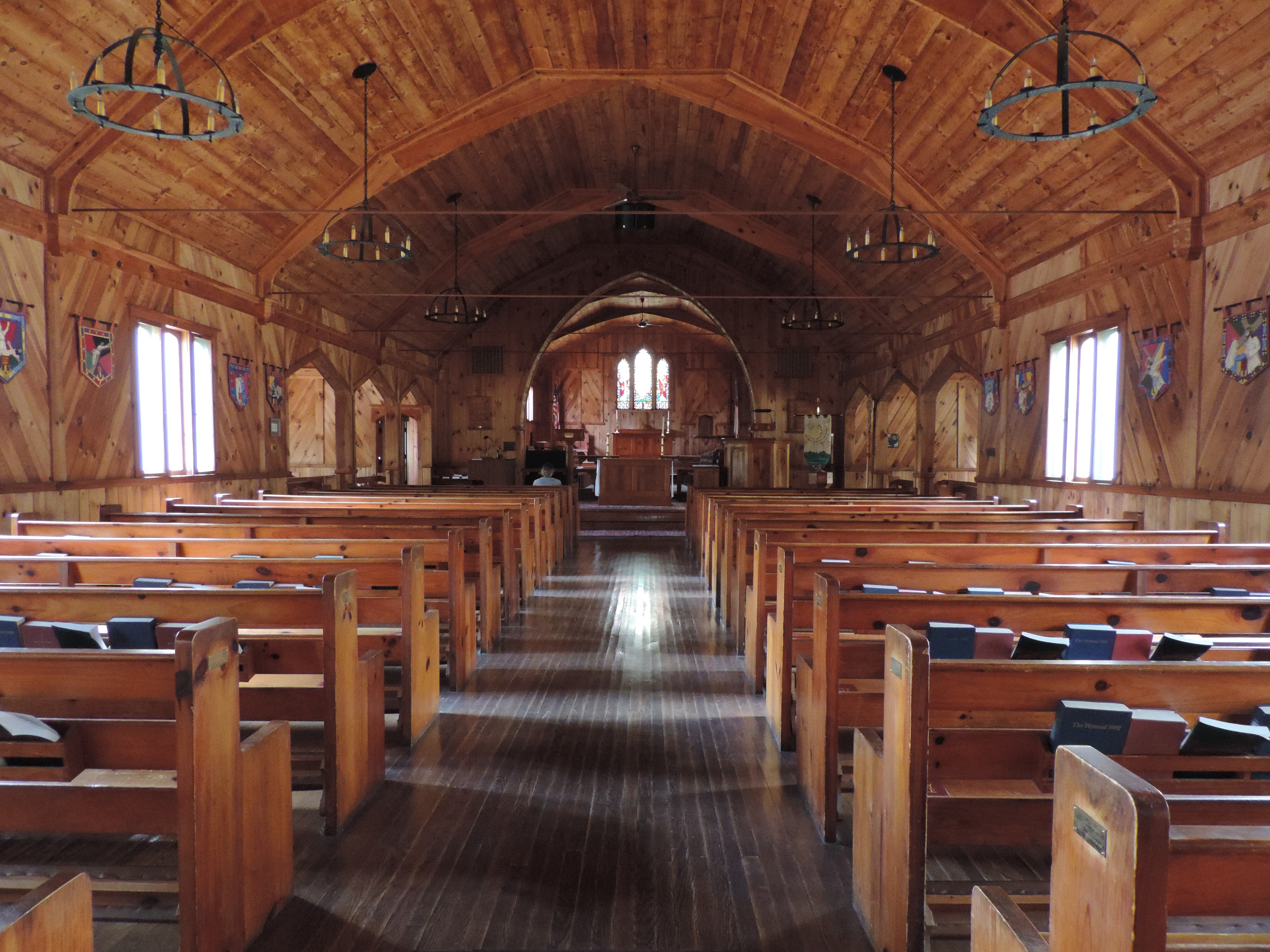
Opening Eucharist

DSCN1176

I sat at dinner with a really interesting man with whom I had a great discussion about the ministries of Navajoland and how leaders, lay and ordained, get trained and raised in the context of the withering hardship people in reservations endure.  This person was curious about the wanderings that eventually led me to be ordained a priest and how now, I find working with ECF. Turns out he is the Bishop of the Navajoland Mission Area and I’m going to go out to Farmington, NM sometime relatively soon, God willing, to see the leadership development process he has put in place.

Then it was time to go to the Opening Eucharist.  I’m not great with protocol but now that I’m with ECF, I have to be a lot more conscious of things like that.  I had travelled in clericals and jeans, got here and saw no one wearing one and took my collar off.  Whew, that was liberating.  But then at dinner, everyone of the priestly persuasion it seemed, had put theirs back on or had arrived wearing it and I hadn’t noticed.  I have purposely chosen to stay in one of the most remote parts of the conference center which is way cool and quiet, but it’s a real hike to get to my room and back. I scrambled to get my daggum collar back on and and make it on time to the opening eucharist at 7:15 PM.

The Presiding Bishop is here, along with two more bishops and all sorts of folks.  At the very beginning of the Eucharist,  people from the Native American Ministries Office led a Lakota “Four Direction Prayer”.  It was gentle, dignified and beautiful and we said it turning to face each of the directions of the compass.  The second petition says this:

Let us pray to God in the North
North (Waziya), your color is White.
From you we receive Snow.  Winter comes from you.
The Snowy Owl brings messages of our mortality and teaches
us endurance in the face of hardship.

Last week I tried to be flippant about all these encounters of mine with owls, and the website I found that had an explanation of the owl totem.  Tonight, at the Eucharist, I realized those strange and brief encounters are not to be taken lightly but rather with reverence and gratitude.  At the Liturgy of the Word a young Lakota man unexpectedly found himself in the position of having to give the sermon. He was nervous and he was sad.  Late last week, a wonderful deacon from one of the tribes of North Dakota died very unexpectedly and our preacher was obviously deeply grieved.  He gave us a simple and very beautiful description  of how many meanings the word “Relative” has in Lakota and how it defines our relationship with everything in God’s creation.  Including mine with the owl.

We had gathered for Eucharist and it wasn’t people with a lot of power or polish.  We were certainly of all sizes, shapes, stripes and colors.  We are bound by some real despair and discouragement.  No point whitewashing that.  But we rocked Siyahamba (We Are Marching in the Light of God) with exuberance. We sang some other wonderful pieces and prayed with dignity and solemnity and joy.  I learned something new about having relatives tonight.  For that I am grateful.

Building the World We Dreamt Of

Living Quarters for My Stay in Kanuga

Living Quarters for My Stay in Kanuga

In the past two weekends, I have been a part of conversations where complexity seemed as intractable and confounding as anything I have ever encountered.   Increasingly, I see three essential elements to healthy ministry (and community life in general, for that matter):  transparency, inclusion and mutual accountability.   None of that is rocket science.  It’s surprising how many relatively homogenous congregations don’t practice these disciplines particularly well.  Bring together people with real differences in race, language, class, theological starting point, political affiliation, gender, sexual orientation and nationality and then, stir in several years working together  by the seat of our pants and I find myself in a maze of endless complexity and dead ends.

At the end of 2013, all the stresses and strains of the effort to be the New River Regional Ministry  finally shook the community to its foundations and we are all still trying to figure out how in heavens name one does the work of healing and reconciliation, keeps what’s working well afloat, and continues to try to dream and build for the future.  It is still not clear that the pieces will hold and a way forward will open.  Even the first passes at conversations that acknowledge this complexity are hellishly painful and fraught.  Not many of us have the stomach and there are so many other things that need to be done.  After two weeks of mind-bending intensity, I looked forward to coming to a conference because with my ECF job, a big part of what I am doing right now is networking and getting to know who is doing what in the denomination.

The conference I am attending is called, Together, Advancing the Sacred Dream-New Community Clergy and Lay Conference.  It has been organized and sponsored by the Office of Ethnic Ministries and brings together Latino, African American, Asian and Indigenous members of the Episcopal Church.  The first major plenary session is titled “Building the World We Dream About–Addressing White Privilege, Internalized Oppression, Racial Justice and Reconciliation, and Capacity Building”.  That’s a mouthful.  I rode on a small Kanuga bus from the airport to the conference center and listened to several different conversations that clearly had to do with folks who are standing at the edges, who have a pretty significant experience of marginalization, who are more than a little raw and vulnerable.  The things I was struggling with in Fort Lauderdale writ large.

Part of me wants to run as fast as I can from these topics.  In fact, on some days, I seriously entertain the notion of just leaving the church completely. Isn’t racism, classism, privilege and exclusion so yesterday?  Hasn’t this all been worked out?  The fact of the matter is, not yet.  Not enough.  Not so the most vulnerable among us can came to the table and experience transparency, inclusion and mutual accountability.

In some respects, my ECF job, puts me in the very center of the life of my denomination.  We are being challenged to work on leadership development programs and resources that bring lay and clergy people together beyond the clergy-centric models of the past–the ones where a clergy person with a few trusted advisors really made the decisions and so much of who was welcomed and how was implicit and resulted in congregations where everyone pretty much looked the same.  If we don’t understand and build programs that respond to the extraordinarily deep roots of power and privilege and the consequences, I wonder what we will accomplish.  And the same is true with NRRM:  if there isn’t an honest engagement with the unexamined dynamics that drove the conversation and the decisions of the last 4 years, how can this be a work of discipleship?

So here I am.  In one of the true bastions of white Episcopal privilege, a gorgeous conference center that exudes rustic elegance and Southern hospitality.  Can you be at the center and on the edges both, at the same time?  I think that’s one of the questions I have to answer for myself as a member of the church.  The glimpses I see of the answer have nothing to do with comfort and easy dispensations…

How to Snatch Joy from the Jaws of Despair

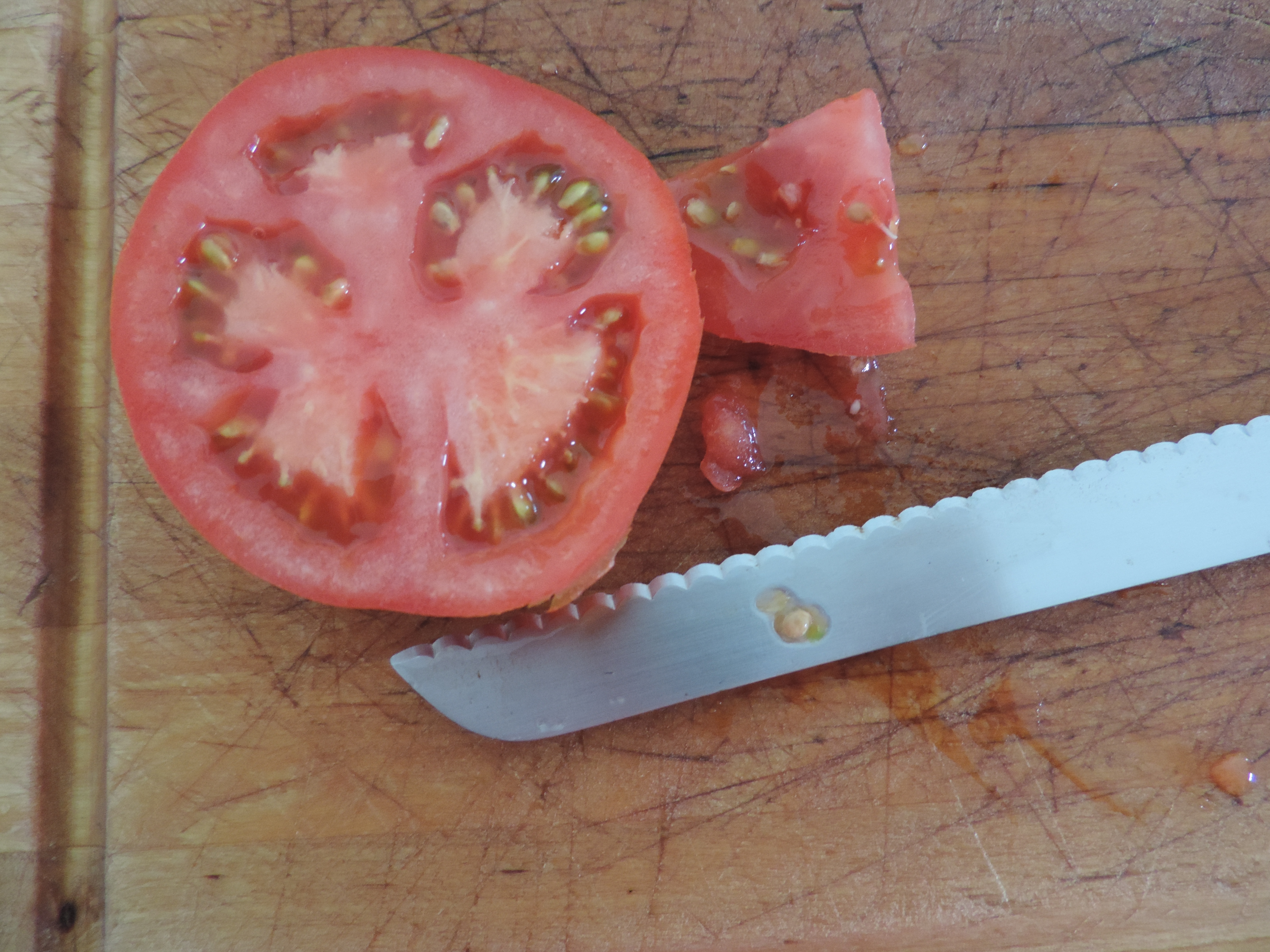
DSCN11691. Have a ‘mater sandwich for lunch on Grand Forno fresh baked, black olive bread, using the first ripe tomato you picked from the garden.  And have the tomato taste as good as I remember tomatoes tasting when we grew them in Memphis.

Maria in Apopka the Morning I Dropped Her Off At Sleep Away Camp in 2011

Maria in Apopka the Morning I Dropped Her Off At Sleep Away Camp in 2011

2. Fill out the application for the Girl to get to go to sleep-away camp this summer on the hope that she will have a good enough spring to be able to actually get up to Camp Thunderbird in Apopka, Fl.

3. Dance all through the house to “Who Let the Dogs Out” with Boo, Daisy and Maria on a Saturday when Ms Maria is in good enough shape to be able to have  2-night sleepover at home. Then pack up a picnic dinner to eat on the beach.

Where I Do Not Want to Go

photoIt was another tough ramble last night.  It rained during most of my time walking and I say something about where I found myself when I say I welcomed getting cold and wet because it was a distraction from misery.  I was only about a block from our home when a large shadow arced right in front of me and settled back on a tree.  I turned to look though I already knew it was my sweet friend and totem, the owl.  For the heck of it, when I got back home, I did a quick Google search on “owl totem”.  The site I landed on said

“*Intuition, ability to see what other do not see
*The presence of the owl announces change
*Capacity to see beyond deceit and masks
*Wisdom
*The traditional meaning of the owl spirit animal is the announcer of death, most likely symbolic like a life transition, change” (http://www.spiritanimal.info/owl-spirit-animal/)

Now, this is all as loosey-goosey as can be and I know it.  At the same time, if there is anything I know for sure  it is that since I first began this blog, right before Ash Wednesday of 2011, much of my life has been about trying to see in the dark, walking with very little in the way of light and clarity.  Last night when I looked at the picture I had snapped of my fellow creature, I was struck by the enormity of eyes that have evolved over time to receive as much light as possible. This is a necessity to survive and make sense of what seems senseless.   A piece of music I listen to often on my rambles comes from Godspell (yes, I date myself; along with Jesus Christ Superstar, this is some of my most favorite 20th century reinterpretation of the story of my faith). Except now I think the way I must sing this is “Night by night, O dear Lord, three things I pray”.  I am getting used to the truth that it is in the night that I will find and be found–and that even in the darkest nights there is enough light to see.

Glory

DSCN1165

Jan Richardson continues to inspire and challenge me through her magnificent posts at the Painted Prayerbook.  Her insight about glory, allowing glory a place in our lives, is particularly instructive to me today.  She says, The story of the Transfiguration is about opening our eyes to glory, allowing that glory to alter us, and becoming willing to walk where it leads us (Painted Prayerbook).  This was an intense weekend from beginning to end.  All kinds of unexpected things have happened I’m still sorting out.  And today, my work is a funny and strange echo of the weekend.  My first major project with ECF is to develop a workshop that includes a section about the ways in which teams in a congregation must come together and define their work based on a process of discernment that allows the Gospel to inform, challenge and shape team members as individuals and team results as well.  In short, I am developing a 3 hour ‘mini course’ on discernment for lay+clergy teams.  What I am trying to do for myself, distilled and made as practical and accessible as possible.

I started my work early this morning, sitting at the desk in my new workspace.  The temperature is 78, we have low humidity today and a there’s a light breeze so the door next to my little office kept swinging just enough to make me aware of the weather.  I finally stopped, came out and just got washed over by wonder.  This is glory made manifest in creation.  Allowing glory into my life today meant moving my desk out here where I stop from time to time, allow myself to really breathe and abide with my work, the confusion and ambivalence, and sheer beauty of the day.

Transfiguration

DSCN0528

I made myself my usual oatmeal and tried to figure out if I would get a pedicure and then go to the beach or  go up to Boca to do some more photography at the Japanese garden.  My colleague Joe Duggan has been here for the weekend, helping the parts of the New River Regional Ministry begin to have the harder, deeper conversations that no one really wants to have but are essential if this ministry is to survive.  Joe and Sherod got up a while after I did and as we discussed the plan for the day, it became clear I needed to participate in this work, even though my role is strange and ambiguous right now.  So I did and entered into a day loaded down with history, hurts, hopes, and contradictions that make my head want to explode sometimes.

All the while, I kept thinking about my friend, my dear friend, who was off getting married as we did this work.  A little older than me, life has not been easy for someone who was widowed once, divorced the second time around, raised kids as a single mom and now smiles out of pictures with a sparkly spark that makes her and me giggle when we talk about it. Old skins, new wine, Cana.

Then, it was back home to scramble to finish ECF work I had to get done before heading out for a walk earlier than usual but better suited to dinner plans with our houseguest.  I hadn’t gotten down the block before I was on the phone with the daughter of the first parishioner at St. Ambrose who took the risk to  allow me to be her priest.  M. is in hospice and slipping away very quickly.  Up the road I went, to Boca, and gathered with her son and his family to say those exquisite words of farewell I have said twice before in the past month.  This one got to me.  M was conscious enough to listen intently, to whisper amen’s from one petition to the next, to be willing to receive my thanks when I leaned over and kissed her forehead.

I will be up very early tomorrow to finish my sermon on transfiguration, having had one of those days when I am conscious with enormous rawness that it’s not just occasionally, but rather, every. single. day. when  briefly, the sun burns away the fog, the clarity pierces, the pieces arrange themselves in stark and complicated simplicity, and I realize way more is asked anew of me, way more than I had dreamed was expected of me or I was capable of doing.

I will slip in between the sheets of my bed tonight aware that I am not the person I was when I woke up this morning, that my world has once again, shifted under me and tomorrow I set out to keep trying to find my way.

Caminante, no hay camino. Se hace camino al andar. Al andar se hace camino y al volver la vista atrás se ve la senda que nunca se ha de volver a pisar. Caminante, no hay camino, sino estelas en la mar.

Hurry Up ‘N Wait Some More

DSCN1161The tomatoes are growing.  This is the one that’s further along.  There are quite a few more.  I go out and water and look and wait daily.  The lettuce grew swift and sure and for some reason, has all tasted far more bitter than I had anticipated.  I am wondering about the tomatoes now, not projecting, not able to do anything at all but let them grow and become whatever it is they are going to become.

Likewise, my girl’s slow journey continues.  Along with serious self-injury two weeks ago, she has been making other bad choices at school so it is two weekends now without being able to have her home.  She came down with a bad cold this weekend so last evening, we went over to see her.  Sherod stayed in the truck and she and I sat on porch swing they have in front of A House, where she lives.  I put my arm around her and she put her head on my shoulder. I sang her the lullaby I invented for her when we got custody of her, now 13 years ago.  Then we just swung in silence for a while, I aching to scoop my baby girl and bring her home.  I cannot project, I am not able to do anything but let her continue to grow into who she is able to be.

My work is done for the day, later I will walk. For now I can knit.


Awake

IMG_0006

There continue to be major and minor shifts and tremors in the ground beneath my feet and I wake up in the dead of night just about always now.  Some nights I find easy silence.  A lot of nights, the anxiety monsters are out roaming, stomping and storming.  This morning when I checked Facebook, I found that Emily Mellott, a lovely priest in the Diocese of Chicago had shared a link to another priest, this one a suburban vicar, Heidi Havercamp, who unexpectedly blessed me with a new definition of adulthood.

Vigils or Lying Awake in the Middle of the Night

Vigils, from the Latin vigilia, ”wakefulness”: a period of purposeful sleeplessness, an occasion for devotional watching, the monastic night office.

Part of adulthood, it seems
is waking up at 2 a.m. or 3 a.m.
and spending some time
in involuntary (often anxious)
contemplation.
Is this really the weakness
of an aging body and mind,
or in fact, a growing awareness
of the eternal?

At 2 a.m., our side of the earth
faces outward, away from the sun,
into the infinite darkness of the universe.
Eternity, I think, is what wakes us up,
asking us to look it in the face
with wonder and dread.

Asking us to listen to the silence,
but also, the heart beating,
children sleeping, and the night wind.

Or to hear the police and fire sirens,
ambulances screaming.
Asking us, I think, to pray
for those who work while others sleep.

For those who the night keeps hidden,
prostitutes, runaways, and drunks.
For the injured, the sick, the dying,
the alone. 

Asking us to remember
that we’re not alone
when we’re awake
in the middle of the night.

Asking us to contemplate
a crack in the ceiling,
an infinite cosmos.

Asking us to ponder God’s glory
and our finitude.

This is the work of adults.

On This Day: Sermon for the 6th Sunday After Epiphany

DSCN1145

I call heaven and earth to witness against you today that I have set before you life and death, blessings and curses. Choose life so that you and your descendants may live, loving the LORD your God, obeying him, and holding fast to him; for that means life to you and length of days (Deuteronomy 30)

This skein of wool is part of the last gift I received from my mom.  She had a beautiful old chest in her living room, a chest full of projects—sewing, knitting, all kinds of crafts my mom enjoyed doing all her life.  Already very feeble, mom could still be all kinds of bossy, so she instructed me to open the chest and look for a big bag full of skeins of alpaca wool and a knitting project.  She had started knitting a sweater that was really complicated and you could tell it would be breath-taking when she finished it. Mom had been knitting the sweater for me.  She couldn’t bring herself to say that she knew time was running out for her, so instead she said she thought it was time I learned to follow more complicated knitting patterns.

I have set before you life and death…choose life.

I look at a single skein and I see any number of possibilities.  So many different ways I could use it.  I suspect my mom bought this wool at least 10 years ago and nothing has changed—what I hold is my hands is just a possibility waiting to be realized.  As many possibilities as it contains, there are also limits.  This is a single, loosely wound strand of yarn.  It has a beginning and it has end.  I can stand here and unwind this skein and it will pile up on the floor until eventually, there is nothing left in my hands and a big mess on the floor.

I have set before you life and death…choose life.

I simply accepted the gift my mom was entrusting to me.  After she died, I brought it  home and put it away in my own version of that chest.  The bag sat there for almost three years until late this fall when I suddenly remembered it.  I didn’t have to look at the pattern long to realize it was way more complicated than I had the energy or desire to commit.  But the skeins of wool were extraordinarily beautiful.  And as I held the partly knint sweater in my hands I felt my mom so close by—what was there, even unfinished, nonetheless contained the love, skill, hopes and possibilities that she had envisioned.

I made the decision to unravel the whole thing, and cried doing so. You see, I had figured out that I could use the wool for what I was capable of knitting, something a lot less complicated. I would knit scarves for my brothers and a pair of socks for my dad.  There was enough wool for all three projects.  And so I started.  There have been decisions to make.  Commitments.  If you look at my work on this particular scarf, there are a couple of places where it is obvious I made a small mistake and have corrected it.  I’m glad I did—if you drop a stitch and don’t pick it back up, eventually, the garment will no longer be usuable—it will unravel.

A few weeks ago, when Sherod had his surgery, I took my knitting and sat in the waiting room, each stitch a prayer:  Please, God.  Please, God.  Please, God.

As you can also see, there’s plenty of work left on this scarf and then there will be my dad’s socks to make as well.  It is only when I have given each of my brothers and dad his gift that the skeins of wool will truly matter, will have meaning, and purpose.

I have set before you life and death…choose life.

You may be sitting there scratching your head wondering what in heavens name this story is all about.  Like the skein of wool, the time we have been given has a start and an end.  I suspect at least some of you may remember me having quoted one of my favorite poets, W.H. Auden, before: “Time is our choice of How to love and Why”.  To choose life is to have to make the choice over and over again, it is to live and pray, and decide for ourselves, one stitch at a time.  If we are attentive, is we are mindful, if we allow ourselves to imagine and to dream, a pattern emerges.  Out of things that aren’t particularly special, or new or unusual, a new, hopefully beautiful, creation emerges.

But we can also make death-dealing choices.

In this last year, I have become almost agonizingly aware of the small victories of death that come with magical thinking.   We tell ourselves, “somehow, things will be alright”.  That others will take care of what needs to be taken care of.  That we can depend on others and still have autonomy.   I myself constantly struggle against magical thinking—I will indulge in this treat and tomorrow will go back to taking care of my blood sugar.  If I can just find the right words to say, if I can be nice enough, diplomatic enough, careful enough, I can say my truths, some of them hard-edged, and no one will be upset and things will also change.  Magical thinking, this business of wanting to have it both ways.

It isn’t just individuals who indulge in magical thinking.  Communities do too and it is equally death dealing for them.  I was in New York this week and was taken aback by the sense of walking into a bunker at 815 2nd Avenue, the ‘headquarters’ of the Episcopal Church.  Security is tight, tight, tight, and there’s an air of defensiveness—and yet from that posture, we dream of having meaningful, life-changing ministries as the Episcopal Church.  Magical thinking, pure and simple.

And right here.  This community has been spectacular this year in the stewardship campaign.  Bill talked about that last week.  And then, Bill asked for all hands on deck for a workday yesterday.  A handful of people from the English speaking part of the community showed up.  There was a similar handful of people from the Spanish speaking part of the community.

We want it both ways—I want things looking nice and I am too tired, too busy, too old, been the one who did it too many times before, it’s those people’s turn now.  That kind of magical thinking will bring about the death of our community and it will be death without dignity.  Someone will make the decision for us and summarily close down the ministry or it will simply peter out, no one will be around to mark the ending or to thank God for the gift of life that resided here for over 50 years.

I have set before you life and death…choose life.

If we are too tired.  If the complexities of being a church community in the world as it is today have overwhelmed us, if there simply is nothing left to give—let’s have that conversation.  Together, let’s plan the funeral and celebration of the life that was here and model to the entire diocese what happens when people of courage reach the end of the line.  There is nothing undignified in death if faced with courage, grace and humor.  It is through denial, and magical thinking, and expediency  and procrastination that we experience death with no promise of resurrection.

But if we want life, if we want to go on living, if there is still  ministry to do here in the Riverland area, there are a zillion small stitches, small prayers, small actions, small stretches the community has to keep making.  The good news is that these are the very actions that draw us close to God so that God’s grace can help us live and have life abundant.  But we, like those in every age before us, must make those choices.  Today.

I have set before you life and death…choose life.

The Lottery

DSCN1144I got a lovely bouquet of roses for Valentines Day.  Sherod got them through WLRN, our local public radio station. Unbeknownst to him, his name was included in a raffle of two prime tickets to go to an Andrea Bocelli concert tonight. His name was chosen.  Still recovering from his hip surgery, Sherod turned them down.  He will watch the Olympics and I will walk tonight.

So random.  There is also such a random quality to ‘Valentines Day’.  It is certainly exploited with a dimension of raw commercialism that I rail against.  But there are too many genuinely sweet, inspiring stories about the ways people have layered it with meaning that I cannot summarily dismiss.  And then there is the most beautiful piece of writing I have found today, penned by Jan Richardson, whose husband died very unexpectedly last year, a short time after their wedding.  Perhaps it has special resonance because another friend, Cindy, buried her beloved brother today.  He had cancer, treatment seemed to have worked and then it came roaring back. Some day, they will be able to tell us why the exact same protocol works for one and not for another.  But we aren’t there yet.  I saw a picture on Facebook of the gathering after Cindy’s brother’s service and the grace and capacity for joy, even in the midst of death, shines through ion her face and the faces of the others in the photo.  Jan’s wrenching grief is on full display in the blessing she wrote for this day, and also her gift for writing and the generosity of her life.  Neither Cindy’s gift or hers is random.

A Blessing for the Brokenhearted

There is no remedy for love but to love more.
– Henry David Thoreau

Let us agree
for now
that we will not say
the breaking
makes us stronger
or that it is better
to have this pain
than to have done
without this love.

Let us promise
we will not
tell ourselves
time will heal
the wound
when every day
our waking
opens it anew.

Perhaps for now
it can be enough
to simply marvel
at the mystery
of how a heart
so broken
can go on beating,
as if it were made
for precisely this—

as if it knows
the only cure for love
is more of it

as if it sees
the heart’s sole remedy
for breaking
is to love still

as if it trusts
that its own stubborn
and persistent pulse
is the rhythm
of a blessing
we cannot
begin to fathom
but will save us
nonetheless.

– Jan Richardson