Time Present and Time Past


A week before our wedding
A week before our wedding

Two months from today

Two months from today

Time present and time past
Are both perhaps present in time future,
And time future contained in time past.
If all time is eternally present
All time is unredeemable.
What might have been is an abstraction
Remaining a perpetual possibility
Only in a world of speculation.
What might have been and what has been
Point to one end, which is always present.
Footfalls echo in the memory
Down the passage which we did not take
Towards the door we never opened
Into the rose-garden. My words echo
Thus, in your mind.
T
.S Eliot Burnt Norton

We knew for the past couple of years that we did not want to stay in Florida after Sherod’s retirement.  Back in 2012, when we went to Alabama for a wedding and started to consider the possibility of a move back to the area around Selma, over and over we slammed into the realities of our daughter’s needs.  Maria has come a long way and she is also still as vulnerable as ever.  She needs the safety net of an Intermediate Care Facility and Alabama has none.  How could we leave her and move so far away?  It haunted us.

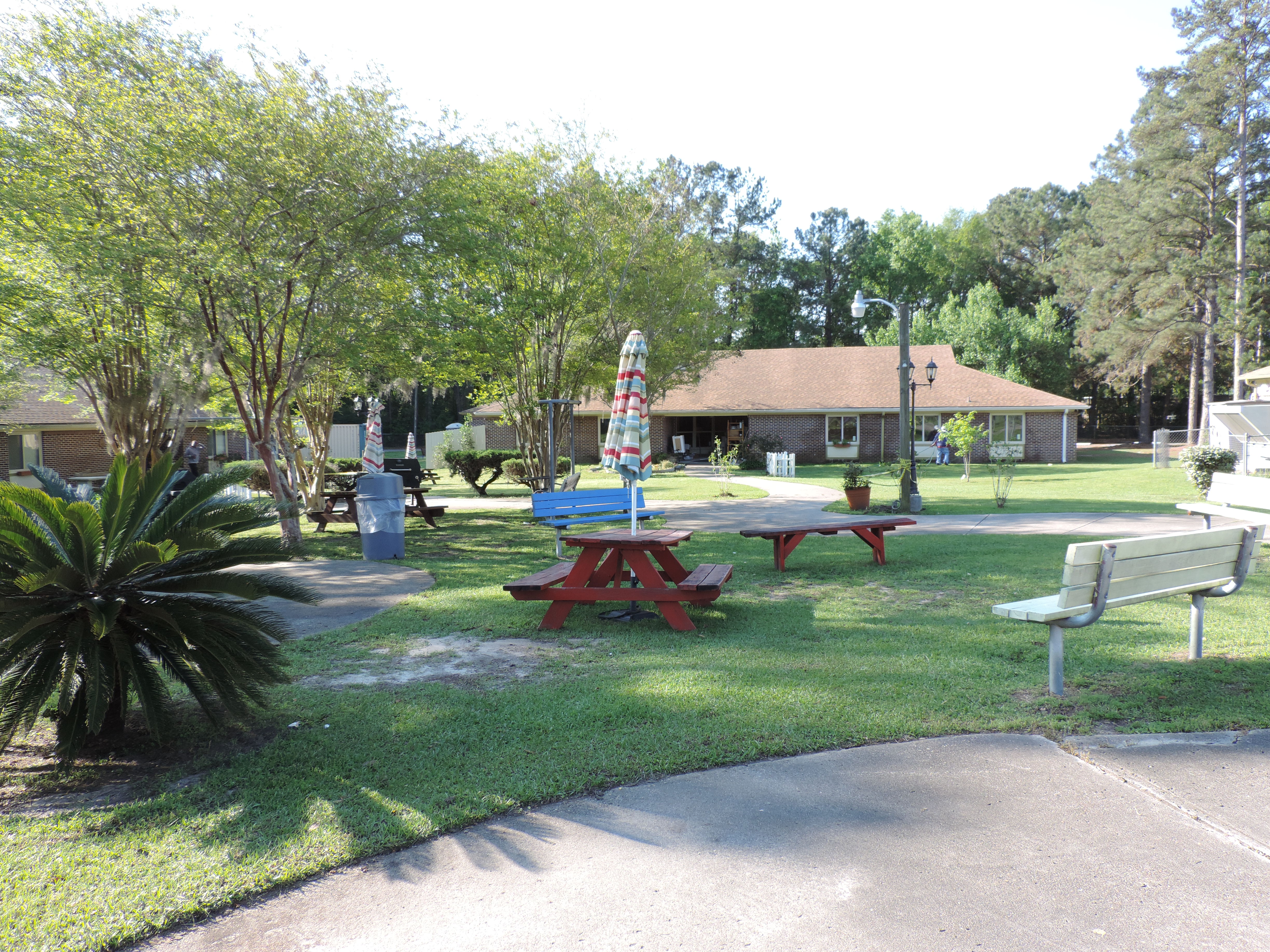
Last time we went to Selma, suddenly it occurred to me as we were driving back home that it would be worth looking into ICF’s in the northwest part of Florida where she would be a lot closer to us and still within the umbrella of care provided to Florida residents.  I googled and found a small network run by a private, non-profit organization.  They even listed beds available right now in the Tallahassee ICF they run.  We got back here, went to work researching that possibility, stopped in for a meeting and tour at the Tallahassee on the way back up last week and have begun the transfer process for the girl that should culminate with me driving her up there on June 15 or 16th.

TDC is much like BARC. Another ‘branch’ of the private non-profit that runs TDC has an amazing performing arts program for folks like my girl and she will get to sing and be in plays and do all sorts of performance marvels to her hearts content, starting immediately after she arrives in Tallahassee.  Sherod and I expect we will get to see her every month or so and have her up with us for a few days at a time all through the year.  And without abusing of their generosity, we have asked her stepbrother, Charlie, and his family to help us keep an eye on her. It is reassuring that in a true emergency a member of the family could be there in under an hour to help make decisions.

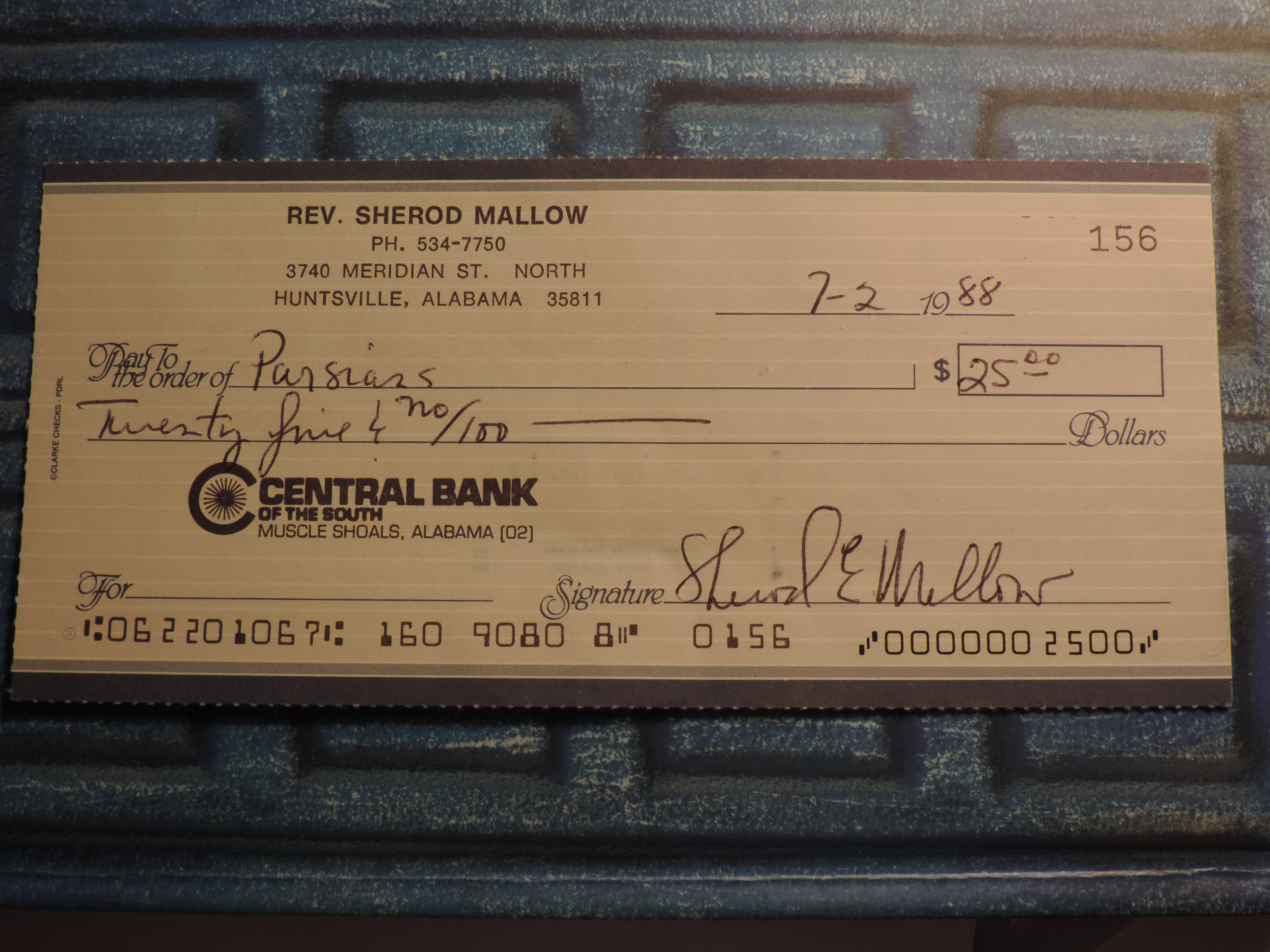
With the contract now executed, this evening instead of walking I started tackling my part of the garage.  It’s surely time travel time for me.  As I sorted through my shelves, I found boxes and boxes of old, cancelled checks going back to right before Sherod and I got married.  It is only very rarely that I write checks any longer and I had forgotten how it’s a trip to rifle through them, how many memories waft up with the dust.  And because we have started talking about all these moves and changes with our girl Maria, there was a call in the midst of my work–her eagerness for the 16th of June to arrive is enormous–and we played “imagine” over the phone.

Everything here and now is layered on as well–my leave-taking is changing just about every relationship I have valued here and the to-do list gets longer and longer so I have to concentrate intensely on the things I have right in front of me.  Time all smooshed up, all wibbly-wobbly in me.

In My End Is My Beginning

Pecan Grove at the Farm

Pecan Grove at the Farm

Last Saturday, a group of some 60 people gathered at the church I have been so privileged to pastor in these past 4 years.  The work that needed to be done was not easy.  Sherod and I, with little else than a whole lot of passion and a capacity to tolerate risk, had launched St. Ambrose, El Centro Hispano de Todos los Santos and All Saints on an experiment in church transformation for the 21st Century late in 2009.  No one really knew where we were going and it turns out we were going out to the desert, to wander. Now, some major decisions needed to be made.

There have been moments of exquisite joy–of finding ourselves dancing with the Holy Spirit in an absolutely, marvelously improvised, moment by moment response to abundance that was simply breath-taking.  I still remember the New Year’s Eve at Starbucks when a generous and brilliant literacy teacher and champion offered to start a literacy camp as part of our ministry.  Today, that literacy camp has grown and morphed enough to become a United Way agency.  There are too many moments like that to enumerate.

Alongside the goodness, buried deep in the light, weaving through everything we did, there was also all the reality of a humanity that even in its best moments has brokeness–sin–in the warp and woof of its existence.  More than ever, I have to recognize that there is harm and alienation and separation as brutal as the kind Dietrich Bohnhoeffer named and responded to, as we will remember over the next week, in our own midst. I am not interested in demonizing, blaming or judging, but I am more radically committed than ever to accepting the “both/and” nature of the human condition.  To paraphrase Johann Metz, the Gospel shines a bright and steady light on the costs of brokenness, including mine.  Such glory, such devastating capacity for death-dealing denial, so intertwined in each of us.

On Saturday it was just that kind of humanity that was on display as the joint vestries of the New River Regional Ministry engaged a conversation to discern if and how, the communities that have defined this ministry would go forward together.  Until that day, the possibility still remained, though at best half-alive, that a way could be found for me to stay on until a new rector was called for All Saints, even if in a part-time capacity.  That my staying on would provide continuity of vision and provide some stability in the midst of the turbulence of Sherod’s transition.

I listened carefully and it was obvious that the leadership I had to offer, even in that limited capacity, was simply too distant from what the lay leadership chooses for itself.  There is no animosity in that recognition. There is simply a realization that to stay would be to compromise too much of my vocational integrity and so I took that option off the table.

In the meantime, all last week, I had walked with the Latino part of our community on the path of death, mourning Marion, tending to her children.  I was reminded that my ministry began on May 15, 2006, two days after my ordination to the priesthood, when I was asked to bury Yovi, a young woman born in Cali, like me, who died when an alligator came out of one of the canals in our county while she was running next to and dragged her into the water where she drowned.  That day in 2006, in the funeral home that was gracious and also impersonal, I saw people bewildered by the senselessness of that death, people who had no community of faith, almost no language to find consolation.  That was the day I realized my call was to go out to the edges of the church to minister amongst immigrants like me.

Last Saturday, it did not seem mere coincidence that I was entering that meeting mindful that I would receive an equally battered body the very next day. All that I had hoped might be possible–that people could mourn where they also rejoice, and work, and serve–had actually come to some fruition. I had to accept that the arc of my ministry in this place is complete.

As we drove up to Lowndesboro and back again, I looked out the window and wept frequently.  I grieve that I was unable to help the NRRM community develop a more viable financial model when ministry  goes far out past the edges of the privilege that has always defined the Episcopal Church.  I grieve even more that I was not able to provide the leadership that opened space for NRRM to take a hard, courageous, honest look at  the insidiousness of getting stuck in a model that is frankly colonial in its distribution of power, in the ease with which we can classify those who are out on the margins as a charity project and those on the inside as benefactors who know what’s best. The limits of my ability, the failures I am well aware of, make this a time of grief as well as expectation.

This afternoon, we have gotten word that we are about to go to contract for the farm in Lowndesboro.  Sherod asked me what that was like for me.  As we walked around the farm on Wednesday, I was keenly aware of the deep silence — a silence reminiscent of my 30 day retreat in Tahoe.  I was equally mindful of the smell of loam.  The Eucharistic prayer I use for the Spanish service on Sundays recounts God’s gifts and says, “you gave us the earth to be our cradle, our home and our grave”.  I am glad to go to a place where I will be one of the am ha’aretz–in the most literal translation of Hebrew, one of the people of the land.

There is much to bury.  There is much to cradle and care for as Sherod and I tend to our marriage more intentionally after long years drawing from the reservoirs of good will and love between us to do the work of ministry.  The land will be my home in a way I have not allowed it to be my home since the days my brothers and parents and I roamed wide open pastures in Cali on Sunday mornings, under the shadows of the Farallones de Cali.

All of that tumbles around in me this afternoon, in this liminal space before the to-do lists of selling this house and buying that one, closing out my time with the ministries here and continuing to move forward with my ECF job, become overwhelming, in this in-between where my beginning is my end and in my end is my beginning…


Ghosts & An Offer

We got to Lowndesboro about an hour before we were supposed to meet the realtor and general contractor.  That gave us time to drive around and get a feel for the neighborhood–the old, lovely churches, four of them, that were started sometime around the 1840’s.  Today, their congregations are so small that there’s a single congregation and four pastors.  The first Sunday of the month, everyone worships at the Episcopal Church, the second with the Methodists, the third with the Presbyterians, the fourth, with the Baptists. There’s a big farm with rolling hills and lots of sheep.  Lots of old houses and any number of ranch-style, newer ones in what can only loosely be described as a township–mainly farmland.

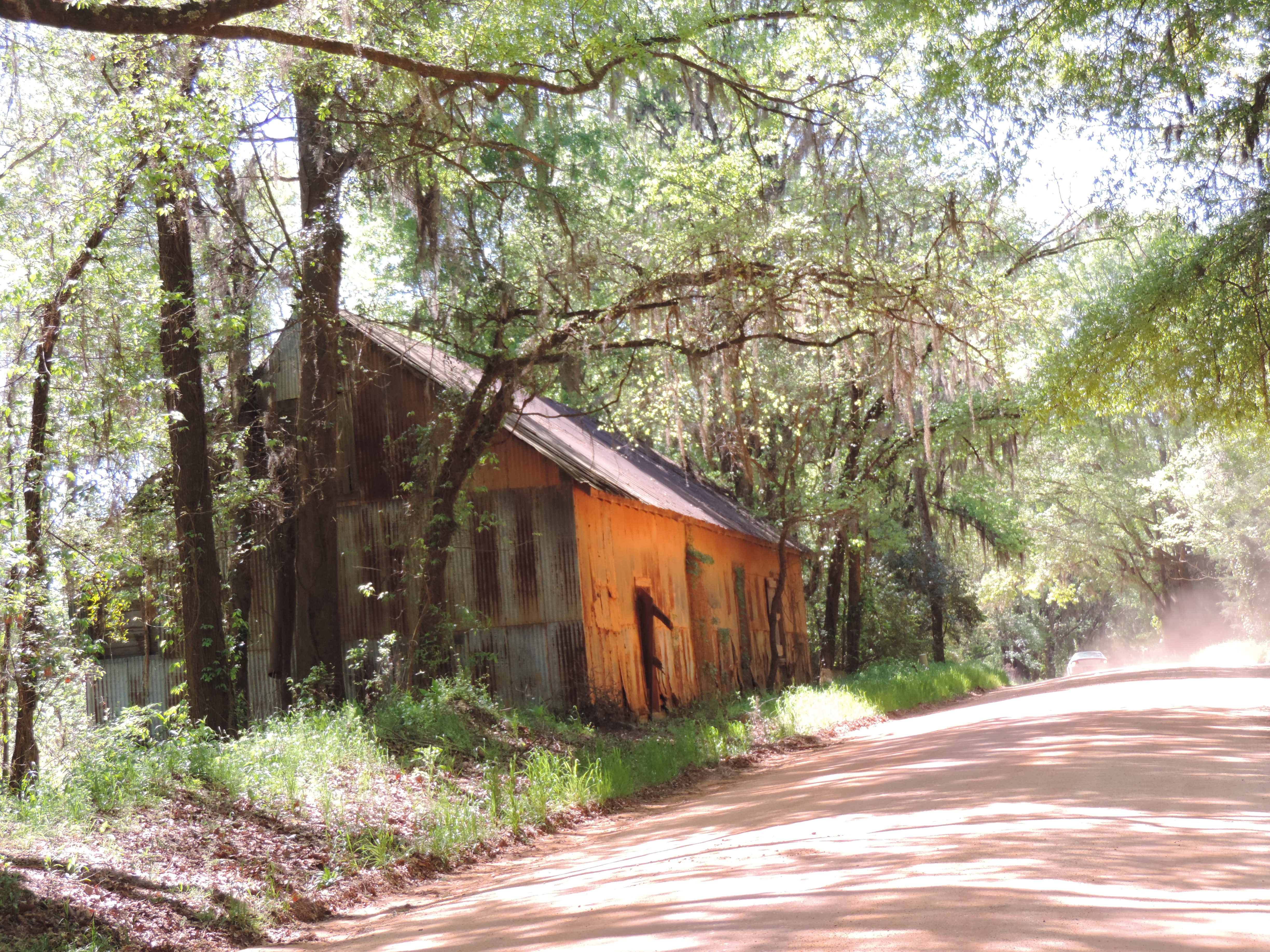
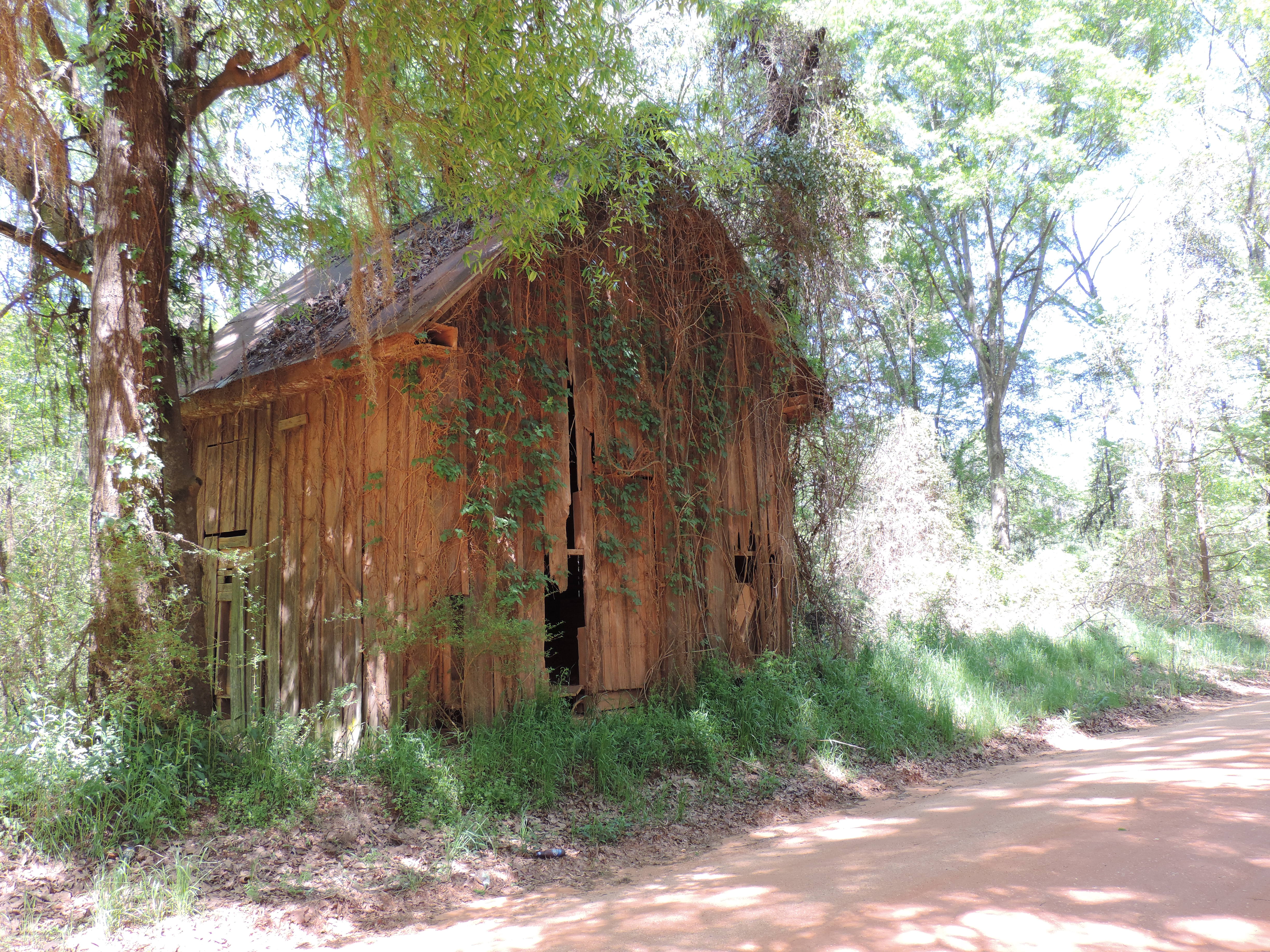
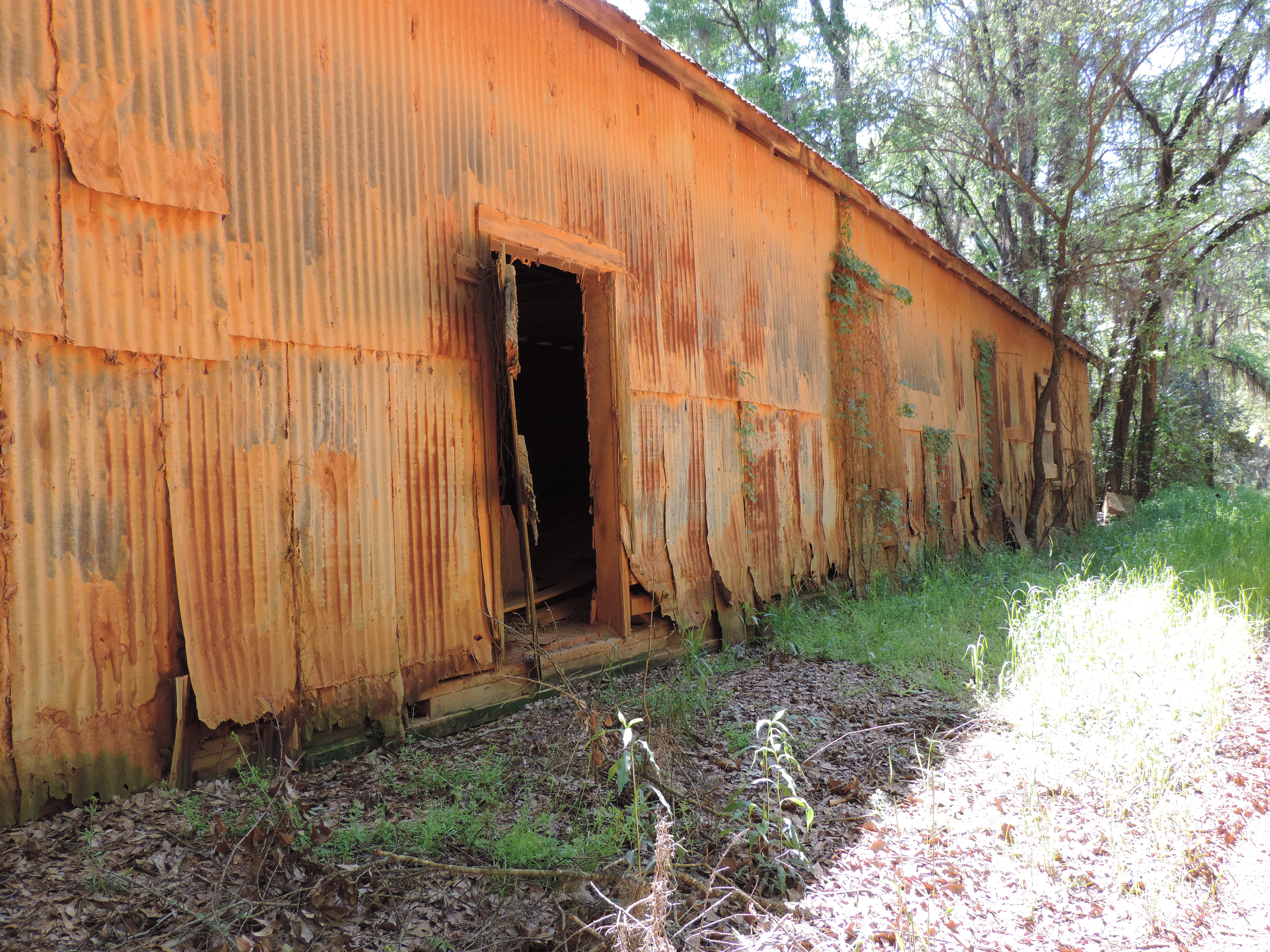
Towards the river, the pavement gives way to roads of Alabama red dirt.  One of the things that fascinates me about this particular part of the country is how you see the ghosts all around if you look closely.  As we bounced along the road behind the small farm we are looking at, this is what we came upon:

DSCN1340

DSCN1347

DSCN1345

A cluster of buildings long since abandoned, going gracefully down to the dust.

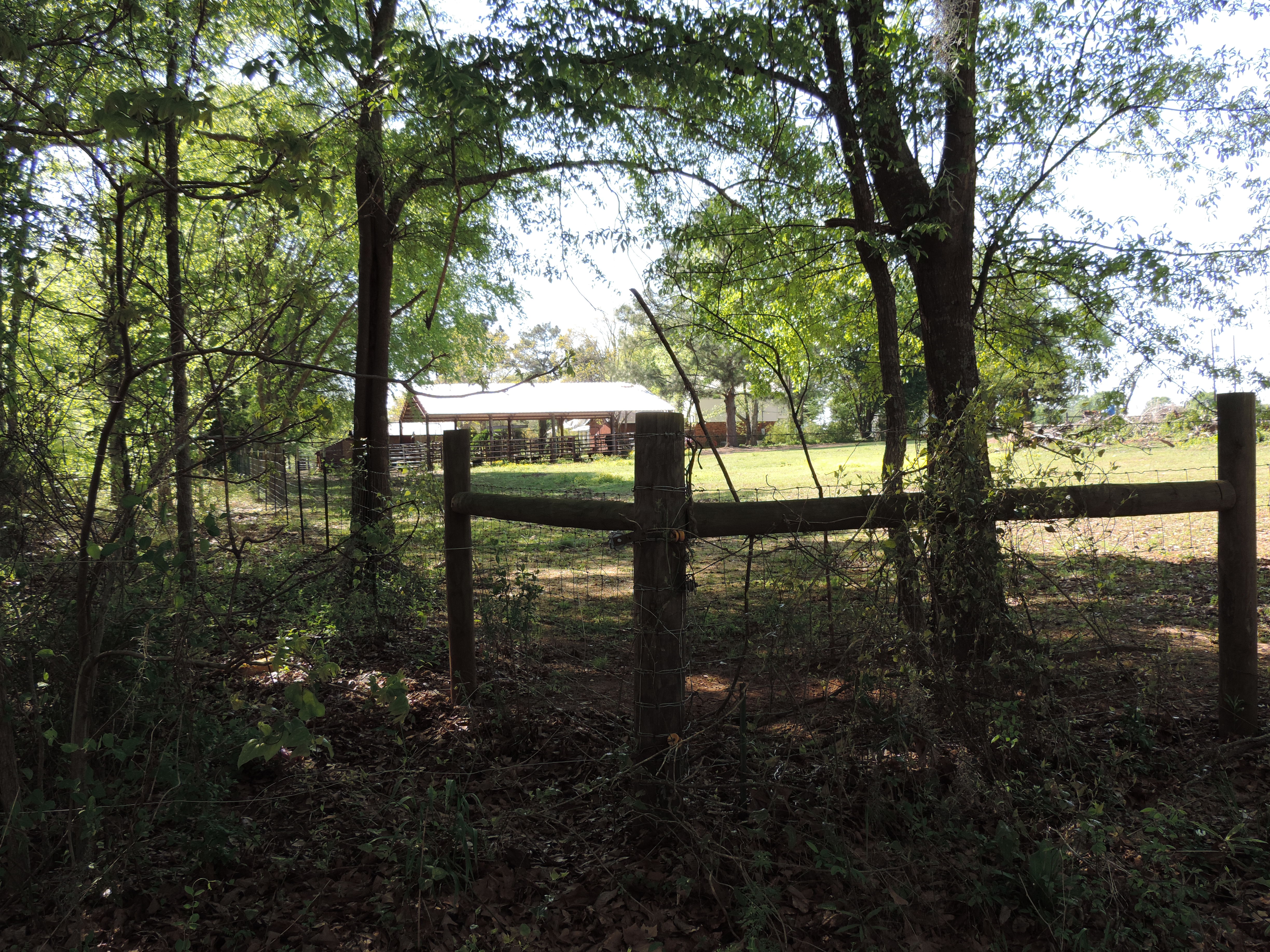
After several hours poking and prodding and going through everything with a fine-toothed comb yesterday afternoon, this morning we made an offer on the very small farmstead we’d been looking at. Four acres, a house, a shop, a shed for hay, and an open barn where Sherod can hold revivals.  What appealed more to him is a second-floor balcony and the thought of sitting up there in his underwear, shooting when the fancy hits–one of those eccentric neighbors everyone says you’d better watch out for.

Headed to Ocala on the first leg of the trip back home this afternoon, had me look up how to buy a donkey and some goats on my iPad. After I had given him all the facts (a donkey costs about $400.00), I found my old friends at the Antique Rose Emporium–there are two trellises one out front, one in the back and just like that, I could be back growing the antique rose species I love so much.

We’ll see what tomorrow brings…

Lowndesboro House

DSCN1367


Jesus Wept: A Sermon for the Fifth Sunday in Lent

Since February 1, I have either been an officiant of, or participated in, 5 rites of burial or celebrations of life. Late this afternoon, we will receive the broken and battered body of a young woman whose children have been part of our reading program, who were baptized here. Last week, her spouse put a gun to her head and pulled the trigger. And Jesus wept.

The three wonderful St Ambrose ladies I was privileged to bury died after lives lived well, good lives raising children, serving, growing in faith, especially loving dearly and passionately. E.  and M., died too young, and especially M., died with a violence too terrible to be able to contemplate for any length of time without getting crazy angry. Earlier this week, several women of el Centro who meet regularly for a  time of prayer and planning time sat  and asked ourselves, “where was Jesus for M.?”. It was so important to exclaim, like Martha, “Lord, if you had been here our sister would not have died”.  That gave word and voice to the desolation, the utter impossibility of comprehending and making our peace with what had happened.

On Thursday afternoon, F, the father of the two older girls came into this very space with S who is 10, and A who is 6. He had asked Diana, Marlene, Alejandra and I, along with the therapist that provides free counseling in our community, to keep him and his girls company as he told his girls that their mother had died. We watched bewilderment and overwhelming pain crumble the faces of those two little girls. And Jesus wept. Jesus wept for the senselessness of that death, for every victim of domestic violence who lives waiting for the other shoe to drop, whose heart and soul dies just a little each day that she or he is demeaned, or hurt, or killed. Jesus weeps.

During my ministry as a priest of the church, I have seen plenty of death, and most of the time, I have grieved and also been consoled by the truth that death arrives for all of us, I find dignity in having come to believe what someone once said, that our lives are all about learning how to die. I have lost much of the fear I once harbored. There has been sadness but not desperation in the goodbyes we have said to so many of our dear friends from the original membership of St Ambrose, even in the short time I have been a part of this community. And I have come to understand that if I feel desperation in my ministry, it is  desperation that we sell life too short, that we give in to half-truths,  easy answers and superficial relationships that that rob us of the life-giving grace that is most especially available to us when we live authentic lives open to the fullness of our humanity.

On Thursday, A, S, and F entered into the valley of the shadow of death and also, found themselves beside the still, deep, living waters of goodness and mercy. After a long time of the rawest, most heart breaking grief imaginable, I watched the two little girls start finding their way back into life. They wanted to engage the women F. had asked to stay in the church. We had lit the paschal candle before they came into this space and when it was time, I lit a small votive candle for each girl. Together we remembered that on the day of their baptism, each of them received the light of Christ that reminds us that death is never, ever, stronger than the love of God.

We talked about how, when they get very sad, which they will often in the days ahead, they can ask a grownup to light their candle and as they look at the beautiful flame, they can remember that even though their Mami’s body was too hurt to be able to keep working, the light of her life, of her love for her daughters, her goodness, will never go out.

A and S had been baptized here at St Ambrose and they remembered that we had first talked about these things when Diana and I prepared them for their baptism. Tonight, we will receive M in this same space and the community who cared for her will find consolation in each other’s company and the paschal candle will shine strong and bright and beautiful next to her casket.

There is much about resurrection I don’t understand with my mind and at best, my heart sees only very dimly. What I know is this: in the meantime, what I believe in my very body is that none of that promise makes sense in the absence of a community of faith. In today’s Gospel, it was Jesus who raised Lazarus from the dead. That is stated clearly and unequivocally, but listen carefully to the reading and you are reminded that immediately, Jesus turns to the people with him and doesn’t suggest, doesn’t ask, doesn’t recommend. He orders—unbind him. Let him go. He doesn’t single out the most righteous or his favorite, the one who most believes or prays best. Unbind him. That’s our work. That’s our ministry. That’s our mission.

For Lazarus to find the fulness of life once again, he needs his whole community. Without the community, not even our Lord’s work is complete. As I move on to talk about the meeting we had yesterday, I ask you to remember that we, like Martha and Mary, have it in us to say “Yes Lord, I believe” even in the darkest, bleakest moments of our lives, and to remember as well that even in those moments, Jesus says to us, through your tears, through your grief, through your despair, you will have the strength to do what it takes to unbind, let go, liberate.  That is your vocation.

A Matter of Light and Perspective

Day before yesterday, Sherod and I drove around for a good part of the afternoon.  As much as anything, Sherod was re-familiarizing himself, I was getting a lay of the land.  We fell in love with a piece of property — 17 acres of gently sloping land with a pecan grove, fruit trees, hydrangeas, daffodils and hyacinths, a creek as one of its boundaries.  Yesterday our realtor friend helped us see the house that anchors all this grace and beauty.  Crazy inside and ultimately waaayyyy too big for us–over 3700 square feet but the reality of a move here became a little more concrete.

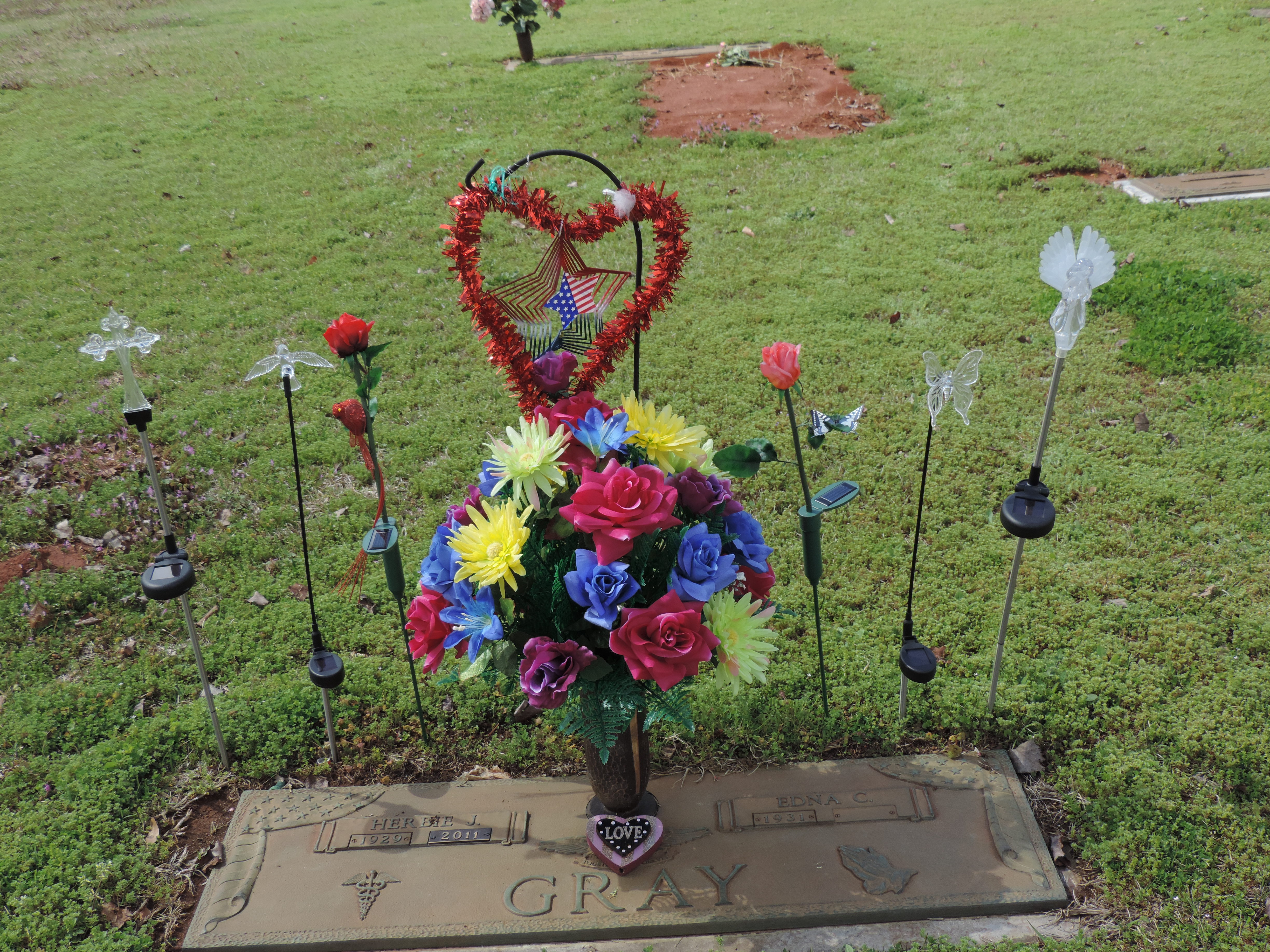
DSCN1258But what really mattered on Tuesday was a visit to the cemetery to bring some flowers to my mother and father-in-law’s grave.  Juanita’s side of the plot is not covered in grass, yet, a bald spot of Alabama red dirt.  But the gravestone already has her name and dates of birth and death–seeing all that had Sherod and me both choked up for a minute, and me insanely grateful for the sense of connection to Juanita.  I don’t begrudge my own mother’s decision to have her ashes scattered in the Rio Caldera.  But when we move here, I want to be able to come out and visit that grave, maybe because that is the definition of rootedness isn’t it?  To have our dead beneath our feet, a connection deep into the land itself.

Last February when I came to do the half marathon, I brought Juanita out to the cemetery on a cold winter afternoon.  She was too frail to get out of my rental car but wanted me to go make sure Earl’s grave was OK and to just stand there for her to see.  The memory of that moment abides and represents a moment of such deep connection with a person I had to learn to love, who earned my respect and gratitude.  I understand a whole lot better now, why people visit graves and do such fun and silly and whimsical things as this (imagine, these little solar powered decorations shining in the dark).  I suspect I won’t have quite the imagination but I can see myself honoring the passage of time and seasons.

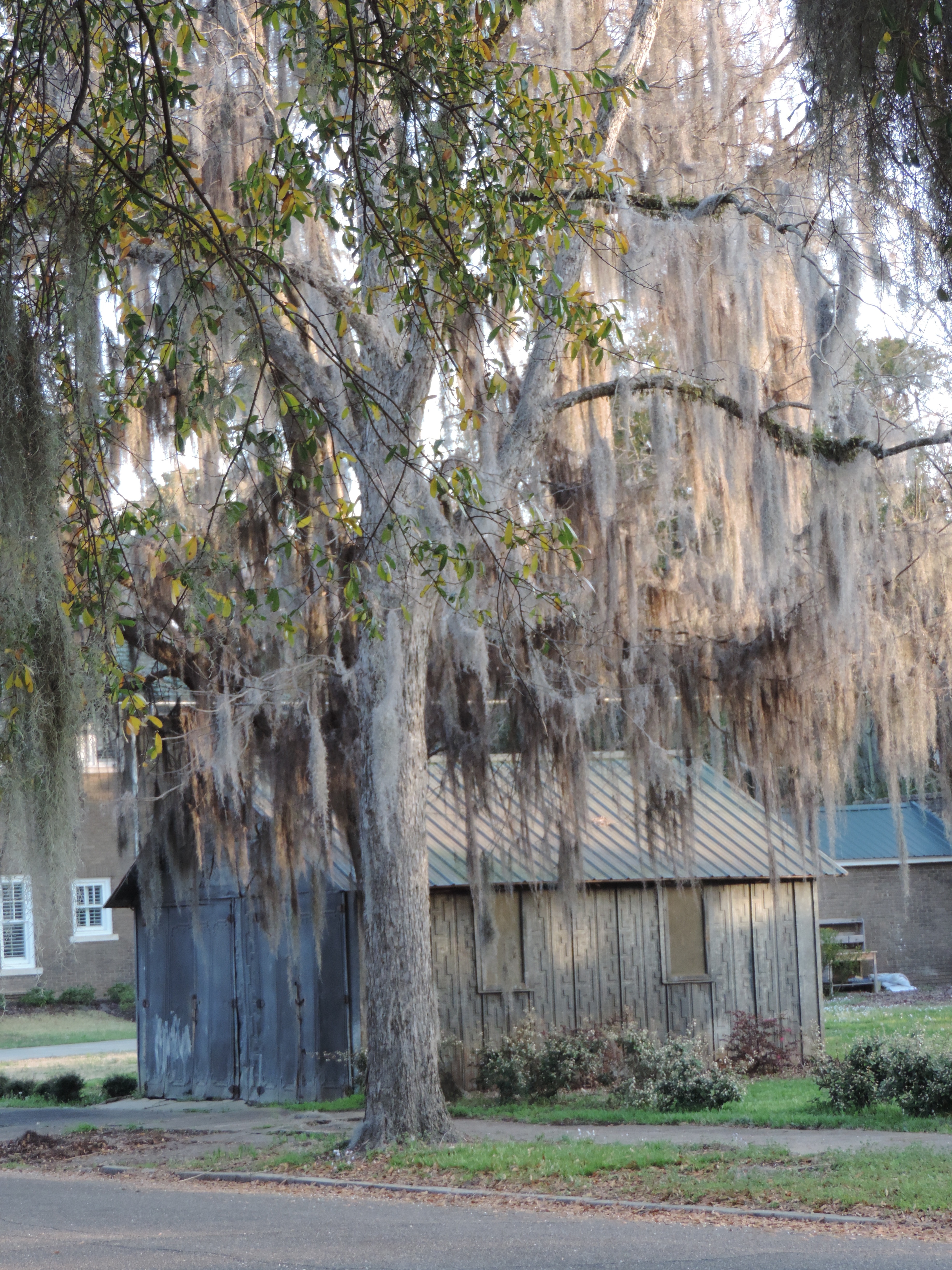
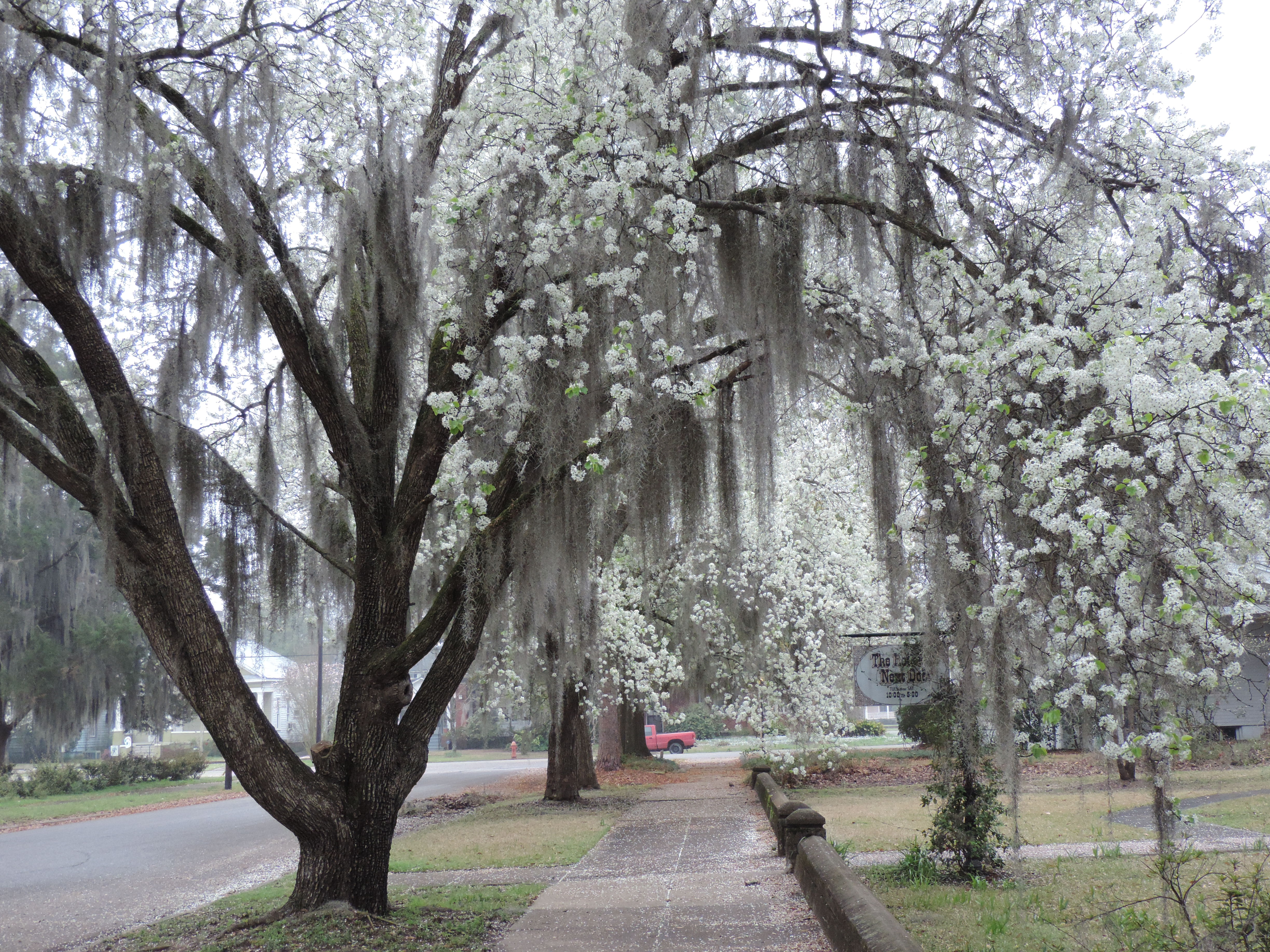
DSCN1219We head back to Florida today, will be back in Ford Laurderdale tomorrow.  The when and how is still more than a little blurred, but the outline is there, the road is there, for our return.  I will have my ECF job, God willing; I will hang out at the little market where Latinos, primarily Mexican, do their shopping.  Maybe that will lead to a new ministry, or just new friendships.  We will more than likely first rent a house then buy a piece of land to build something with a small carbon footprint. Sherod and I will garden, occasionally do some canning; we’ll have a porch and a swing, the biddies, geese and goat. I don’t imagine I’ll stop marveling at light through the Spanish moss early in the morning.  And one day, I suspect I will wake up and say, “I’m home.”

DSCN1331

Dothan

20140317-165958.jpg

I got into Fort Lauderdale in the evening on Saturday. Maria and Sherod were waiting for me and we had a good evening. Four AM came awfully early but I had two sermons to write and laundry waiting as well. Then my regular two services, a quick run back home to put on my prettiest preacher girl outfit. We were burying beautiful Muriel and it was a small way to say thank you to someone who always dressed to the nines in the prettiest way imaginable. For the first time in my years as priest, I almost didn’t make it through the sermon without just sobbing. As it was, I needed both pieces of Kleenex I slipped in my alb pocket before the slow walk down the aisle reading those magnificent lines, “I am Resurrection and I am Life, says the Lord”. Some farewells are so very hard. But the funeral was the celebration we had planned, the reception lovely. I got home in time to help with a bit of pick up and then have dinner with the friends who had kindly agreed to keep Boo and Daisy for the week. I fell into bed and woke up for long spells three times in the night.

Up at five, packed, had my coffee and Sherod and I hit the road headed for Selma. I’ve worked a lot of the way and been on a video call; now we have driven through Dothan. Tomorrow we will meet a realtor in Selma. We are going to see old friends and new in Selma and Montgomery. And maybe, by the end of the week, When we are driving back to Fort Lauderdale, I will have caught up with myself…

Whose I Am

10007316_10152318869583115_1578241219_o

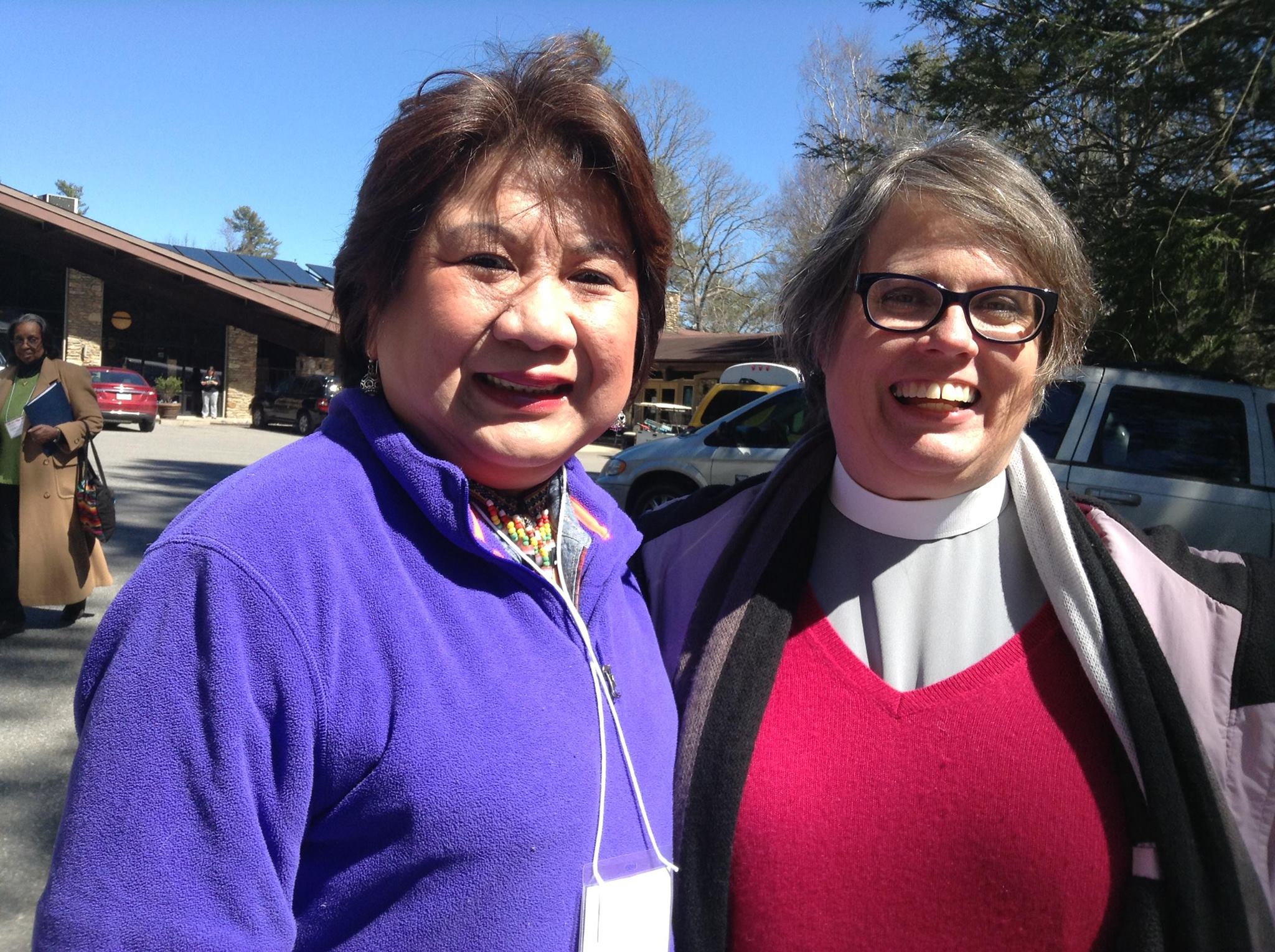
With My Friend, Ruth Casipit Paguio

The conference is winding down. Tonight there has been all kinds of fun with a talent show featuring the four ethnic ministries in attendance.  I had been sitting with my two ECF buddies when it was time for the Latino community to do our foolishness.  It was not anything I thought about–I was just there, with old friends and some new ones as well, but clearly, unequivocally, in my mind, a part of the Latino community.

But a strange thing happened today at breakfast.  Apparently, someone decided a picture was needed of the ‘Euro-american Allies” of the Ethnic Ministries Office attending the conference.  The photographer came by my table and started insisting that I come out too and get my picture taken.  I kept insisting to her that I was a latina.  This pinged back and forth between us about 3 or 4 times before she finally gave up but she was obviously irritated and so was I.  With the benefit of hindsight, I think I understand a little better why she had been so insistent–I am here not representing El Centro Hispano de Todos los Santos, or even as priest missioner of the New River Regional Ministry, but rather working with ECF.

Later in the day, I was walking by a group of Latino guys I hadn’t really spent any time talking to; they started whistling and saying, “Allí va la güerita que dice que es latina y que no se quiso tomar la foto con los europeos” (there goes the little blonde who says she’s latina and didn’t want to have her picture taken with the Europeans)–not in an ugly way, but actually with a mixture of confusion and admiration.  I didn’t even go for a full throttle generic Colombian accent–I pulled from every fiber of my Caleña being and answered them in Spanish–“Qué güerita ni que pan caliente–caleña”.  (Like heck I’m güerita–I’m from Cali).  That broke the ice and we went on to talk and giggle a bit before we went our separate ways but that has stayed with me all day.  I have gone to work with ECF precisely as a woman with the experience of serving in the church with and as a latina, and in fact, I think that’s part of the strength I bring to the job.  It was also incredibly important for me to have the freedom to identify myself and not have it done for me.

Even so, I am mindful that identity is so fluid for me–just like the question about being in the center or being on the edges confounds me, whose I am can get confusing too.  When I am in Sweden, I feel so very Swedish.  When I get to come to events like this, when I am celebrating the Eucharist saying the words from the Eucharistic Prayer of the Immigrant in Spanish, I am latina both in an existential and ontological way (I know, big words, but they really get at something important to me).  And all those years, when I lived with Sherod in the deep south and hardly ever even had occasion to speak in Spanish except to my family by phone, I was about as American as the person next to me.  Maybe the best way to understand myself is to say I live in the in-between places where those neat lines of demarcation simply don’t make anything clearer or more lovely or more true.